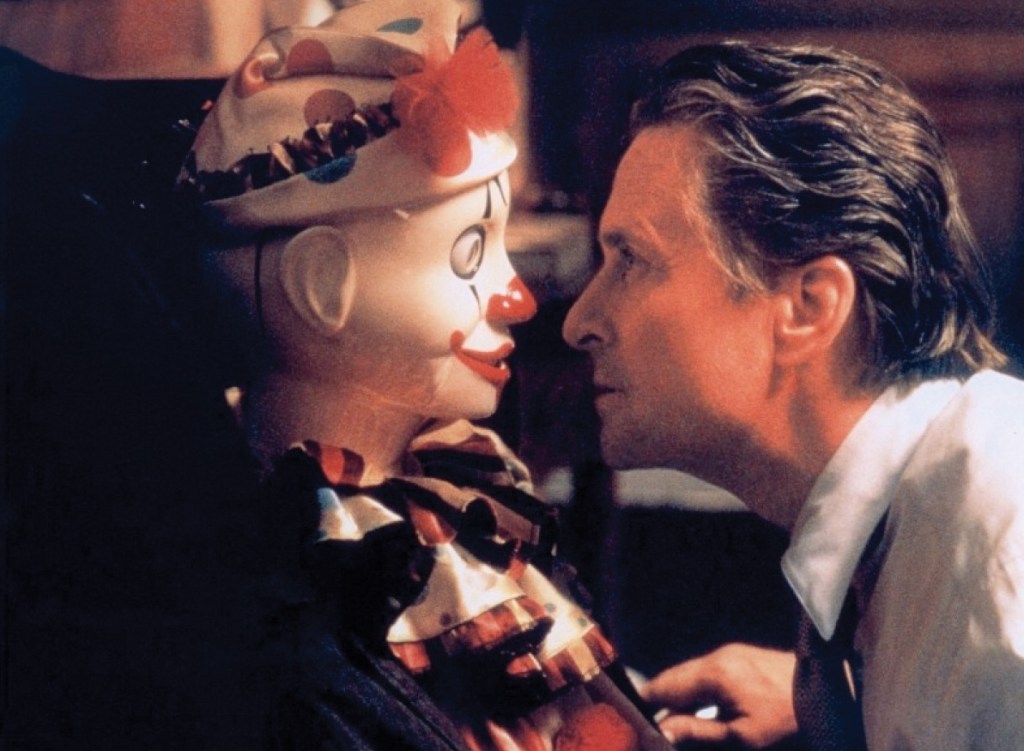
David Fincher directs Michael Douglas, Sean Penn and Deborah Kara Unger in this mystery thriller where a sad billionaire signs up for a ‘game’,one that starts to impinge on every element of his solitary life.
Can’t believe I’m about to write far, far less words about a movie I’ve always loved because I’ve spent an entire day on fucking Toys!? Premium hokum. Humbugs and nitpickers need not apply. A really sinister masterful expansion on a Tales of The Unexpected. Fincher’s directorial control on this is truly Hitchcockian. Flawless. The highly improbable level of fakery conjured to make ‘the game’’s machinations convince in many ways is a love letter to big budget filmmaking. Set decorators, well cast extras, convincing supports, squibs and stunts. All the tricks of modern storytelling are employed in the grift, making for an unofficial celebration of such Hollywood illusions. Sometimes you realise the dangers Michael Douglas’ Scrooge Meets Gordon Gecko lead is dropped into aren’t really all that life threatening if he stopped to take a breath and just think things through. But as a twisty turning puzzle that holds up to multiple watches, this is still a class act. Just go with it!
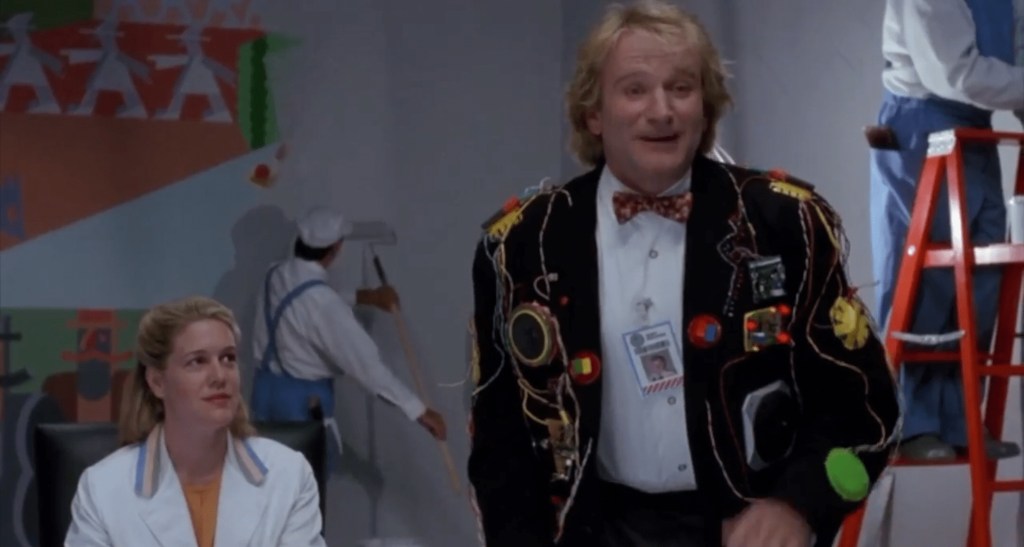
Barry Levinson directs Robin Williams, Joan Cusack and Michael Gambon in this satirical fantasy where a military man takes over the family business of making whimsical playthings.
When I first started this blog the intention was to write essay length history and op-ed pieces on projects exactly like this. Follies that struggled to find their audiences. The misguided productions stories, calamitous releases, their place in history – cinematic and personal. Trying to figure out the internal and external forces that nudge an ambitious film into being a cultural bête noire. Return to Oz.Alien3. Last Action Hero. Over the past six years, the reality is this really has become very much a diary of what I have watched each week. Yet I do seem to devote more words and consideration to the big budget stumbles and wilder swings Hollywood made in my youth.
Barry Levinson’s Toys was a dream project over a decade in the making. Its sensibilities reside in the late Seventies when Levinson was churning out spec screenplays with comedian and then wife Valerie Curtin. His background was in writing for comedy variety shows and getting Mel Brooks’ jokes and ideas hammered down into screenplay form. No studio was interested in Toys when the first, second or third draft was submitted. Levinson broke through as a director with a run of down to earth comedy dramas; Diner, Rain Man, Avalon. He had the critics favour, was an annual Oscar shoo-in and his style was grounded in warm, humanistic reality. Killer box office and prestige meant he could make pretty much any project he wanted by 1990. So he blew the dust off one of his and Curtin’s old unproduced screenplays…
Considered in the wake of Batman and Dick Tracy maybe Toys wasn’t that strange a bet. The Fox executive who greenlit a lavish $50 million dollar budget and every single inch of their studio space to Levinson’s vision was at least playing within the current marketplace. Visualist directors who took their audiences into hyper artificial worlds seemed like THE trend after the emergence of Tim Burton, Terry Gilliam, Neil Jordan, Sam Raimi and even The Coen Brothers. The pre-Jurassic Park Nineties are littered with rubbery, cartoonish mish mashes that abandon all claims to verisimilitude. Francis Ford Coppola gave us his ornate and unhinged Dracula. The gothic slapstick of The Addams Family had exceeded all financial expectations. Even Spielberg gave up, gave in and made his poorest blockbuster: the papier-mâché Hook. Yet Levinson had never really made any overtures to be an iconic world builder until now.
Toys even had a bankable star. Robin Williams, the motor mouthed comedian who made the leap from stand-up to sitcom to A-List. He had won plaudits collaborating with Levinson on Good Morning Vietnam. He somehow charmed the world into making a period film about a school pupil’s suicide into one of the Top 10 money earners of 1989. If audiences’ flocked to see Williams in Dead Poets Society, imagine the stampede for him in a René Magritte inspired pop art extravaganza! Williams as a Wonka-esque genius who has to protect the innocence of imagination and play. Sounds fucking marketable!
And the look of Toys is something to behold. Ferdinando Scarfiotti’s (The Last Emperor) Oscar nominated production design creates a factory floor of gargantuan Pez head deities and smooth Italian futurism. The guts of the factory have ducks crossing synthetic rolling hills instead of corridors, school nativity production cityscapes for communal recreation and closing in walls. As the factory changes purpose it warps ergonomically. The dream world is almost too ordered, coded, built to be abused and rewritten to a more authoritarian ideal. The outside world is deep blue skies and high green grass, occasionally we uncover lost elaborate architecture from a child’s imagination. Like toys abandoned in lustrous lawn of a never ending summer’s day.
Trevor Horn assembles a soundtrack to stir up the wonder. The corporate folk of Enya & Tori Amos sweetens us up, hoping to lull us into a childlike state of arrested development. Levinson said in interviews “We were right on the doorstep of turning this into a musical… We sort of kept a bit of the musical stylization without the musical.” I find the happy workers singing along to pumped-in anthems of conformity and subservience slightly sinister and fascistic myself. Like something from a Lang dystopia painted pastel or Leni Riefenstahl documentary babyfied. When war between the toys finally breaks out whispered warbling gives way to a Frankie Goes to Hollywood revamp, the battle charge of aggressive techno. There are a lot of competing voices here cheering on an ephemeral and misguided vision.
In this cacophony of ideas the humans get overwhelmed. Robin Williams is all but on standby for the first act. His character mourning, the focus on his uncle inheriting Zevo Toys sucks all our attention. Eventually they start to genteelly clash. Williams pranks and undermines the new boss. He shows off practical jokes and inventions; a smoking jacket, virtual reality where the headset is what we would now call 4DX, a fake vomit testing room. The latter sequence contains the unfortunate line “This clearly is the vomit of the white man!” Surprised that wasn’t regurgitated in every eventual negative review. Gambon makes an attention grabbing fist of the villain, where Williams idles. Supporting players like LL Cool J’s ever camouflaged head of security and Robin Wright’s spaced out romantic interest struggle in underwritten, miscast roles. I wonder if agents were fired afterwards?
Joan Cusack is the only performer who bests the ostentatiousness of it all. Her character, Williams’ even kookier sister, has the most effective quirks, lands laughs. The movie’s finest but most disposable sequence has the siblings recreate a full blown MTV music video in a corridor to bamboozle a security camera. Slight spoiler, she turns out to be a literal living doll rather than a dolls clothes designer who lives her work. Even though the most artificial character has the most heart and life, the story never stops to consider how she might feel about the toy armageddon that occurs in the final act. Nobody would predict at the one hour mark that Williams and Cusack would be winding up a warehouse of their father’s inventions to fight a war of attrition with the destructive new designs.
Instead the playthings we are supposed to marvel at and cherish are used as cannon fodder in a toy genocide that seems to be the antithesis of everything that has gone on before it. It makes for a sorta spectacular finale but didn’t sit well with me either as a child or an adult. The movie predicts drone warfare a fair few years before it became commonplace but this stems from the practicalities of marrying up toy manufacture with a lovey dovey, out-of-date anti-establishment vibe rather than any prescience. Using toys as guided weapons really is the only satirical option that satisfies the set-up and vague messaging around the film. Both sides, good and evil, succumb. What would Woody or Buzz think? Toys would actually make a neat double bill with Spielberg’s A.I.. The same uncaring need to manufacture and replace creations with emotions but not stakes is here as in there. It just is one of many concepts touched upon but not explored with any serious robustness.
Overlong with an underwhelming start and distasteful finale, Toys doesn’t really conform to any genre. There is an overload of formless concepts. The basement of the factory houses some kind of vicious sea snake… we never see it clearly but it threatens the leads continually in the final act like the mysterious monster in Lost. Were the SFX unfinished or did Levinson want to retain its mystique or was it just too gruesome for kids? Not that it mattered, a few out of place swears and moments of inappropriate horniness meant this was released with a PG-13 rating anyway. Kids didn’t just not go to see it, their parents were persuaded it wasn’t overly suitable.
Levinson recently stated at a revival film festival “I thought, if we do it in these primary colors and it all looks like it’s happy and fun, but it’s really a dark comedy underneath it, rather than presenting it as a dark comedy.” I don’t know? Toys really feels more like a film for adults who want to pretend they are pre-teens again. It has an immaturity that only the wise will understand. I remember renting it as a 12 year old watching it in my bedroom (no one else in the house was interested) and being bored. And I was a pretty open minded kid. There just wasn’t an obvious market for the finished product as handsome and eccentric as it often was.
Williams would probably be the only factor that might have saved it from a box office drubbing. The first trailer shows no footage of the film. It just has Mork in one of the lush fields riffing to camera about what Toys might be about. Alarm bells should have rang there. If the concept of the film is so unwieldy that the star can’t summarise it to his fanbase and the footage from the film is nowhere to be seen, you might not have a hit on your hands. The second trailer tried to up the more comedy orientated moments of Williams performance (there’s at least enough to fill a two minute montage) and some of that grandstanding production design. Maybe that more trad trailer came too late though. Disney’s Aladdin had been released a mere three weeks earlier and had sold itself on having Williams voice the genie of the lamp. Considered one of his finest entertainments, Aladdin has a slickness and confidence that is the polar opposite of Toys misdirected weirdness. Williams even had a stipulation in his contract with Disney that he would not be the focus of a marketing campaign for Aladdin as it was in competition with his favoured release Toys. When Disney ignored the agreement they had to buy the star a Picasso as an apology before he would work with them again. The damage was done for Toys only hope though… the masses had already got their Robin Williams fix that winter.
The critics were accurate and dismissive. Variety in a contemporary review said “Levinson, a director most at home with slice-of-life portraits relating to his Baltimore roots, tries his hand here at a darkly satiric fable and ends up doing an extremely poor impression of Terry Gilliam.” The New York Times found little to praise “very young children would seem to be the target audience, though they won’t have a clue as to what’s going on. Their adult companions will be driven to dreamless slumber.” Word of mouth or Oscar buzz wasn’t going to turn the tide. I’ve scoured the internet looking for the usual snide PR, production horror stories and studio interference but it seems very much like Toys was just stillborn rather than aborted. Fox seemingly did as much as they could with what they had paid for, never impinging on Levinson’s vision.
Toys failed to open at Number One on its release just before Christmas. It ultimately only made back half its budget, grossing only $23 million over its entire US run. It never has had a Blu-Ray release (a strong indicator that the home video market rejected it too in previous formats). In all honesty it wouldn’t surprise me if it eventually got a Criterion Release one day. And if that were to happen we would no doubt cover it on The Worst Movies We Own podcast soon after. Natalie has a nostalgic fondness for it that I certainly don’t but maybe being a few years younger than me she was exactly the right age. And being a few IQ points smarter, the perfect temperament for its esoteric charms? But maybe there’s a good reason it was always available in her childhood Blockbuster when she visited?
A clash of impressive adult world building and pig headed strangeness, Toys caught my attention and frustrated me almost equally on this rewatch. Hippy dippy values reshaped into mass market product made for a generation that never really existed. It reminds me most of those ever so middle class childrens’ event movies we get these days like A Wrinkle in Time or the more pretentious Pixars. Well made films which posh parents might really think their kids should love but don’t have any of the instant gratification or rebellious adventure that cheaper, more mercenary releases naturally have. A kids’ movie should never feel like a museum piece, certainly not on opening weekend.
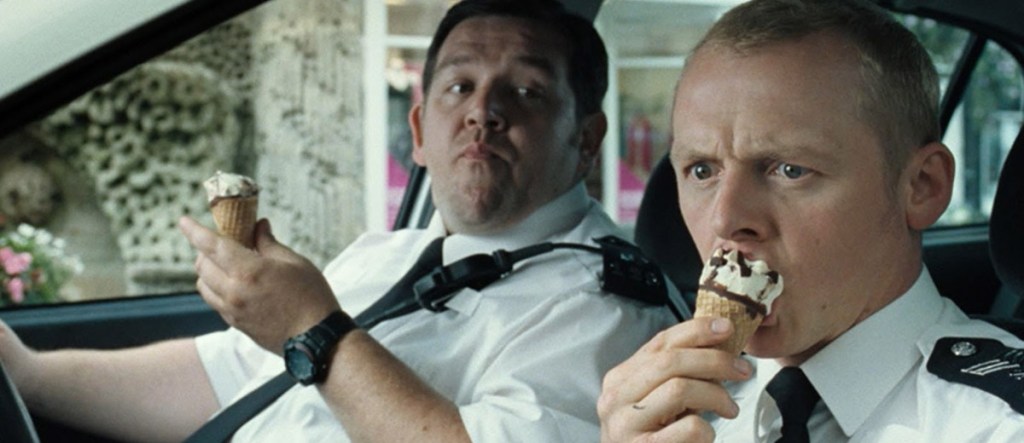
Edgar Wright directs Simon Pegg, Nick Frost and Timothy Dalton in this buddy cop action comedy spoof where a by-the-book supercop is sent to a quiet rural village with a deadly secret.
Does for Lethal Weapon what Shaun of the Dead did for Dawn of the Dead. But you already know that! Just a barrage of relentless jokes for the first hour. Some very smart, some very silly. Embraces the Airplane / Naked Gun philosophy that the more straight faced the traditional actors play their part the better the hyped up parody works. Now the movie gets a little lost in the woods for twenty trudging minutes when Wright spends just a little too long unravelling the conspiracy. He does at least do this in what is traditionally seen as the downtime in a feature length comedy. No matter how good the joke there’s a point around an hour where the audience needs to catch their breath. So its a relief that when the big action finale erupts, it isn’t only a slam bang homage to John Woo, Michael Bay and Tony Scott but it has some of the most exquisite and patient callbacks ever achieved on celluloid. I’m not fanatical about Pegg and Frost’s schtick but this certainly is their crowning achievement, the peak of an enviable comedy run.
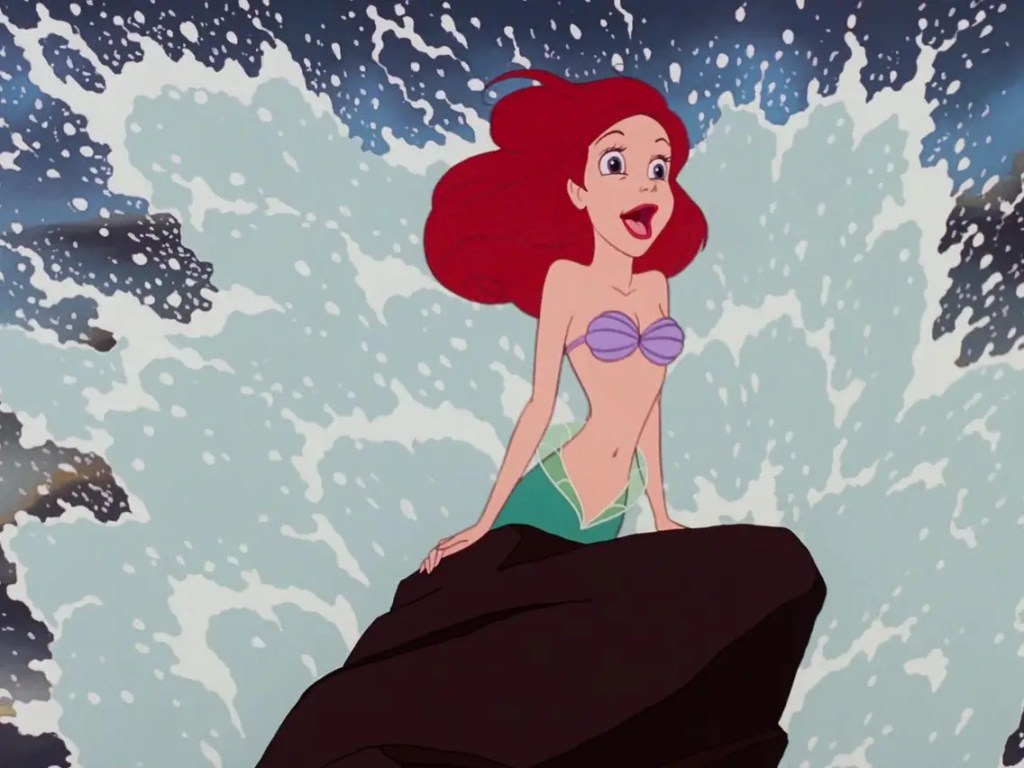
Ron Clements and John Musker direct Jodi Benson, Christopher Daniel Barnes and Pat Carroll in this Disney animated classic about a mermaid who gives up her voice for a pair of legs in the hope of kissing a land bound prince.
Definitely the best viewing experience I’ve had of this… being a little too adamantly boyish to fully enjoy it in my youth. The tunes are glorious, Ursula makes for a fiendish villain and Sebastian a note perfect sidekick. So… some of the background and filler animation is a bit formless (the studios was literally being reborn after decades of talent drain and cheap corner cutting) yet Ariel herself is a revelation of design and movement. I’m fully aware it is wrong to find a teenage cartoon who is half fish so attractive at my age… Sue me!
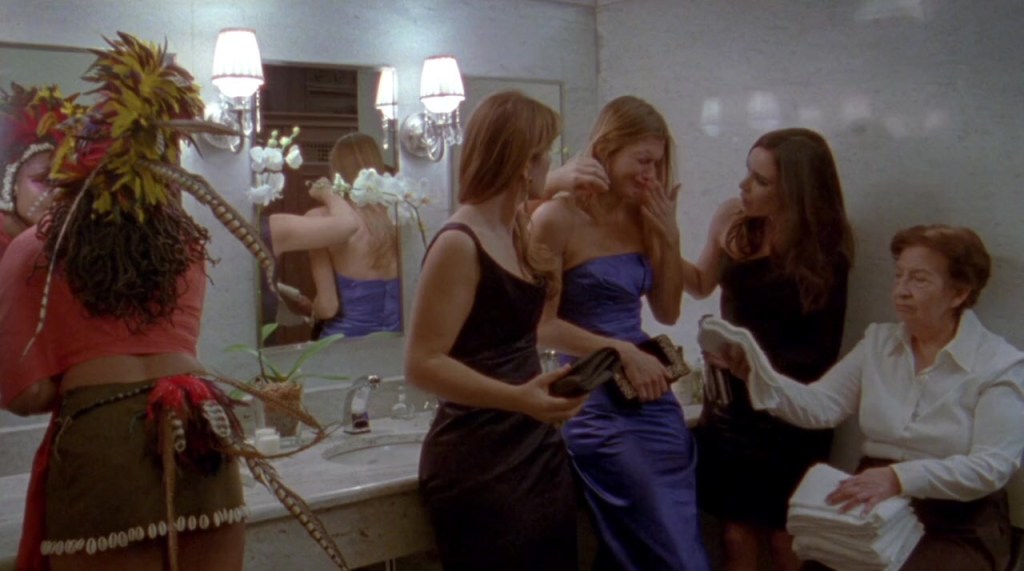
Zeina Durra directs Élodie Bouchez, José María de Tavira and Karim Saleh in this New York indie where a conceptual artist believes her Middle Eastern friend has been renditioned while she begins an affair with a Mexican stockbroker.
Strong on atmosphere and with some nice sequences where we see the immigrants of New York interact away from the naturalised ‘Americans’. Has the feel of a secret world being interrupted but equally there’s a certain degree of very wealthy people using poor people from the same ethnic background to validate their own ‘authenticity’. Outstays its welcome as a narrative long before the finish line but I enjoyed some of what Durra captures in passing.
Wayne Wang directs Susan Sarandon, Natalie Portman and Shawn Hatosy in this light drama where a feckless mother and her serious daughter move to Beverly Hills to bicker and bond.
Working neither as a drama, comedy nor romance this would be pretty unwatchable if it wasn’t for the star power and burning talents of the two leads. Sarandon works her socks off to try and bring some sweet affection to a character who is all but diagnosed bi-polar. Portman’s dour wet blanket was definitely raw fucking her cousin. Tell me I’m wrong?
John Curran directs Mia Wasikowska, Adam Driver and Roly Mintuma in this true story of a lone woman who trekked the Australian desert with three camels and a dog in the Seventies.
An unsung gem of the last decade. This looks gorgeous and has a constant sense of adventure that is convincing without being bombastic. The ever excellent Wasikowska gives a career best as tenacious loner, Robyn Davidson. Sensitive but forthright, she sells the unique urge to abandon humanity and spend isolation with her pack. Really sweeps you up with its stunning location cinematography and accurate production design. There’s a couple of emotional wallops along the way that are maturely handled, doesn’t soft sell the hardships Davidson endured and the ending is a pure joy.
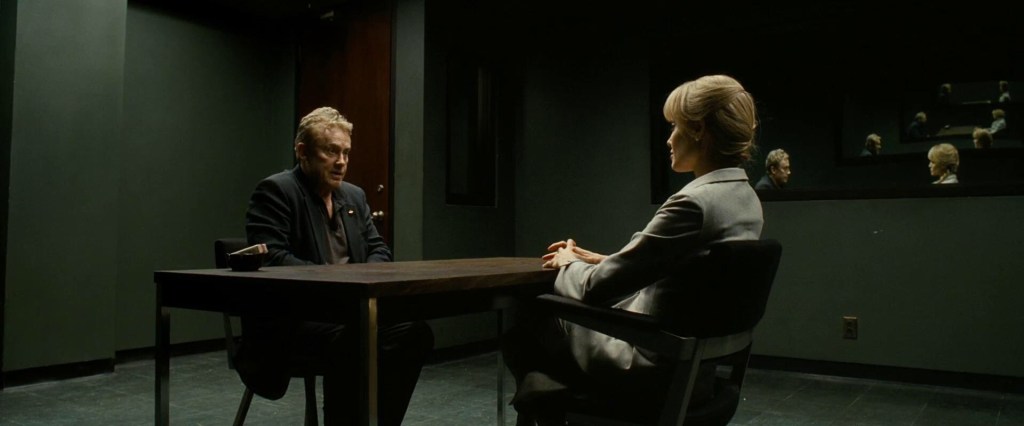
Phillip Noyce directs Angelina Jolie, Liev Schreiber and Chiwetel Ejiofor in this action thriller where a CIA analyst is outed as a Soviet double agent and has to go on the run to save her husband and the leaders of the free world.
Infamously originally written for a male lead (Tom Cruise?) until they swapped the gender of the protagonist. Girl Power aside, Salt proves a pretty rote Jason Bourne rip off that is saved by a slam bang chase in the middle. The sequence where Angelina leaps from moving trucks over different lanes of the highway is gourmet popcorn. Jolie is a stylish but blank presence and that works quite well with all these mechanical twists that clunk into place every twenty minutes or so. You’ll give up caring what side she is on long before the movement ends. Polished but forgettable.
Duncan Jones directs Jake Gyllenhaal, Vera Farmiga and Michelle Monaghan in this sci-fi thriller where a soldier finds himself in a time loop, possessing the body of a victim of a train bombing eight minutes before the explosion, over and over again.
I’m a big fan of the time loop sub-genre. To the point where I can’t really think of one I don’t cherish. Want it funny? Groundhog Day! Scary? Triangle. Thrilling? Retroactive. Arty? Last Year at Marienbad. I’ve yet to see Time Crimes. This sci-fi variant takes a little from Quantum Leap and string from Executive Decision. The disaster has already happened. Gyllenhaal’s disorientated body hopping investigator just needs to figure out the triggerman so future attacks can be prevented. It might even be him… That eight minute loop is pretty smart as it doesn’t really give him leeway to disembark too far or call in further resources. No big swings are allowed, there’s no room. The time outs in a shadowy military base where he reports back his findings and tries to figure out how he has been assigned this fantastical mission have an air of creepy paranoia. Jones slow drips the exposition, tightens up the kinetics (you are all but guaranteed a blast every ten or so minutes) and has lucked into probably the most naturally attractive cast of any modern release. Is Source Code the most original concept in the world? No. Is the bomber pretty obvious? Yes. Does that sickly sentimental ending have a lot of empty caboose to it? Sure. In the main though this is a slick, rattling good time. Times 8.
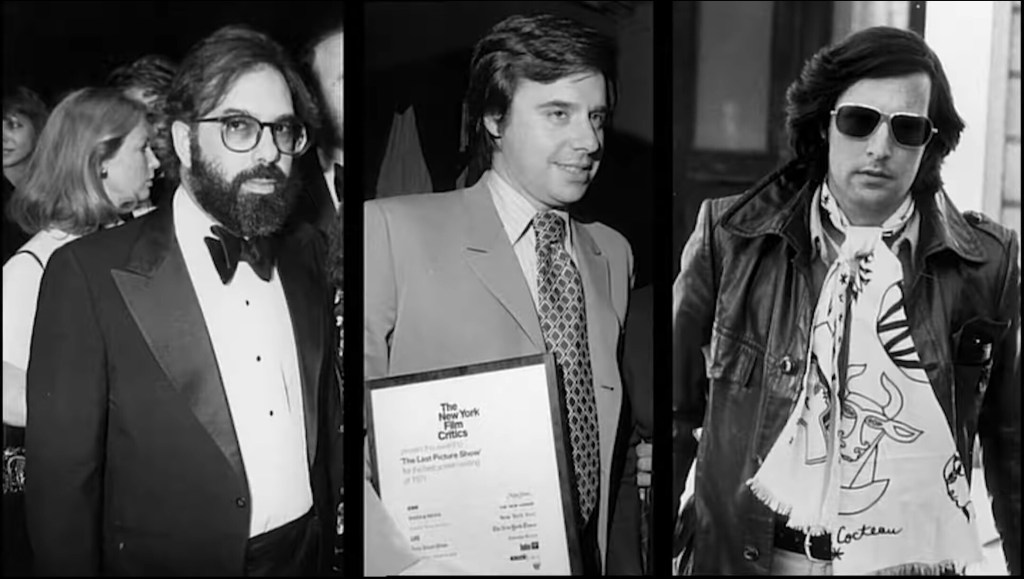
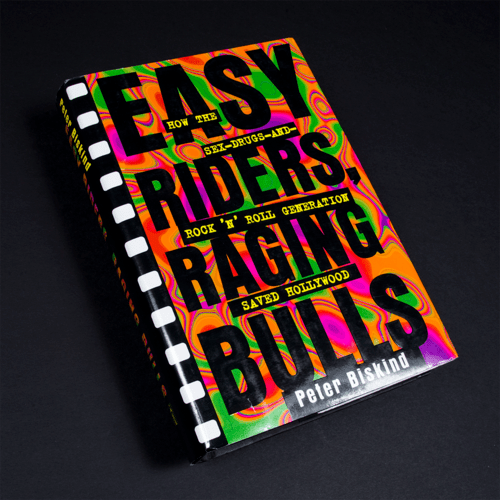
Kenneth Bowser directs Dennis Hopper, Peter Bogdanovich and Margot Kidder in this documentary companion piece to Peter Biskind’s seminal book on the “Movie Brats” and the New American Cinema of the Seventies.
Talking heads, stock footage and on set photos. Though considering the backstories of many of the movies covered warrant their own feature length documentary this can only ever be a busy busy overview. The gossipy nature of Biskind’s book is a blessing and a curse. The tell all – straight from the ex girlfriends and first wives’ mouths – nature of the reportage meant the biggest names involved avoided this follow-up project like the plague. Spielberg, Lucas and Friedkin are notable by their absence, Marty surprisingly subdued, Peckinpah and Ashby long dead. Yet many of the female sources were not just romantic partners but active creatives and technicians in the movement. Marcia Lucas worked not just with George as his Editor but was Scorsese’s go-to cutter in the second half of the decade. Nearly all of Polly Platt’s illustrious projects after her and Bogdanovich split up are now considered classics… right up until her last producer credit on Wes Anderson’s debut: Bottle Rocket. The principal subjects might not savour their early affairs, drug taking and unprofessional gaucheness writ large now they are considered the elder statesman of Tinseltown but the sources are pretty credible.
Of course, Biskind’s fascination with hubris and maverick celebrity means Warren Beatty, Dennis Hopper and Bob Evans get a little too much credit. Surely Dustin Hoffman, Robert Redford and Jack warrant as much absent spotlight as Shirley MacLaine’s hound dog kid brother. The choices of who made the cut and who doesn’t fascinates me. Stanley Kubrick, Sidney Lumet, Bob Fosse, Mike Nichols and Woody Allen receive minimal attention. Maybe as their careers started in either TV, the Fifties or both? But then why do Altman and Peckinpah become so elevated? Their early backgrounds are much the same but maybe their studio battles and bad behaviour were just plain more fascinating? And he’s never quite sure whether émigrés like Roman Polanski, John Boorman, Milos Foreman or John Schlesinger belong in his inner circle.
Biskind’s ultimate thesis that the later juvenile rollercoasters of Star Wars and Jaws meant that studio head were given a blueprint as to what kind of blockbuster was a safe bet also feels like a reduction. So where does that leave Friedkin and De Palma who were first and foremost also iconoclastic formalists… more inclined to leave the crowds entertained and stunned than mess with political and social state of things? I’d say it is fair that Biskind wants the rock ‘n’ roll burnouts to define his favourite era rather than the thriving survivors. Watching this unspectacular documentary is a neat précis to his fine writing and investigation. It made me want to revisit the weighty tome again with fresher and more mature eyes than I had in my early twenties. My first paid written work on film was an essay about the alternatives to the subjects of book for Kamera’s print magazine. And even if it proves a mere taster for all that is celebrated in his key work, it made me want to indulge in the movies he is so passionate about. As I am too. So…
6
American Graffiti (1973)
George Lucas directs Richard Dreyfus, Ron Howard and Charles Martin Smith in this teen movie where the youths of Modesto, California reach various crossroads in their lives while driving around enjoying the last night of the Summer of ‘62.
A joy to revisit. The Rosetta Stone for nearly all teen movies that followed and one of the first notable exercises in mass market nostalgia. In that respect, there’s this acting as the spiritual bridge slap bang between Meet Me In St Louis and Dazed & Confused. Though both of those films have a distance of decades betwixt the more innocent era they are resurrecting… American Graffiti is only 11 years older than the lost world it looks fondly back upon. So much had changed from the Kennedy Assassination to Altamont that it is no wonder Grease, Happy Days and this emerged so suddenly to take stock at what had been abandoned by the American youth psyche so quickly. Opening night in 1973, must have been a rude awakening for the popcorn munching kids. This isn’t what your parents were doing, it is what your older sibling was doing when they were your age. You couldn’t imagine a teen movie released now but set in 2013 being such a culture shock. Even if it notes the absence of hand gels and face masks.
The ever present Do Wop and Summer Bop soundtrack, the awkward sexual mores that seem so immature after the Summer of Love, and those bright gliding hot rods. The gleaming chrome automobiles feel like characters in themselves… the strongest link between this and Star Wars is Lucas presents us with a culture where everyone cruises and hitches a ride and battles it out in fantasy vehicles. A lot of drama and humour can happen in the cockpit. It tends to be pretty relaxed, low stakes and low energy stuff. A hang-out movie where everyone is separated. The night broods and obscures, without headlights and neon… you get lost in the dusk and moonlight. Camouflage for our four knights to try on different armour before the dawn of real life fixes them into their fates. Props to Haskell Wexler for serving as visual consultant when Lucas (rather over enthusiastically) decided not to have a dedicated cinematographer. No other night movie looks like this and it is all thanks to Haskell in my opinion.
Much to love here. The female roles are meaty and better acted. Candy Clark was Oscar nominated for her troublemaking ditzy blonde but for me Cindy Williams and Mackenzie Philips give the most noteworthy performance. The modern joy of seeing a pre-fame Harrison Ford as the ostensible villain, a cocksure cowboy looking for a challenge. The magic surrounding Wolfman Jack’s small but pivotal role as himself, the sage-like DJ. Life’s short, the popsicle is melting, enjoy the flavour while you can. If you ever want proof that the bought-out studios had zero idea what they were doing in the Seventies then the fact that Universal underestimated this masterpiece and considered writing it off as a TV movie is the smoking gun to that idea.
9
Alice Doesn’t Live Here Anymore (1974)
Martin Scorsese directs Ellen Burstyn, Alfred Lutter and Kris Kristofferson in this road movie where a young widow and her son travel across America hoping to build up enough cash to get to Monterey.
A gem. Marty’s first “one for them” is full of character and heart. He was handpicked by Burstyn, enjoying some post-The Exorcist bargaining power at Warners, and they chime grandly together. Scorsese navigates the shifts from road movie to musical to sitcom to romance masterfully. He never loses us in the key changes nor the convincing grit of his location work. Burstyn has a spiky energy with her kid co-star but is generous enough to let smaller roles from Harvey Keitel, Jodie Foster and Diane Ladd be high impact. Not being set in New York and being very much a “Woman’s Picture” tyro Scorse seems like a strange choice to helm such a piece. When asked by Burstyn whether he knew anything about women, he sweetly replied “Nothing, but I’d like to learn.” Their Alice has the same scrabbling from the mire lesser dreams of the blundering hustlers of Mean Streets, a more human mania and alienation at the brutish world she must navigate alone than the desperate Travis Bickle. Alice is a more romantic, funny and ultimately heroic character, allowed to grow rather than self destruct and she typifies Scorsese’s protagonists away from his more infamous crime pictures. Gangsters and killers only make up a third of his impressively genre hopping filmography after all.
8
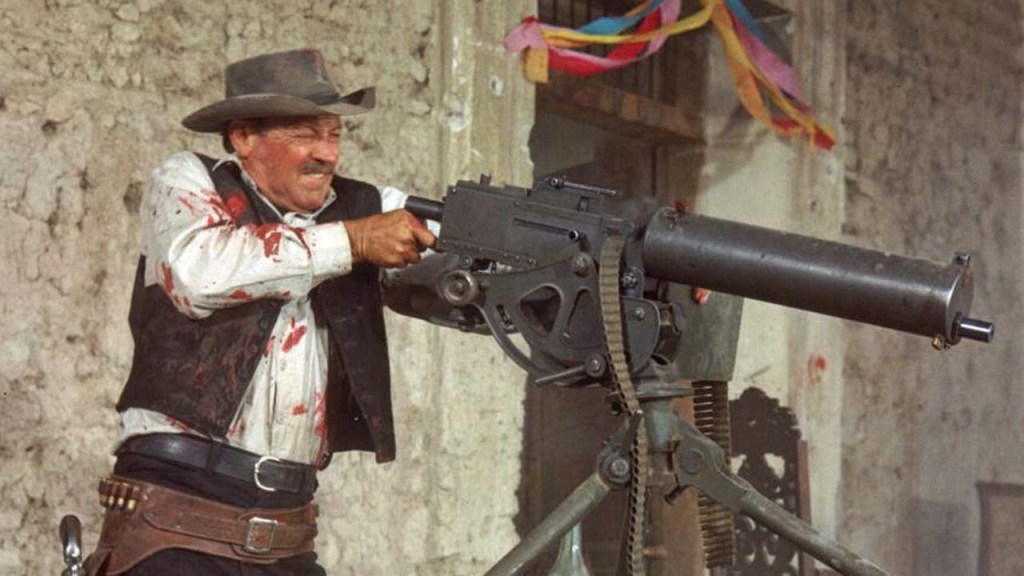
The Wild Bunch (1968)
Sam Peckinpah directs William Holden, Robert Ryan and Edmond O’Brien in this X rated western of an ageing bunch of gunslingers trying to outrun the 20th century.
The end of the West. Violent men with a iron cast code. A dirty and dangerous way of life that once lived leaves no other options. Both elegiac and revolutionary (no Hollywood movie was this gory and chaotic before, it essentially ends in balletic genocide), this completely rewrote the rule book of what could be shown on screen and is a key landmark in the birth of the action movie. Subliminal cuts, an orchestra of realistic gunfire, agonising squib frenzies. Featuring a cast of men’s men supporting actors, leathery and past their prime, Ernest Borgnine is the stand out. Loyal, steadfast and secretly enamoured with their leader… it is never explicitly stated but he clearly is gay and madly in love with Holden’s oblivious boss. “We all dream of being a child again, even the worst of us. Perhaps the worst most of all.”
9
Bound For Glory (1976)
Hal Ashby directs David Carradine, Ronny Cox and Melinda Dillon in this period biopic of truly left wing folk singer Woody Guthrie.
Not to become an amateur conspiracy theorist but it is mighty strange that some of the greatest films ever made that happen to be pro-union and have positive representations of socialism seem to drop out of circulation all too easily. This and Bill Forsythe’s excellent Comrades are beautiful and masterful works of cinema that you’d struggle to access for decades unless you really hunted them out. Even Warren Beatty’s Reds doesn’t get quite as much airplay and accessibility as other modern classics of its stature. It is almost as if the corporations and conglomerates that hold the rights to such genuinely left leaning cinema know that such powerful messages work against their own venal values.
This is like no other music biopic you have seen. Doesn’t bother with a tragic childhood or last act redemptions. Just focuses on Woody Guthrie making his ambling, half thoughtful way through the Great Depression. He witnesses a town fold in on itself as work dries up. He rides the railroads and experiences the brutality of the bulls and the cops against economics migrants in his own country. He sees first hand the oppressive practices of the fruit picking bosses, flooding the market with cheap labour so they keep every family desperate for work and with no leverage to negotiate a fair wage or contract. He rarely plucks a guitar for that first hour. Ashby and Carradine agree that Guthrie is a unique soul. Too artistic to deliver a simple sign painting job to spec, too wayward to support his family, too much political integrity to keep a well paying radio spot unless he has the right to pick us own polemical songs. He’s not really a fighter or a grafter and he’s a shit of a lover. Weak willed or far away with his undefined ideals to truly care about personal relationships. He wants to be of no fixed abode, close to the workers, changing hearts and minds even if he only has a primary colour idea of what an unionised world would look like.
The realisation of the 1930s of ghost towns, soup kitchens and workers camps is stunningly achieved. Sally Dennison who cast thousands of plausible extras deserves praise. Haskell Wexler performed the first ever steadicam tracking shot to take us through the camps. Thieves Like Us. Boxcar Bertha. Hard Times. Why did the depression era appeal to the mavericks of New Hollywood so much? Was it just that decade’s turn in the queue to be romanticised and immortalised? Was Bonnie & Clyde’s kick starting success to the cinematic revolution thus a marketable mode that guaranteed the green light? In light of ‘the draft’ coming in for a Vietnam war nobody their age wanted to fight, could these film brats hippies only really lionise a time when society fell apart and the government required very little of its transient citizens? Hal Ashby (Harold & Maude, The Last Detail, Being There) seems like the most politically and socially astute of his class of filmmakers. While others flirted with current issues as another slide in their counter culture playground, he seemed to gently engage with the class, wealth and power inequalities of his day. This sole reflective journey into the past seems to suggest that the biggest threat to the everyman still exists, unchecked exploitative capitalism. The song remains the same, Guthrie’s just so happens to have composed the beautiful ones that stood the test of time.
9
Paper Moon (1973)
Peter Bogdanovich directs Ryan O’Neal, Tatum O’Neal and Madeline Kahn in this comedy road movie where a film-flam man needs to take an orphan, who just might be his daughter, across state lines to her aunt.
Still in the 1930s but far less politically minded. Seems nice to close off this mini season on an outright charming entertainer. A knickerbocker glory after all those ‘Coney Islands’! The O’Neals have wonderfully combative chemistry, although allegedly the amount of takes it took to achieve this in some scenes was far from natural nor gentile. Pretty much every bit of business avoids cuteness and lands a well earned punchline or ‘rassle’hold on your heartstrings. Bogdanovich is probably the most precious of his peers. While the other where the generation who grew up in the movie houses and wanted to pay homage to the cinema they marinated in, he seems to really want to have been born fifty years earlier and be making flickers in the past. His endeavours aren’t love letters or updates to screwball romances or road movies, they are heartfelt forgeries. It was unlikely his keen imitations would continue to hit with wide audiences but this one certainly does. Cinema is by its very nature a con job, so why not enjoy one of the sweetest little hustles from every generation who happened to be alive in 1973?









 Bobby Carroll's Movie Diary