The Wailing (2016)

EFA166FC-C7F3-48D9-B865-BA93A943F78D

Na Hong-jin directs Kwak Do-won, Hwang Jung-min and Chun Woo-hee in this Korean chiller about a uniform cop who begins to suspect his town is being possessed by something malevolent. 

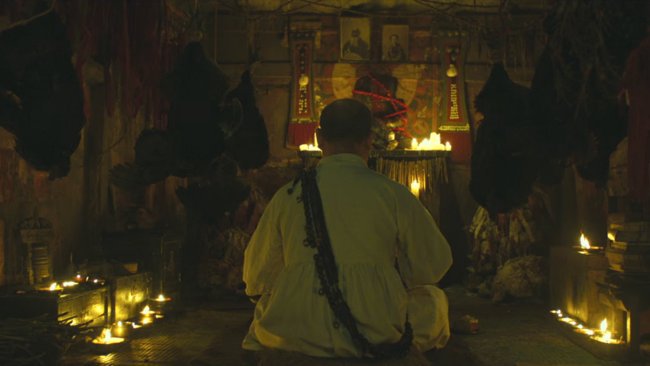
I’m quite a fan of Korean cinema but nearly all of what we receive shares similar, repeated flaws; tonal inconsistency, animal cruelty, casual racism and punishing length. The Wailing, a movie with plenty going for it, seems weighed down by these hallmarks more than most. It is an Exorcist evoking chiller that has sequences that feel more in keeping with Shaun of the Dead. The lead a bumbling, loving father seems based on Homer Simpson rather than Father Merrin, likeable and sympathetic but not exactly subtle. We all know comedy and horror can make happy bedfellows, a punchline and a jump scare share the same DNA, but here we zig-zag disconcertingly from farce to full on fear in a blink of an eye. There is an intense scene of animal sacrifice, one that with its cross cutting and prolonged duration evokes Apocalypse Now’s finale. I’m not sure if the creatures in it were actually slaughtered but considering what happens to dogs, octopuses and the like in other Korean movies I doubt anyone batted an eyelid on set. This always leaves a bad taste in my mouth. The movie plays with the racist idea that the immigrant Japanese man is responsible for the demonic epidemic spreading throughout the locality, merely as he is the sole foreigner. In a western movie you’d take this as a prejudice being set up to be lampooned but the movie plays this hand with a poker face. Na Hong-jin’s blistering The Yellow Sea had a similar inscrutable casual racism to it. Culturally, it seems only western countries are precious about openly distrusting the other, but the strong reviews of this movie from our countries rarely focus on it… and you suspect the same writers would throw an old Hollywood movie with similar sentiments under the bus. Why is what is now unacceptable when from a different era, overlooked when from another country? And then there’s that length. There’s plenty of bravura sequences – some of the shocks beggar narrative belief but are uniquely disturbing. But then there’s that farcical set-up that could easily be 30 minutes shorter. By the time you get to the suitably drawn out finale, wherein double bluffs are exposed and an agonising choice must be made, you like the protagonist are left exhausted, exasperated, confused and inert. That’s the director’s intention, but it is a frustratingly slow conclusion when you already have had your patience thoroughly tested. If you can break it up over a couple of days, The Wailing is a decent watch… but there’s just too much of everything for one satisfying sitting.

6

The Vault (2017)

1277CA4A-4CAA-49F7-ACC3-F2E457110816

Dan Bush directs Francesca Eastwood, Taryn Manning and James Franco in this horror where bank robbers unleash malevolent supernatural forces from a haunted safe.

You cannot set ghosts on fire. Stop chucking petrol bombs at them. Aside from that important safety announcement… the characters are detestable, the twists obvious, the poltergeist element strangely ignored for huge swathes of the second half. Even the “shock” finale, suggesting the money itself is haunted rather than the basement, has no fun with what could be quite a fruitful revelation. Taryn Manning puts in the sole capable performance even if she is essentially only transplanting her Orange Is The New Black persona to a rather poor genre mash-up.

3

Gerald’s Game (2017)

19CDC3E9-A98E-4706-B75C-967DD6978EE8

Mike Flanagan directs Carla Gugino, Bruce Greenwood and Henry Thomas in this horror about a woman left handcuffed to her bed with no chance of escape. 

The plus points; Carla Gugino carries on being one of the most overlooked, overqualified genre actresses around and there are truly unsettling moments of gore and delirium. The downside; Flanagan indulges his source material’s weakness to deadening effect. King never knows how to end his thrill rides and Gerald’s Game has one of the worst dismounts ever, here faithfully recreated. Also the author’s obsession with exploring incest abuse in gloopy suspensers leaves an awful taste in the mouth. This time overpoweringly so.

4


Riding in Cars With Boys (2001)

AA732F3B-EE0A-4D1B-994A-1EA798C7E503

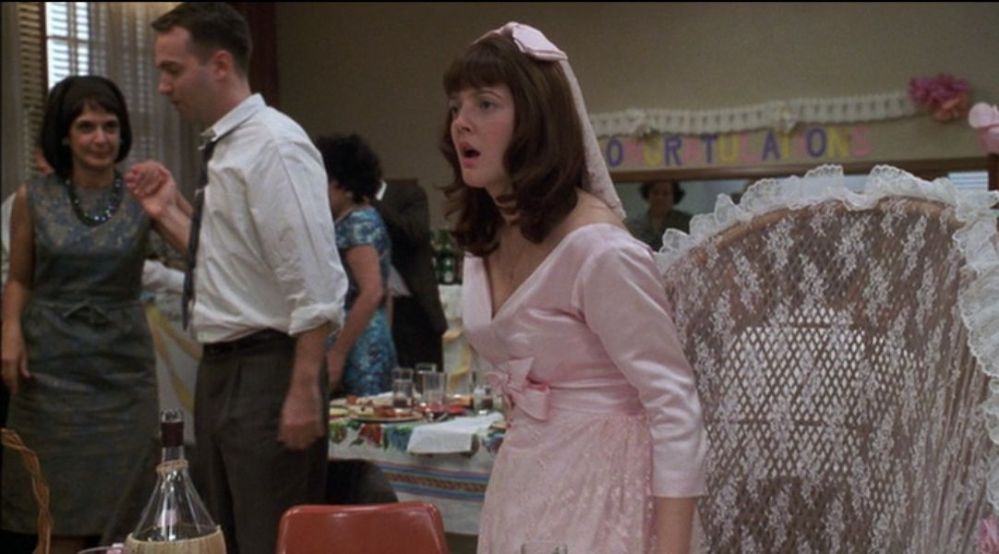
Penny Marshall directs Drew Barrymore, Steve Zahn and Brittany Murphy in this bittersweet true story of a teen mother facing rejection and disappointment throughout the sixties. 

A quite harsh drama sugarcoated with the comedy acting of overly-likeable performers. It makes for an imbalanced experience. You prefer it when the interactions are sitcommy and colourful, yet the film mines for weird unsettling energies that more ‘serious’ fare often miss when they goes this dark. When Zahn faces up to the fall out of his drug addiction or Barrymore is sidelined at her own wedding or the child is put in peril, it incites an uncomfortably emotive response from the viewer. It isn’t meant to be this hard… life sure, but not a Drew Barrymore movie. The end product is certainly uneven and often a little unsatisfying but has enough strong moments to pad out the quality. Brittany Murphy’s maid of honour speech, Zahn’s holding onto the baby tooth and a sing song car ride with Dad. Feelgood delights in a surprisingly, unsympathetic melodrama.

6

The Chronicles of Narnia: The Voyage of the Dawn Treader (2010)

62D10835-35E5-468A-A4CC-0F94263CB806

Michael Apted directs Georgie Henley, Ben Barnes and Will Poulter in this sea bound Narnia fantasy adventure. 

I have a soft spot for the Narnia series. My developing imagination being stoked by the gorgeous painted, slightly melancholy cover-art of the Eighties paperbacks. A talented man called Steve Lavis visualised C.S. Lewis’ fantastical otherworld by detailing sad lions and ominous ships next to curious teens in chunky knitwear and messy hair. That’s my basecamp for what a cinematic adaptation of the beloved series should be. And the cheap but threatening BBC series of old captured that vibe quite well. So these bland, weightless adaptations do little for me. They want to hit the same audience as Peter Jackson’s Lord of the Rings but are unwilling to invest the same heft into the world building or deliver thrills of any overwhelming scale. Maybe Lewis’ playpen doesn’t naturally lend itself to the scope and action of Tolkien’s but it certainly matches it in inherent magic and wonder. Dawn Treader has little bursts of excitement, moves at a decent (almost impatient) pace and even has two attractive child performances. Poulter and Henley are both game. But there’s no passion to the direction, lending a feeling to the adventure that nobody loved recreating any particular episode churned out. A bit more personality and care in the perils and chivalry and this might have been more than passable.

4

The Foreigner (2017)

67A6D09A-BEE6-42C8-928A-A1CE48BF2C90

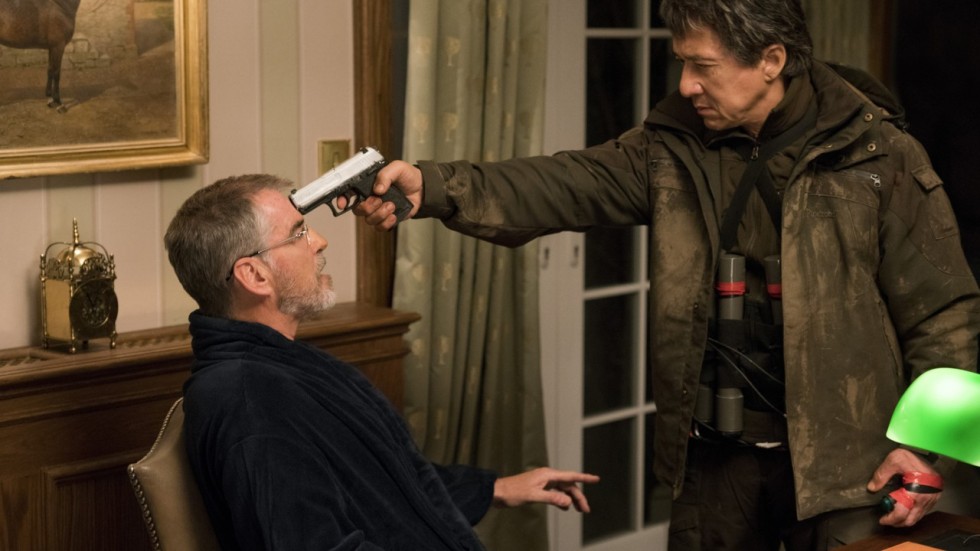
Martin Campbell directs Jackie Chan, Pierce Brosnan and Orla Brady in this revenge thriller where a grieving father (with a background in Special OPs) takes down the IRA.

When this is a Jackie Chan vehicle it works nicely. More subdued, in both stunts and tone, than you are used to from the Kung Fu clown, his share of the runtime mixes the gutting emotion of Arnie’s Aftermath with the geriatric thumping of the Taken series. Pierce’s half of the show is more muddled. He is fine as an oily Gerry Adams rip-off… in fact I’d controversially say, acting wise, it is his post-Bond highpoint. But the third act Shakespearean drama that unfolds around his own family, betrayals and reversals that have very little baring on glum Jackie’s vigilante attacks, over complicating an action flick with a very simple brief. As a Friday night thriller though this still has plenty of watchability.

6


USS Indianapolis: Men of Courage (2016)

96B3D316-43E3-4AAA-BEA4-63FB47D5B3CC

Mario Van Peebles directs Nicolas Cage, Tom Sizemore and Thomas Jane in the recreation of the World War II tragedy involving the delivery of an atomic bomb, the torpedoing of the unreported ship and the shark attack on the survivors. 

A shitty Pearl Harbour rip-off morphs into a dull shark attack movie… followed by a weak military cover-up court case finale for bad measure. Tom Sizemore gives a good impression of a Quint-a-like navvy (who foolishly isn’t a young Quint from Jaws). Everyone else turned up on their available days, sometimes obviously interacting at points when you just know both actors aren’t in the same watertank. Sloppy stuff.

3


What Ever Happened to Baby Jane? (1962)

89742A08-6527-4288-A535-C61BA80D6F36

Robert Aldrich directs Bette Davis, Joan Crawford and Victor Buono in this dark thriller about an ageing former child star who tortures her bedridden sister when she discovers their house is soon to be sold off.

The original hagsploitation / psychobiddy flick. The game lead performances are energised by the much reported off camera gossip that our co-stars were openly vile to each other. I mean neither of them served the other one a rat for dinner in real life but… maybe the opportunity to do so never arose. The fact that this was knowingly their last stab at retaining Hollywood A-List status certainly vibrates in their passionate sniping and distress but it also might explain why it is slightly overlong with extraneous moments of fraught emoting. These slightly overpower any tension creating set-pieces. For the most part this manages to hit the same malevolent sinisterity as Hitchcock’s Psycho and is almost as shocking. The highlights are Buono and Davis’ scenes together. These ripple with the excitement of two everyday grotesques feeding off each other. A rollicking night in, if not quite as taut as Hush… Hush… Sweet Charlotte. 

9

Love and Death (1975)

99B6150A-F49D-41A2-AD61-B7FE5CAA5189

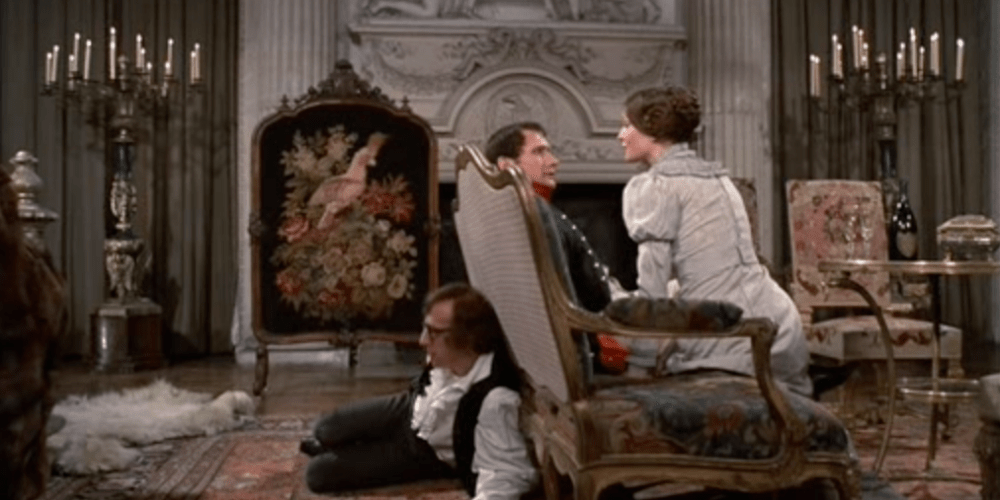
Woody Allen directs himself, Diane Keaton and Jessica Harper in this spoof of Russian Literature. 

About as highbrow as stupid gets. Diane Keaton is funnier as the sexually aggressive lifelong love than Allen is as his stock nebbish pragmatic romantic. There are as many grindingly annoying sequences as there are laugh out loud gags. It looks handsomer than it is.

5

Scum (1979)

6C660919-C538-478A-AE6E-32A7BA0A9B00

Alan Clarke directs Ray Winstone, Mick Ford and Philip Jackson in this unflinching look at Borstal politics, that became a hardman cult classic. 

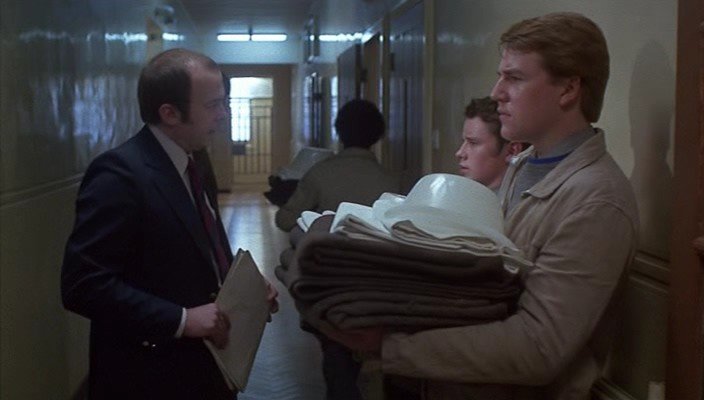
Cor! There’s a visceral thrill watching a pudding faced Winstone endure the grind of being a new inmate with a reputation at the young offenders unit. He bides his time, takes his knocks and when his opening to take power, become “THE DADDY”, presents itself we follow him, we are hot on his shoulders, almost like suddenly we are thrown into Birdman or Goodfellas, and tool up with him. Pool ball in sock, winding our way back and forth through the prison block. We are lashing back with him. Oof! Clarke captures that visceral rush, too well, in all honesty. He reveals all the depressing nastiness of an institution; you can feel the coal dust, smell the bleach, and see the strings controlling the warders controlling the bullies controlling the vulnerable. The first hour, with its quaint yet quotable extreme vernacular “You fuckin’ well do now, slag! There’s no dolly mixtures here, poofter!”, is about as thrilling as lefty, kitchen sink British cinema got. Its racism, violence and anti-authoritarianism is electric shock therapy compared to the nostalgic puddings we get now… old luvvies on Saga packages pretending they’re the queen herself. The narrative misses a step when it shifts its attention away from Winstone in the second half… the  gruelling tragedies it serves up in the woodshed deck scrubs all the laddish braggadocio away. The conclusion is a harsh shock too far if you watch Scum as a six pack and takeaway curry movie. But Clarke uses unrelenting grimness as his cinematic grammar. Making the anarchic and well read rebel character of Archer (brilliantly, sneeringly played by Mick Ford) such an almost surreal treat. As he cuts about all the nasty – shoeless, moaning about the lack of Dostoevsky novels and being vegetarian just to cause the screws extra hassle – he emerges as the piece’s true hero. Winstone, when he becomes THE DADDY is merely joining the governer’s pecking order, conforming to the low expectations society has for his like.

8