Kiss Kiss Bang Bang (2005)

image

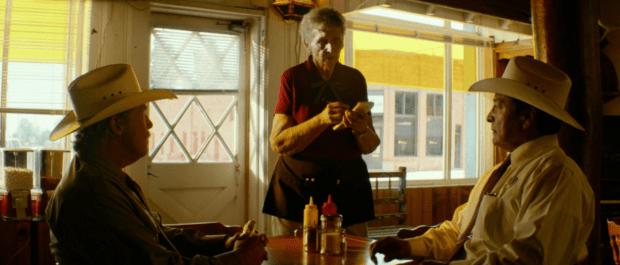
Shane Black directs Robert Downey Jnr, Michelle Monaghan and Val Kilmer in this meta Hollywood buddy detective romance thriller… Set at Christmas!

Prime Shane Black product containing all his tropes and obsessions except the smarty pants, foul mouthed kid. It brought RDJ up up up from cinematic footnote to Iron Man mega star, the effervescent Michelle Monaghan into a slinky Santa costume with her best written part ever, and Val Kilmer just a little dignity after he flushed his not overly deserved stardom down the drain after Batman. If you love this kind of thing, you’ll love this kind of thing. There’s no real depth to it but an abundance of delicious flavour.

10


Mesrine: Killer Instinct (2008) / Mesrine: Public Enemy #1 (2008)

image

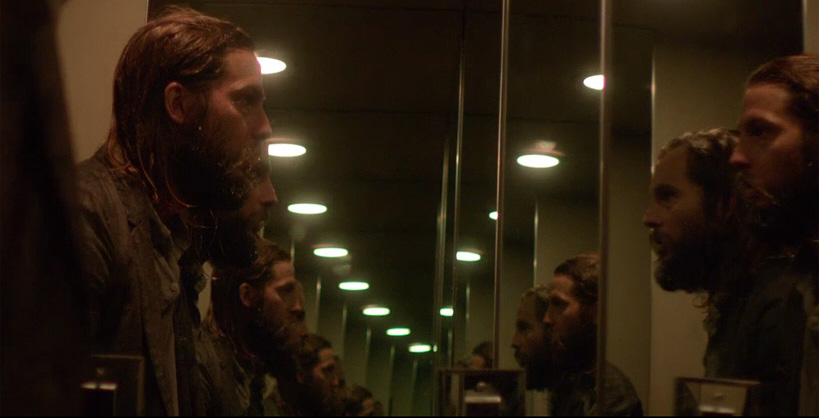
Jean-Francois Richet directs Vincent Cassel, Cecile De France and Ludivine Sagnier in this epic look at France’s infamous criminal anarchist globe and decade crossing crime spree.

“If there’s ever a film titled Bourne vs. Mesrine, the bout will end in the first round and the crown will return to Paris.” Roger Ebert, 2008. Close but no thumbs up Ebert … but you are right, Cassel is electrifying in his ever dominating 4 hours of screentime as the unpredictable, charming, vicious and unfiltered robber, kidnapper and terrorist. Mesrine, a sociopath with dozens of real life deaths to his name,  might be a troubling subject for such a lengthy celebration (warts and all, but it is a pleasurably amoral party and award ceremony for the voyuer) but to be honest as presented here his unique élan and sheer balls out mayhem deserves the big screen treatment. The only shame is aside from Cassel’s magnificently shifting turn and some big budget action, the mini-series length becomes a little deadening. The often chronological order means the film’s flits between Mesrine doing something outrageous then something not quite as outrageous then something outrageous in 1973 but now cliched cinematically after decades of Scarfaces, Goodfellas and Choppers… and then back to something genuinely shockingly outrageous. A loop of mania and jaw drops of varying numbing severity. It might really work better over four or five more textured hour episode, adding room to gasp in and out between that breathless rush. But then, like Tinkerbell on coke and champagne, lovely, captivating Ludivine Sagnier turns up for the last hour and unleashes some furious screen burn hotness on us, distracting us from Mesrine’s desperate cycle. She needs to be in more films, she is a true movie star, you can’t take your eyes off her whenever she’s on screen (and in a film with a high 60-70s style bimbo and “Bonnie” proof…. that is unabashed praise to walk away with come final credits). Still their violent comeuppance is expertly handled from different points of view throughout the lengthy structure. If there were a few more rest breaks this truly would be a gripping afternoon of crime time cinema.

7/6


Serenity (2005)

image

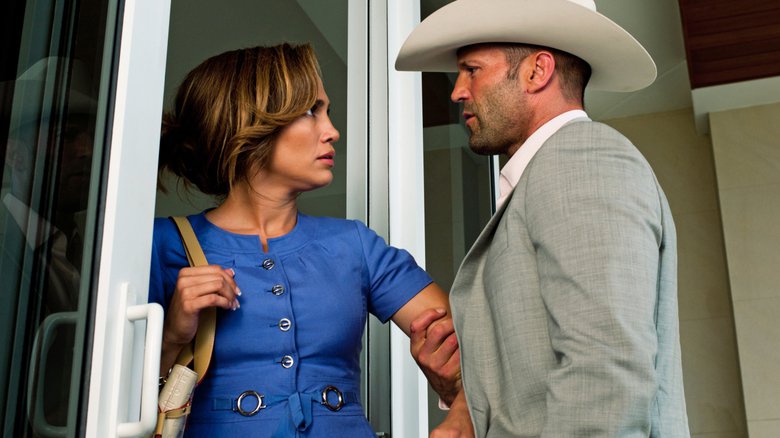
Josh Whedon directs Nathan Fillion, Alan Tudyk and Summer Glau in this big screen conclusion to the short lived but much loved TV space western Firefly. 

Part Han Solo, part Outlaw Josey Wales, all Nathan Fillion (a loveable actor like Bruce Campbell or Timothy Olyphant that just seems to exude a screwball masculinity that comes from some never seen bygone era), Cap’ Mal Reynolds is about as much fun as you can have in space. And his crew have that lovely facing certain death but there’s still time for sarcy interplay vibe that only Whedon can deliver. As space romps go this is not any better than say Star Trek: Beyond below… at times the rushed effects and TV designed sets look downright clunky and you never shake the feeling you are watching the best scenes from a never made final season compressed awkwardly together… but it came at a time when Star Wars had disappeared up its green screened arse and 1995’s Space Truckers was as about as close as we last got to this kind of cosmic adventure. And Space Truckers wasn’t really fun, cosmic or adventurous… Hopefully you get my point? This is, in spades. Firefly and Serenity were a lone beacon for an all but abandoned genre 10 years ago. It existed on the raggedy edge, giving a glimmer of respite to sci-fi fans that we would get our genre back. Now with a Guardians and Awakening Forces still fresh in the mouth it might not seems quite so important. But at the Ealing ABC, before they knocked it down, that autumn night I caught this, it was like coming home. Who cares about the occasional fuzzy bit of CGI when Glau is so balletic in her smackdowns or Adam Baldwin so self centredly scuzzy in his anti-villian banter? Popcorn.

8

X: The Man With X-Ray Eyes (1963)

image

Roger Corman directs Ray Milland, Doris Van Der Vlis and Don Rickles in this B- Movie fable of a doctor who expirements on his eyesight to give himself super-vision, then cannot handle what he sees.

We’ve now reached the age where Tim Burton’s earlier, better works are ripened for remake but this is a title I always associated with Burton. Every year a fresh report that his own take of the 60s cult classic was on the way and this was pre- the Planet of the Apes “reimagining” when Burton had yet to make a soulless dud, three words that have all but defined his later creative output. So I finally got around to watching the original and it’s a curio for sure but not worth your time. Trying to match a similar vibe to tragic but gripping fantasy of The Incredible Shrinking Man, it comes across as merely dour and episodic. Former Oscar winner Milland is clearly slumming it, submitting to the unlikely twists the tale takes his Doc on. And then the shock ending is heavy handedly guessable. A long 80 minutes for little but kitsch rewards.

3


Star Trek: Beyond (2016)

image

Justin Lin directs Chris Pine, Zachary Quinto and Karl Urban in this third / thirteenth entry in the Starship Enterprise based series.

Star Trek means much more to me than even I consider. Natalie and I have started rewatching the Original Series, and I constantly find myself surprised at how many moments I can recall from my childhood cuddled up on the sofa with my Dad and sister after work / school, in the BBC2 slot that had this, a good western or Laurel & Hardy every early evening. Real nostalgic deja vu! I must have watched some of those episode half a dozen times in my youth, yet I would not have considered myself a true fan. The films maybe have never really lived up to the primary coloured philosophical takes on what it means to be human in space, what it means to be part of a society (the crew / ensemble) when such a thing seems alien to you. The plot of the telly episodes often is the small scale, big theme stuff like a stray mimics humans or a crew member loses their humanity, something or someone develops god like powers. Meaty chew for a Western in space with a kick ass cast. The films have always been at their best when they just try to be romps, not stretching the morality play format that hit the spot at 45 minutes but seem overwrought at 120. Sorry Trekkers,  but no one ever expects a Trek to be the best film of the year (the balance between what a rabid fan base and the majority of people who just want a good night at the multiplex is impossible to get perfect – the formers’ demands and nitpicking makes everything else second guessed), and Beyond still doesn’t come close. But it possibly is now my favourite Star Trek flick as it is the most simply entertaining and satisfying. Three films in and these guys have their chemistry down pat – one part mimicry, two parts kids in the playground getting to play their favourite character again (none of that X-Men end of their contractual obligations laziness either!). Karl Urban’s Bones really stands out, his gruff pragmatist’s incredulous reaction getting the big laughs. And Lin brings some 3Dimensional verve to the action. Both the destruction of the iconic ship, and a chase around the wreckage soon after, are series highs in terms of set pieces and exactly the kind of pulse quickening thrills a big summer movie should deliver. So the plot ain’t nothing new, the MacGuffin looks like a toilet cleaner you stick on the rim and Idris Elba’s unrecognisable villain is an afterthought… This is still going to make you leave with a big smile on your face, especially when that magical theme music kicks in.

7

The Bourne Identity (2002) / The Bourne Supremacy (2004) / The Bourne Ultimatum (2007) / Jason Bourne (2016)

image

Doug Liman (1) and Paul Greengrass (2,3,4) direct Matt Damon, Franka Potente, Chris Cooper, Clive Owen, Brian Cox, Joan Allen, Karl Urban, Julia Stiles, David Strathairn, Alicia Vikander, Tommy Lee Jones and Vincent Cassel in this film series following an amnesiac CIA assassin crossing the globe to rebuild his memory and avoid the authorities. 

Wednesday was Jason Bourne Day. One of cinema’s finest franchises and hero characters returned to us after almost a decade’s rest (and yes… I know about Legacy / Renner and I don’t actually think it’s all that bad… but that is not what Jason Bourne Day is about). I frantically went through several large boxes of just moved DVDs before breakfast, actually growing quite worried the original trilogy had been lost in transit. A massive wave of relief washed over me when I found them in the very final box, in the deepest darkest corner. I now know exactly how those analyst extras at Langley feel. That Jason Bourne is frustrating to track down.

The Bourne Identity is just a perfect piece of entertainment. It is an espionage thriller with outstanding action… sure, sure. But it shares more in its DNA with The 39 Steps, The Lady Vanishes or Romancing the Stone than it does with Bond. Essentially it’s a romance on wheels… With outstanding action. Damon’s Bourne, in this standalone work, is more Boy Scout – polite, efficient, skilled. There’s a charming dorkiness to his shock at himself when he efficiently takes down an embassy or cleans a room of fingerprints while his lover sleeps. An anger and confusion bubbles away in Damon’s first take, he seem more on the brink by not having answers than when he does when he gets them. Potente makes an ideal foil for him, scatty when he is focussed, emotional when he is detached, vulnerable when he is invincible.

Their chemistry is great and that chalk and cheese dynamic expose bigger differences in the two good looking kids on the run. Marie is a drifter, rarely paying her taxes or having a fixed abode or even country, a hedonist. Bourne is military trained (and oh my how convincingly so, given Damon’s previous work in indie dramas and comedies) and as revealed in later films a true patriot – not just a killing machine but a willing part of the right wing system. In fact, when we visit his Paris home, it is sparse but expensively furnished, there is a surprising abundance of quality cooking utensils (The Jason Bourne Cookbook, anyone?) suggesting that Bourne has his own life he is abandoning by not completing his mission and coding in… unless the CIA just kit these homes out of a high-end catalogue.

image

The ending this version reaches is a happy one where Marie is settled with her own coastal moped rental cafe and Bourne, now the drifter, turning up on her door. The utopia Liman imagines for them is quite the middle class, libertarian compromise- small business owners in paradise with no one to report to and no reason to keep moving. A rare moment of happiness in the series entire. And then Moby’s Extreme Ways strikes up confirming the great time you’ve had. “Extreme ways are back again, Extreme places I didn’t know, I broke everything new again, Everything that I’d owned, I threw it out the windows…” I cannot think of a pop song and movie series that seem so entwined in their co-existence with each other.

The dirty basements and dirty noise of a night club or rave is where Jason would party if he ever got the chance. In the earlier films, Bourne does have a winning feeling of a younger and fresher gap year Bond. Whereas 007 would receive a mission and then follow it via a series of luxury hotels until a global threat is neutralised, Bourne is just trying to survive day to day, stay off the grid and maybe learn something about himself at each new destination. Whereas as Bond or Ethan Hunt have a whole array science fiction gadgets at their disposal, Bourne improvises and subsists on what he acquires, whether that be a cheap Nokia (often), a biro, a corpse, a magazine, a hardback book or a chair leg. And whereas Bond or Hunt are fantasy action figures whose abilities and emotions come straight out of a comic book (not a criticism given the needs of their own stories), Bourne reacts and emotes with a greater level of verisimilitude. He exists in a real world, one of cold, shock and pain. Even when doing the impossible Bourne is a believable human being – his hands shake, his bones shiver, there even is a tear in his eye at points.

This effort towards relatability is what makes Liman’s action so engaging. You feel bullets tears, a Mini rattle and shake as it is driven down stone steps, ulnas break, oxygen leaving the lungs as throttled. Greengrass would take this method of putting-the-audience-as-tightly-through-the-wringer-as-the-hero-is up to the next level but it was Liman’s inventive flair for finding the grit in the fantastic, the physics of the astounding that sets the series up right. A full English breakfast of great storytelling and invention that powers the future movies despite the different chef and ingredients later introduced. With its incredible wintry Paris car chase, the cat and mouse stalking of Clive Owen’s asset in a desiccated cornfield and that final jaw dropping stunt in the safe house stairwell, a new bar for set pieces was raised and we didn’t even need a nuke or a laser satellite or WWIII to be the stakes.

image

That good feeling doesn’t last long however. When we return to Jason and Marie, a couple of years down the line in Goa, the super weapon is wracked with impenetrable memories, night terrors and guilt. And then Treadstone (in the shape of Karl Urban’s brutally efficient FSB agent) turns up and we get the first of three early shock deaths, a trademark of the series going forward. In terms of scrubbing out a happy ending to keep the franchise chugging along you’d think fans would be up in arms at Marie’s death, like Newt and Hicks’ callous but essential offing at the start of Alien3 split followers of that series right down the middle. Yet after the sucker punch, that real emotion unique to Bourne kicks in, her absence is handled sensitively and we see a never resolved shift in Jason. The Boy Scout is dead and he finally understands the human cost of the wetwork he did, the grief it causes.

Interestingly this is the only first-act killing that motivates Bourne into revenge mode (Landy: The objectives and targets always came from us. Who’s giving them to him now? Nicky: Scary version? He is.) and even then he would still been caught up in this narrative if Marie survived, as Treadstone always intended to frame him, Marie was mere collateral damage. These early death are less plot catalysts and more fair warning to the audience of the narrow margin that Bourne operates in when he takes on the system. The gaps he dives through and punishment he takes cannot be endured by hangers-on or even those closest to him. To do what Bourne does, you have to have his training and programming and fitness. Marie’s death and the subsequent copycat ones in Ultimatum and Jason Bourne are a readjustment of the stakes after Liman’s upbeat conclusion. Greengrass’ interpretation of Bourne’s world is unavoidably deadly and uncaring, you need to be Treadstone to beat Treadstone.

Greengrass’ successes in taking reigns and being long term manager of the series are at their most apparent in Supremacy. He merely tweaks Liman’s style of on location action by getting the camera right into it. The Moscow car chase has to be one of the most bruising and exhausting set pieces ever filmed, and all his low octane, high pressure sequences becomes more confidently sustained under his stewardship. Chases last an excitingly lengthy 15 minutes plus, when the net closes around Bourne there is never a simple exit, when hand to hand combat breaks out it is fought desperately to the death.

image

Greengrass is fascinated with surveillance culture and technology. Whereas as Julia Stiles’ Nicky Parsons is using Word to create wanted posters in Identity, from here on out we get the feeling of what the CIA might genuinely deploy in terms of resources and manpower to neutralise a threat. The stakes increase with each instalment as surveillance tech dominates and Bourne makes for an interesting anachronism as one of the few people his age without a Facebook or Twitter account. (Although this is less to do with him not wanting to get flagged by the NSA for Instagramming his meals, more to do with the fact when he started life on the run mobile phones were only able to make mere calls and the internet was still in its infancy to the public.) The series works as an interesting artefact, visually marking our stampede into the digital age like no other.

Finally Greengrass embraces real world geopolitic in his thrillers. Whereas as Identity had a vague fictional African dictator that could have appeared in any film since 1960, the villians in the later episode are more conceptual – oil rights and lost funds, state torture and behavioural modification, digital privacy and malware. It doesn’t always make for the most fruitful plots but Greengrass’ films appear on point with our times rather than unfashionably playing catch up.

Supremacy ends on two interesting codas, both of which had potential but were fumbled in the most recent films. The first has Bourne visit a young lady orphaned by one of his assassinations. He makes his peace and stumbles away (not sure what value it was to her to have a half dead killing machine appear in her living room… Something to do with knowing and facing the truth being of upmost importance… The franchise’s core message?) This could easily set a template up for Bourne’s motivation in future episodes, where he could resolve the wrongs he did when he was a CIA puppet. A route ignored, and a shame as him limping away into an urban jungle like Bruce Banner is one of the definitive images of the series. The second, ending Supremacy on an incongruous upbeat note, has Bourne call the CIA and let them know he’s back on home turf. Then he disappears into the street crowd of an NY summer. A fun little tease that Greengrass choose to rewind the clock at the start of Ultimatum on, so we only spend the last act stateside, so a promise essentially undelivered on.

image

Now Ultimatum is a very good action flick, set in a world we already love but it is also the first entry where the A* quality drops. Again there are two fantastically sustained sequences (Bourne trying to guide a journalist from grab teams and CCTV cameras in Waterloo station, and an epically prolonged chase through Tangiers that delivers on all the brutal close quarter combat, vehicle stunts and that stalking, in the mix camera work the franchise made its own) but as a whole it feels unnecessary. Bourne tries to resolves his bad memories of the Black Briar / Treadstone training programme (I’m pretty sure it is implied by Brian Cox’s character they are the same project just rebranded – however outside of Identity it is never made clear who is a genuine graduate of the killer factory). The journey to get back into NY feels superfluous, we could have got there without seeing it and be none the dumber. Yet what happens in NY is nowhere near as exciting as what comes before in Berlin, Waterloo and Tangiers. The upshot is David Webb himself choose to be the mindless killer they made him, but by the same token he has now rejected it. There’s also a bit of redacting to his and low level CIA bad penny Nicky Parson’s backstory. They had a forgotten love affair it would seem. Aside from framing those brilliant set pieces it all works out a bit rote. We end on conversations rather than resolutions (let alone some top end bang bang) and the final frames echo how we met Bourne in 2002, left for dead, afloat in the water. The narrative “tied off” to use CIA speak.

So 9 years dominated by Greengrass and Damon explicitly stating the trilogy was over as they had no story left to tell and now we get this week’s Jason Bourne. They were not lying… as the latest entry exacerbates the ricketiness of Ultimatum’s non-essential story. Here Bourne pops up on the grid again while the CIA track Nicky (she’s since learnt hacking and self defence but not how to buy a hoodie when she is apparently the only blonde person in Greece). She suggests his father’s terrorist death (news to us) was highly suspect meaning his choice to join Treadstone might not have been as free as was previously revealed. He’s uncovering new memories that tally. So we are sadly sticking to the Bourne remembers something, triggers an alarm at Langley and all hell breaks loose format again with a bonus Harry Potter / Luke Skywalker chosen one narrative jerry-rigged on for… well, reasons. Considering the amount of chaos and carnage that takes place whenever Bourne does decide to use a passport they actually have quite a strong case for trying to contain him.

image

But that chaos and carnage does still make this fourth plate at the bare knuckle buffet worthwhile. Damon and Stiles racing through Greece in full austerity riot mode, before the city is completely locked down, matches anything the series previously gripped us with. You feel the jaws of the bear trap snapping shut as they dodge water canons and Molotov cocktails. The closing Las Vegas SWAT van chase is equally impressive – bringing a tangible spectacle in a summer of wispy CGI FX. You cannot fault the series’ adherence to keeping it real and in these kinetic moments Jason Bourne more than justifies its existence. Not being quite the stamp of the original trilogy, and frustratingly uninspired in its dusty template, but that still leaves us with some unusually masterful talent at the hotdog and nacho stand this blockbuster season. Who can blame them for giving us what we wanted?

And here’s an evolution: Vincent Cassel’s nameless asset has to be the most convincing villian they have set against Bourne. Whereas nearly all previous assassins activated have been lucky to survive their one scene, Cassel not only goes the distance but seems to be viciously troubled. You know that if Bourne loses an inch to him, it shan’t be a quick and easy death. He might even be an alternative look at what Bourne may have become if he did execute Wombosi in front of his child and carry on down into the Black Briar. Not all villians are quite as strong though, Tommy Lee Jones takes on the pointing at the screen and barking orders Deputy Director role previously lived in by many another Best Supporting Ocsar winner adequately but his wrinkly  face makes him seem like some distractingly weird Tommy Lee Jones hermit crab. Like a Tommy Lee Jones living inside another Tommy Lee Jones.

Perhaps the one area where Jason Bourne feels initially fresh is Alicia Vikander’s digital security expert. The only new character Bourne forms an attachment with and also the only one whose motivations are not black and white. I was so unsure about what was powering her deviations from protocol that wild theories were forming in my head. We are all of sudden meeting Webb Senior in flashback, so could she be a sibling of Bourne’s? Is she maybe a mole for the Anonymous style hackers we find ourselves caught up with? So when she finally is revealed to be… *** SPOLIERS*** a mere Young Turk looking to take over Tommy Lee’s post with the most elaborate and unlikely power grab ever, using dicey game theory that the mayhem of Bourne turning up on the CIA’s doorstep after a decade will let her get away with murder! *** SPOILERS OVER*** you can’t be help but disappointed about how both run of mill yet also ridiculous it all is.

image

Bourne’s relationship with women define him throughout the series, the men are deadly brainwashed zombies or untrustworthy bureaucrats (fishermen excluded). Marie signified a new life, even a chance at some abandoned humanity. Pamela Landy became someone in authority he could trust from a distance (please bring  Joan Allen back for the sequel, especially, if as tantalisingly suggested, Bourne is coming in from the cold). Nicky… well just some consistency in his life or maybe a chance not to repeat the mistakes he did at putting Marie at risk… Listen, my theory falls apart at Nicky. She violently changes from film to film; Intern / Victim / Liar who pretends her so called night with Bourne puts her on anyway a par with lovely German Marie / rubbish version of Bourne on the run. Let’s not look at Nicky too deeply for she is the series’ most interchangeable and weakest link, an afterthought they kept bringing back for no real purpose but continuity. Vikander’s Heather Lee makes it to the end this time and seems set up to return for JB2, their alliance uneasy as Bourne knows the skeletons in her browsing history, knows she’s just as untrustworthy as a Conklin, an Abbott or a Vosen. If there is one way David Webb has developed over the series he has finally learnt to trust no one, not even a pretty young face. The millennials are just as corrupt as the baby boomers. Only bullet scarred and greying Generation X can be trusted – HA!

And Bourne has developed over 15 years. The new film opens with flashbacks of all his previous dark deeds, but it has been edited from quite a few pre-existing scenes where Bourne actually choose not to kill. He may have had the drop on Wombosi, Landy, Abbott and Paz in the original trilogy but each time he chooses not to submit to his Treadstone programming. His humanity beats Treadstone. It is fascinating watching Identity seeing how often Damon doesn’t pick up or takes out of play the gun. Three more movies though and his curious but hopeful amnesiac has been ground away by Marie’s death, by the years on the run, by the constant betrayals, by the shocking memories of the killer he chose to be before we fish him out of the Med that fateful night. And the Bourne we rediscover now is near wordless, stripped topless and fighting, literally, to stave off any further revelations. He is not interested in the truth anymore. It has flayed him of all he was, his search for it has reprogrammed him into a new machine. One who can relate or trust no one, one who doggedly tracks down answers he no longer wants to hear, no longer knows what to do with once he has them. Damon embodies a deadly man, not quite yet out of control with a physically impressive acting return, real star power inconceivable back in 2001 when he seemed miscast but then knocked it out of the park. Even if the continued adventures are diluting themselves he keeps the spirit of the endeavour going admirably.

10/10/8/7


Film of the Week: Gone Baby Gone (2007)

image

Ben Affleck directs Casey Affleck, Michelle Monaghan and Amy Ryan in this Boston set Dennis Lehane thriller about a child abduction.

Ben went from movie star punchline to a creative force to be reckoned with here  (even I, a Good Will Hunting and Kevin Smith fan, had lost faith in him at this juncture) and his brother emerged as the most interesting leading man; a bundled up chain reaction of working class masculinity, doubt and intelligence. The thriller itself is gripping, the cast is Prime A right down to the bottom of the credits. Only the final revelations are fumbled – there’s a bit too much handholding flashback which insults the engaged viewer’s intelligence. And Gone Baby Gone really fucking engages with its well realised characters and locale, burst of taut violent action and moral dilemmas that linger with you long after the popcorn has been swept up. If anyone ever says to you “They don’t make em like that anymore” pop Affleck’s directing debut on and watch them get lost in these smart, old school rhythms.

9

The Blair Witch Project (1999)

image

Daniel Myrick and Eduardo Sanchez direct Heather Donahue, Joshua Leonard and Michael C. Williams in this seminal found footage horror.

One of the greatest horror film ever made (I still remember being freaked out after a Halloween screening when I lived on the outskirts of town and then had to walk up an unlit farm path to get home) which does rely on your ability to imagine what is occurring in out of frame and get over just how annoying its threesome of filmmaking slackers are. Only really a satisfying experience if your mind fills in the blanks but the darkness and VHS grain add plenty of blanks to fill. Horror inception takes place in the slow build of the first act as ghost stories told by vox pop interviewees (credit due to BBC’s Ghostwatch), as does the fact a dozen viewings later I’m still not sure what was in that parcel left out side the tent… but I do know I still don’t like it one little bit. The ending is a PHD in subtle terror, the build up is what you make of it. Smartly conceived and finely executed. An inspiration to low budget filmmakers everywhere.

9

The BFG (2016)

image

Steven Spielberg directs Mark Rylance, Ruby Barnhill and Penelope Wilton in this faithful adaptation of Roald Dahl’s children classic about the friendship between an orphan girl and giant who blows dreams through children’s windows.

Spielberg’s 30th feature feels rather anonymous. It is not obviously a work by him – even though it features all his now classical framing, lighting and work with colour; a fine lead child performance coupled with an awe inspiring, perfect one from current muse Rylance; and that near the knuckle family friendly peril that his name became a brand on. If Dahl and he share anything it is their ability to take a child’s through their new worse fears and after confronting them on that rollercoaster, let the safety barriers come up and the relief wash over the reader / viewer. Here the fear of being snatched out of bed and eaten by giants is masterfully realised and toyfully concluded. This moves onto the wonder of The BFG’s extensive dream operation and conversations betwixt Sophie and he about Giant Country, friendship, lonliness and guilt.  This was always going to be a sticking point for any true big screen reinvention of the childhood favourite. A lot of the book is merely a long if charming chat in a cave. This running time gobbling middle sequence has some of the best moments – anything involving dreams or Rylance ability to convey both amiability and deep sadness in one look is truly the stuff of magic. And once we eventually shift into visits to the Queen, whizz popping corgis and helicopter attacks the film moves up a gear but some of that quality uniqueness is left behind. Yet for all that silly and satisfying spectacle that wraps the tale up, it is the chat heavy, one location trapped, middle section that wins your heart if not the box office.

7

Another Fine Mess (1930)

image

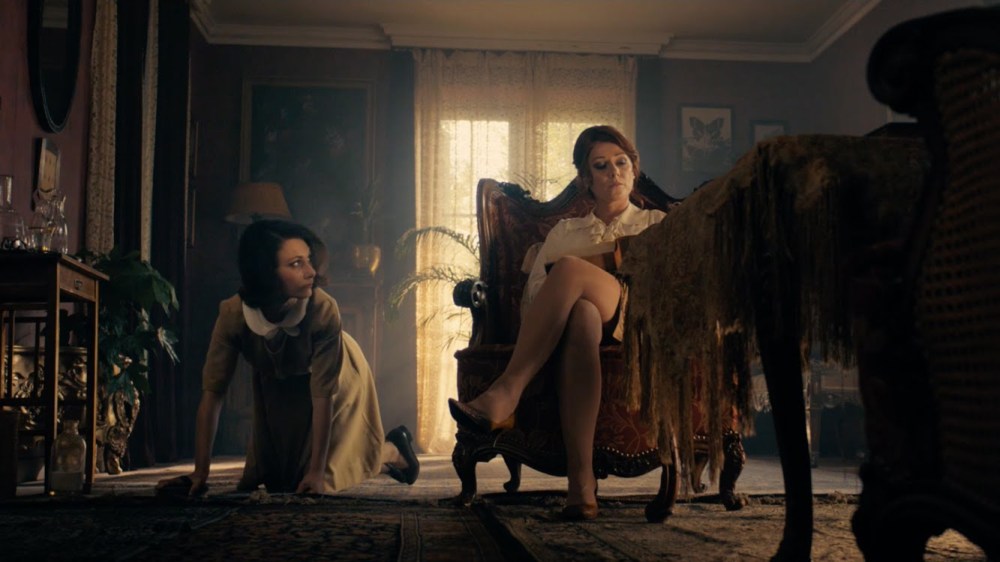
James Parrot directs Stan Laurel, Oliver Hardy and Thelma Todd in this short where the boys have to (like HAVE TO) pretend to be the owner and servants of a mansion.

A daft little time waster, more farce than slapstick. Great talkie era cast of faces and some expectedly nice moments from Stan.

7