A Wrinkle in Time (2018)

0A2BFD86-0ECB-4488-971F-245463542122

Ava DuVernay directs Storm Reid, Reese Witherspoon and Chris Pine in this kid’s fantasy about intelligent children exploring other realms to find a missing daddy.

I reckon I found the sheer ego of a house sized Oprah Winfrey (top billed despite less than 20 minutes screentime) as laugh-out-loud chucklesome as much she probably thought it perfect. This ridiculous image is the forger’s note that unravels all that is wrong with this clunky spectacular. It has been made in an echo chamber where values like self worth, diversity and literacy have been made paramount over joy and pleasure. We are presented with a childhood home full of tasteful furnishing and non-fiction hardbacks, which lacks toys and when the kid’s friend visits, he is given a dry salad for a snack. Straight faced. For reals! It is a fantasy where the reality is less believable in its utopian middle class obsessions than the wonderlands we (eventually) visit. Solemn kids mope around a prison that lacks sugary drinks or video games. No wonder they go mad and start imagining a world where Reese Witherspoon turns into a mega-leaf and Zach Galifianakis still has a movie career. A Wrinkle in a Time has its heart in the right place, has a better sense of wonder than Spielberg imbues Ready Player One with, and it even pulls a surprise villian out of its arse towards the end that suddenly grips you to the meandering plot. But ultimately it is a movie made directly for right-on moms, that will only fitfully entertain younglings. When it accidentally cheers up and cuts loose, you can just about see how it almost could have been a new children’s classic.

5


Ready Player One (2018)


A1DC0616-1DBA-4ED7-BB71-11FB7CEA5A49

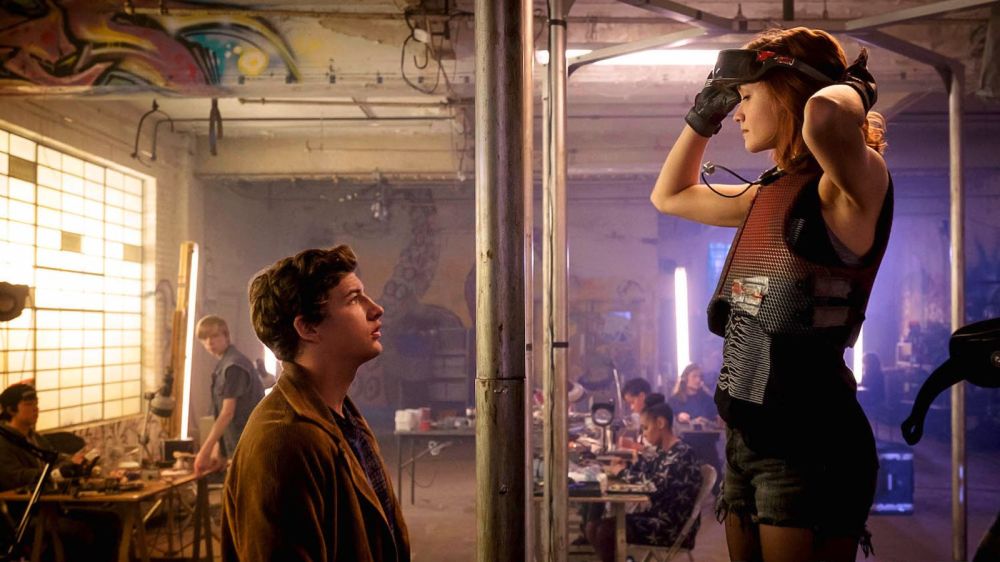
Steven Spielberg directs Tye Sheridan, Olivia Cooke and Ben Mendelsohn in this sci-fi adventure about kids trying to find the easter eggs that will grant them control of the immersive VR game that dominates their lives. 

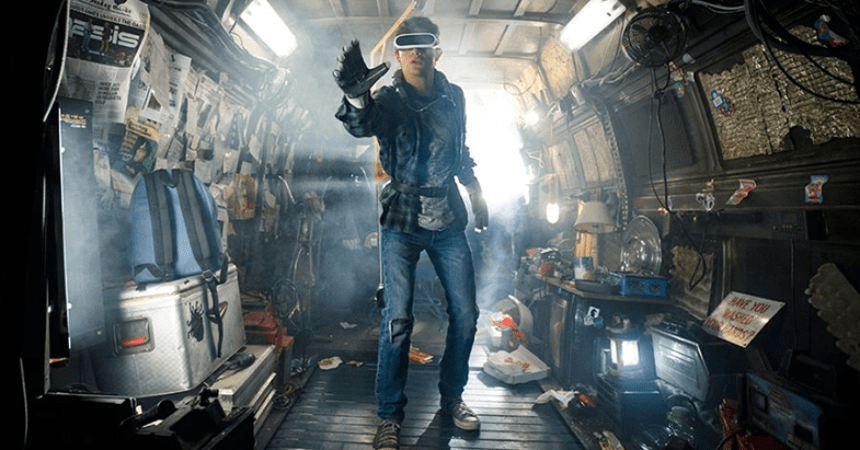
Where to start with Ready Player One? Is it any “good”, I guess? By modern blockbuster standards, it is standard. The human kids are blank husks. Olivia Cooke is undeniably cute and has a fake birthmark here but that’s where the sparkle of personality ends among our heroes. These dead eye automatons aren’t 21st century Michael J Foxs or even Sean Astins. There are lots of FX but very little wonder. Once you enter into a world with no limits you really want to feel overwhelmed… yet the OASIS delivers exactly what you’d expect from it and often with computer animation that feels slick yet rote. It has the same uninvolving sheen and lack of consequence that many of the Marvel set pieces suffer from. There’s no overriding risk. Sure, “death” means you can lose all your fantasy wealth but considering the characters will always have their skillset to reacquire all the gold coins and inventory it hardly feels like a major set back… and not a consequence that ever is really explored.

So where’s the thrill and tension? It is telling the simpler real world sequences of kids running about factories and hiding behind couches raise the pulse more and feel more Spielbergian (The Goonies meet Minority Report) than all the twisting cityscape demolition derby racetracks and massive raids on fortresses of doom within the game. Even then we hardly reach Inception levels of invention when physical attacks on the plucky gamers in reality effect their avatars in the dreamscape. A car smashing into their mobile gaming van creates an inconvenient wobble but we are hardly seeing that twirling, gravity defying corridor fight counter-physics that Nolan so persuasively dropped on us.

A0FA1E5A-21D4-4584-A09F-C222A061DD39

Much has been made of the tsunami of pop culture and geek culture references that dominate the game. The OASIS is a world where you can play as Lara Croft or Robocop or any signifier they managed to clear the licensing rights too. But in all honesty a cheeky nod to the Last Action Hero and a brilliant sequence that recreates Kubrick aside (seriously, these five star 10 minutes parallel the high points of Back to the Future Part II and Batman Vs Superman in their gleeful meta-meatyness; the undoubted highlight of the entire adventure), I met it all with a shrug.

Vintage-wise, these are precisely my generation’s toys and iconography but it feels either too obvious or too obscure. All bunged in without wit and often taking things to a show-off level of specificity that it plays only to the dullards. And dullards worse than me, who can’t get their head around new Star Wars entries or female Ghostbusters. Cuddling up to those who are making nerdy fandom a depressing place.

2E5C2A8E-5E27-41AE-B4E9-EAF37E3D45FC

If you are going to have the Turtles crop up, don’t let it be their current newty incarnations when the bulky cartoon equivalents mean more to everyone. If you are going to throw the Delorean into the mix, let it have the advantages and limitations of Marty and the Doc’s trusty vessel rather than be just another fast racer that looks like the Delorean. And yeah… I recognise a Gundam…. but I reckon the Stay Puft Marshmallow Man, a giant “Baby Ruth” screaming Sloth, stop motion ED-209, a mega engorged Johnny 5 or even Doctor Ivor Eggman Robotnik would have filled the same purpose and meant a lot more to far, far, far more people? And no obvious Star Wars… pffftttttttttt….

My point is not to make me as obnoxious as ‘those geeks’. I’m not merely saying ‘you included this and not that… boo hoo!’ I’m saying very little care has gone into the relentless nostalgia. It is constant but under utilised. Mere set dressing. Like being invited to rummage around a carboot sale of your childhood, where you aren’t allowed to touch and have no money to take any of it home and everyone wants to see the next busy blanket so the crowd pushes you along to the next trestle table full of lifeless, rigid touchstones from those play-filled Saturday afternoons with no chance to do more than steal a glance at it all. Imagination in aspic, stuck helplessly in a jelly, making it shiny and unpalatable. Let us play with it!
50206C40-F652-41E4-8E46-BDA8A576DC57

Of course Spielberg is doing all this on purpose. His overriding desire is not to create an adventure that kids will act out in a playground like we did with his Indiana Joneses or Jurassic Parks, or even a love letter to the generation who bought into to those triumphs. It is to critique two symbiotic cultures.

One is the gaming culture that takes a youth audience away from his immaculately crafted adventures into their own interactive worlds. People spending weeks immersed on Call of Duty or The Last of Us are not finding the time to go see War Horse. And Spielberg plays up the addictive nature of these rival experiences. The future he presents narrowly depicts nearly everyone obsessively playing out their second lives in the Oasis. The over populated Columbus, Ohio, where shanty towns of trailers piled on trailers, exists in this particular nightmarish state as the town is the birthplace of Gregarious Games. For all we know the rest of the world is fine compared to the dystopia presented. Only the game addicts have flocked to this particular city, using it as a communal jacking in point. We never meet anyone who hasn’t settled in Columbus to devote their life to the game. Everyone else around the globe might have perfectly healthy lifestyles. They could all exist outwith the narrative – never playing the game, or playing another game that isn’t twenty years old, or only visiting the Oasis in moderation with no threat of being sent to gold farming Loyalty Centres to pay off their neglected real world debts. Either way Speilberg’s assessment of the gaming world is one without innovation, one where an entire community is dangerously subservient to it, one with no interest in any culture that exists outwith the game.
7CDEA053-8993-4FB8-803C-1DAFEF7052B0

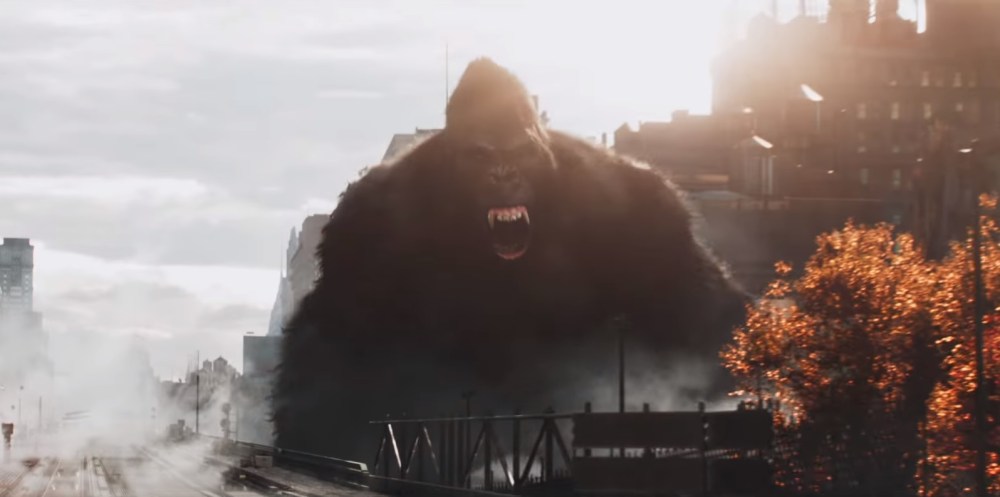
Two: Spielberg attacks the current obsession in Hollywood for existing properties. He came to power in an age of original material. Sure, Jaws is based on an airport novel and Indiana Jones is rife with homage for the bearded wunderkind’s own childhood cinema… but they were made in an environment where the quality of the concept was more important than its recognition value. The 80s had remakes (The Fly, The Blob) and even reboots (Star Trek, Flash Gordon, Batman). It even had films based on toy lines (Masters of the Universe, Action Force: The Movie). But in the main, it was a decade where toys were based on cinema franchises, not vice versa. And everything else mentioned was surrounded on all sides by wide releases of original creations from famous auteurs, or sold on star power. Nowadays everything given tentpole marketing seems like a photocopy or a cosplay. Without Spielberg’s name as a brand and the fact the concept opens up the movie to have Tyrannosaurus Rexs / King Kongs / Batmobiles-a-go-go, it is hard to imagine modern Hollywood would greenlight a project like Ready Player One based merely on the limited readership of a cult novel. There is no benefit in constantly, cannibalistically, looking backwards… unless it is to open a sneaky level-completing, hidden, cheat back door.

So Spielberg creates an oppressive, exploitative playground exaggerating these two cultures. A playground where having your imagination perscribed to you by regurgitators and corporations only interested in repeating what has worked previously. One that is fascist and dangerous. It is all very well having a library devoted to the legacy, memories and pop culture absorbed by one brilliant man but surely the kids should becoming up with their own tastes, stories and icons. Not living in the 3 Dimensional Facebook feed of a dead tech autistic. The ultimate message of Ready Player One is it is sexier to find your own fun, give yourself space and time to make human interactions. “Tuesdays and Thursdays,” if you must.
D762933B-605C-48AC-AFA3-A2A29924F3B3

Deeply flawed, grumpily misguided, Ready Player One still has enough fun within its griping motivations to make it one of the better blockbusters we’ve had recently. It never threatens the Spielberg 24 carat gold but it matches contemporaries Thor: Ragnarok or Justice League in terms of colour and kinetics, detail and gorgeousness. You just cannot help but think Spielberg might be better served lending his talents and creative control to something he authentically was excited about though. His thrilling recreations of 20th century historical amazing tales are his current forte. Both Bridge of Spies and The Post were effortlessly more entertaining than this, despite their mature, dry subject matters. This fits awkwardly in with his decent but ultimately flat CGI dominated adventures. The Adventures of Tintin: The Secret of the Unicorn, The BFG and this all remind me of David Bowie “Jungle” period in the mid 90s. An ageing master trying to give the kids what they want and coming across as average rather than spectacular, worse still alienating his middle aged fanbase. None of these heavily rendered blockbusters are awful but you yearn for the days when Spielberg was dragging Harrison Ford through deserts or chucking jeeps into trees with computer augmented hydraulics. The Amblin logo, the twinkling Silvestri score and the Drew Struzan poster promise the very best and a back handed warning about living in the real world with satisfactorily flat effects and lacklustre toy catalogue wallpaper just doesn’t cut it. Not when you invoke those particular totems of popcorn brilliance. You cannot wear the fetish of an old school Spielberg four quadrant magic around your neck, and deliver a jokeless satire. Don’t piss on your legacy when you still can create classics.

Mark Rylance though, playing this plot’s Willy Wonka (mixed a little with our reality’s Steve Jobs) is a marvel again. He imbues his creator figure with a confused sadness, a romantic wonder and accessible mystery. Like his Big Friendly Giant, he manages to be human and otherworldly simultaneously. Lucky for his regular collaborator Spielberg, Rylance manages to bring heart to a product that constantly, and almost willfully, avoids guts.

6


My Top 10 Steven Spielbergs 

1. Raiders of the Lost Ark (1981)
2. Jaws (1975)
3. Indiana Jones and the Temple of Doom (1984)

9E67D8E0-F4FE-4761-BB15-48C6970A867F
4. Schindler’s List (1993)
5. A.I. Artificial Intelligence (2001)
6. Indiana Jones and the Last Crusade (1989)
7. The Post (2017)
8. Jurassic Park (1993)
9. War of the Worlds (2005)
10. Empire of the Sun (1987)



Movie of the Week: Tess (1979)

738B07BB-9604-4152-B6EA-6E056E3E1E58

Roman Polanski directs Nastassja Kinski, Peter Firth and Leigh Lawson in this prestige adaptation of Thomas Hardy’s classic about an innocent Wessex lass whose life is destroyed by the men around her.

On a purely qualitative level I struggle with Polanski as for every masterpiece like Repulsion, Rosemary’s Baby or Chinatown; there is a dud like The Tenant or The Ghost. Partly his problems come with the limitations imposed by his exile from the Hollywood studio system. If he wanted to work at the scale he was accustomed to at any point in my lifetime he would have to return to the US and face statutory rape charges for which everyone agrees he is guilty.  It explains why nearly all his recent movies are compromised or limited. You couldn’t say that about Tess though. It is a glorious production, elegantly paced. Yes, it deals with a young girl being raped, and the rapist is sympathetically dealt with and somewhat charming… but Polanski doesn’t shy away from the grim inevitablity of the act, its prolonged unavoidable consequence for his heroine nor look for any forgiveness for her transgressors. What happens in the act itself is desexualised, the gory details lost in the fog, both figuratively and literally. Beyond what Polanski’s grim personal history forces on the viewer, his Tess is a superior period piece. It looks lush with Geoffrey Unsworth’s heavenly, bucolic exterior shots capturing the magic hour light perfectly. Kinski struggles with the accent but when silent and physical she is wonderful. Watching her whistle at caged bird is a moment of ironic horror for her fate, seeing her crucify herself by stubbornly perusing more and more gruelling work as she slips through society’s cracks is very affecting. There is also the slowly unwinding exploration of civilisation versus pagan traditions, references to which often wangle their ways into the proceedings. We end up stranded on Stone Henge surrounded by the newly formed police force. But with ancient stones and ways chafing against closed church doors and graffitied scripture much earlier, it feels like this destination was predetermined long before Tess innocently states she’d much rather work than pursue the life of a D’Uberville.

9


My Top 10 ‘Most Beautiful’ Movies

1. Miller’s Crossing (1990)
2. Dances With Wolves (1990)

AC65DC1A-EF4F-4F85-9013-7F17040FD1C4
3. The Hudsucker Proxy (1994)
4. The Royal Tenenbaums (2001)
5. A Matter Of Life And Death (1946)
6. Amelie (2001)
7. Ghost in the Shell (2017)
8. Days of Heaven (1979)
9. Barry Lyndon (1975)
10. Tess (1979)

Unsane (2018)

31C4BAC0-4833-4F0D-9BBF-91E13846FE57

Steven Soderbergh directs Claire Foy, Joshua Leonard and Juno Temple in this thriller about a stalked woman who finds herself committed in the very asylum where her attacker is working. 

It is a solid hook for a thriller and a perfect showcase for Foy who impresses as the flinty, unsympathetic survivor. No wallowing for her – she is rude, aggressive and self centred. Pleasing so. It is a cracking performance in an OK thrill ride. Like Emily Blunt’s brave turn in The Girl on the Train, a complex lead working hard for a lacklustre film. Unsane is a bit more involving than that movie, even if it never goes anywhere particularly shocking, the threat that it might is at least constantly impressed on the viewer. Soderbergh’s gimmick of using an IPhone to film his feature works. It gives the image a burnt out, flat air matching our protagonist’s world view. The lack of focus means everything in frame is weighted with equal importance to our eyes, meaning shots are often busy rather than swiftly processable. And it is a film about perception and self image, so what better tool than the icon of how we as a society now distribute our projected lives. While Unsane doesn’t match the high standard of his best work, it is in keeping with an unwritten theme he explores in nearly all his movies. Criminal love. Whether it be fetishes of sex, lies and videotape or Full Frontal, the outlaw romances of Out of Sight or the Ocean’s Trilogy, the monetised sexualisation of Magic Mike or The Girlfriend Experience, or even the world where touch is forbidden like Contagion, Soderbergh is fascinated in making human contact impermissible and illegal. Joshua Leonard’s pleasant but controlling monster here is just another aspect of Soderbergh’s view that humans will break all manner of barriers to fulfill their needs – even consent.

6

Proud Mary (2018)

364116A1-822F-464A-9A11-35DD8B0CF09C

Babak Najafi directs Taraji P. Henson, Billy Brown and Danny Glover in this action thriller about a mob enforcer who takes in an orphan from one of her hits, creating a gang war.

Taraji P. Henson is a star I cannot get a fix on. Like Nicolas Cage, her acting style seems to suggest a whole different performance is being restrained under her skin, a schizophrenia that often wriggles free in her expressions and emoting. And also like Cage it means you can never tell if she is lazily overacting or doing something incredibly unique. I’d give her some leeway if this wasn’t such a chore. More interested in homilies than shoot-outs, it struggles with scenes where morally we are to supposed to view some characters as good, others evil, when by action they are all cut from the same dubious cloth. Danny Glover gets some meaty screentime. That improves matters a tickle. But if you’ve come for exploitation or thrills, you’ll leave utterly bereft.

3

Branded to Kill (1967)

5900E5C1-492C-410D-B666-B5A9B1CE48E5

Seijun Suzuki directs Joe Shishido, Koji Nanbara and Annu Mari in this pop art thriller about the Number 3 hitman’s lusts, paranoia and rivalry. 

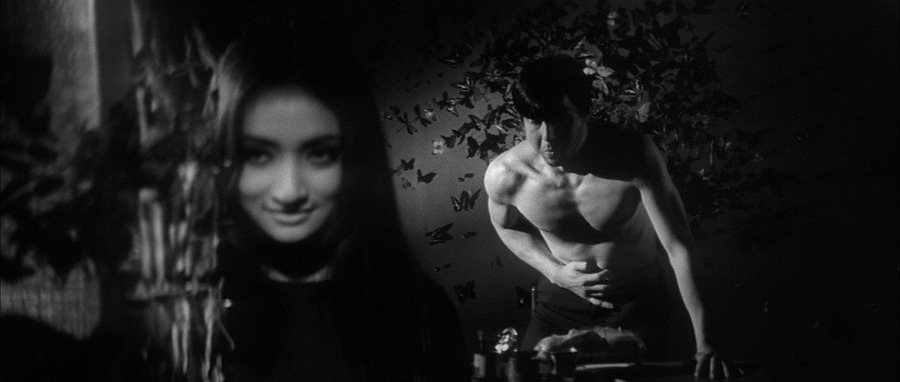
Surreal, sexy, kinky, inventive, nonsensical. This one of those movies that often is wildly unique but also occasionally frustrating. You are never more than a few seconds away from a fantastic shot or an almost parodic, hardboiled bit of business.

8

The Square (2017)

9A1F978F-C310-4DB3-91AD-93616CDBEC1D

Ruben Östlund directs Claes Bang, Elisabeth Moss and Terry Notary in this art world satire about a vain modern art museum curator whose life spirals out of control. 

At times rattlingly smart, other times a bit obvious and dull. There’s a brilliant five star 90 minutes film here padded out with an hour of OKish extras. Claes Bang is fine as the square – an immaculate middle aged man who raves with his underlings and elderly patrons, while struggling to do the right thing even while doing the right thing. Moss has a brilliant scene involving a tug of war over a used condom. Notary steals the show as a performance artist who wrecks a stuffy ballroom dinner with his wild, aggressive antics. “Help me.” Everyone, but he, says it at some point. Visually there are lots of squares too. The kinda experience that feels as much a psychological test paper, as much as a high brow comedy. You can tell why it did so well at Cannes. The world of impenetrable works, ligging galas and shock tactic media campaigns probably felt very familiar at a film festival known for its pomp, controversies and industry focus over artistic celebration.

6

Voyeur (2017)

941CA59B-CCCD-44F2-B853-7961835934B6

Myles Kane and Josh Koury direct Gay Talese, Gerald Foos and Anita Foos in this documentary following the release of the New Journalism writer’s book about Foos’ life as a motel owner who elaborately spied on his guests.

This underrated documentary is gripping, personality packed and uncovers subtle truths concurrent with its big controversies. Gay Talese is a big flamboyant figure of the late 20th century writing tradition that also gave us Norman Mailer, George Plimpton and Tom Wolfe. Personalities who were self consciously bigger than their subject matter. Impeccably dressed and beautifully spoken, his previous bestsellers made him a talk show regular decades ago. Gerald Foos is a gregarious man, in a happy marriage, who for years owned a motel built specifically so he could spy on his guests, nightly and unnoticed. Both men keep basements full of notes and mementoes of their past, both have a fascination with overseeing the lives of others. Hoarders with god complexes, speculators on what they witness and how it will have value to the general public. Broken mirror images of each other in many aspects. Foos, spotting a kindred spirit on TV, even invited Talese over to peep through his hidden vents with him back in the eighties. Now that the statute of limitations has passed, he seems happy for Talese to expose him and write his story. And from there a mini hell breaks loose. A lot of reviews seem to focus on the criminal aspect of this, the salacious part about a man who watched his guest engage in secret, sometimes violent acts and kept shtum. They focus on the power struggle between Talase and Foos when new, contradictory information comes suddenly to light and reputations are left in tatters. And all that stuff to me is incredibly watchable, inventively recreated and compellingly stitched together. Far too fascinating a pairing to deserve the snide scorn Voyeur seems to have garnered in the press. But where the documentary comes truly alive is in watching two men of the past realise they are now out of time. Both had an inflated idea of where their story would take them. Gay would have another bestseller. Foos would become a celebrity from his notoriety. That doesn’t happen and that is where Voyeur makes it real gains. It is a portrait of two elderly men realising the jig is up. Look at the scene where Foos watches out of his porch blinds, expecting a media circus when his story hits the papers. No such attention arrives. Look at Talese realising his book isn’t selling but his reputation is permanently diminished when he gives the Washington Post one unwise, but mass circulated, quote when reacting to the veracity of Foos’ story. There’s a lot going on in Voyuer… it is an ethical buffet about truth, morality and the media… but at its heart it is the sad tale of two complex men who thought they were above everyone, seeing all the angles, who now no longer understand how the modern world works.

9


American Pie (1999)

MSDAMPI EC005

Paul and Chris Weitz direct Jason Biggs, Eugene Levy and Seann William Scott in this raunchy teen comedy about four inept boys trying to lose their virginity before high school ends. 

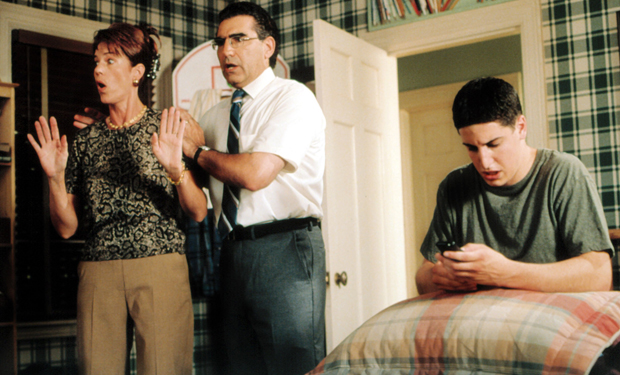
Perhaps the most recent film I will feel nostalgic about. I remember it being one of the first movies I went to see after moving to Edinburgh (at the ABC Lothian Road) back when I could only really afford to go see one film a month. That barren period, while waiting to find a job, saw me ration myself to just Big Daddy, Fight Club, The Sixth Sense and this over the end of 1999. So all absolute classics then… apart from The Sixth Sense. But here’s the thing, each time I rewatch American Pie it holds up remarkably well. Partly it marks the end of my teen years in an idealised way. Those check shirts and that post punk soundtrack of Harvey Danger / Barenaked Ladies / Blink-182 are very familiar. The weird mix of pent up frustration and romantic yearning shown in the lads was rarely depicted on screen then and feels truer than a lot of more serious teen dramas. So an emotional connection probably elevates it. And Pie has its flaws; there is a visual flatness that feels unambitious even for a teen comedy, one or two scenes have dated horribly (I guess broadcasting a girl stripping on the internet without her knowledge didn’t have the permanency or emotional harm attached to it as revenge porn does these days). But even in those awkwardly ickier moments, the joke is eventually turned on the boys. They end up either improved or the butt of their crass actions after every single transgression. And they are purposely a likeable, sensitive bunch… a million years more emotionally mature and aware than the soulless lunks who smirked and winked and groped through the Eighties equivalents (see Porkys, Police Academy, Ski Patrol etc). American Pie’s real strength is in a strong cast. Biggs has a natural gangly slapstick desperation that he sadly grew out of. Eddie Kaye Thomas is memorable as the pretentious long game player. Seann William Scott isn’t even part of the core group and he kills as the utterly comfortable in his own skin arsehole jock. The girls are given more to do than just be mindless conquests… maybe not quite the shading gifted to the lads… but Alyson Hannigan and Natasha Lyonne get moments and lines that suggest a concerted effort has been made not to have them all be mere nubile trophies to be won. Most importantly though, there are more than a half a dozen killer set pieces. Sure, some are dumbly gross (the infamous pie fuck nowadays actually feels rather tame) but many have an internal tension and patient build-up that show expert timing and a crucial understanding of how to milk a good gag. Just watch the scene where a beer and spunk cocktail is unwittingly passed back and forth, bought to the lips and interrupted constantly by Scott and his nervy prey. All it lacks is the overkill of the ominous Jaws theme to emphasise the prolonged horror unfolding. American Pie is packed deep with such strong sequences making it still a laugh-out-loud hoot while also now a warm and sweet blast from the past.

8

Bad Day For the Cut (2016)

8FA182C6-C2AD-4ED7-BFF3-016B44BF63BC

Chris Baugh directs Nigel O’Neill, Józef Pawlowski and Susan Lynch in this Northern Irish revenge thriller where a mild mannered farmer tracks down the criminals who murdered his mammy.

A bog trotter Taken. Actually very gripping, following a similar pattern to The Foreigner… yet tighter, on a tenth of the budget and with none of the star power. There are enough pleasing moments to make this a gritty beer and crisps Friday night filler. Nigel O’Neill (perfectly costumed as a middle aged Irish mammy’s boy) and Susan Lynch impress in parts that feel bigger than their cookie cutter shapes initially suggest. There’s no real complexity to all this revenge violence, it’s just nice to see an independent genre film satisfyingly surpass its own slim ambitions.

6