Love, Simon (2018)

1809252E-FFB2-495D-BDA2-118E192CDD8D

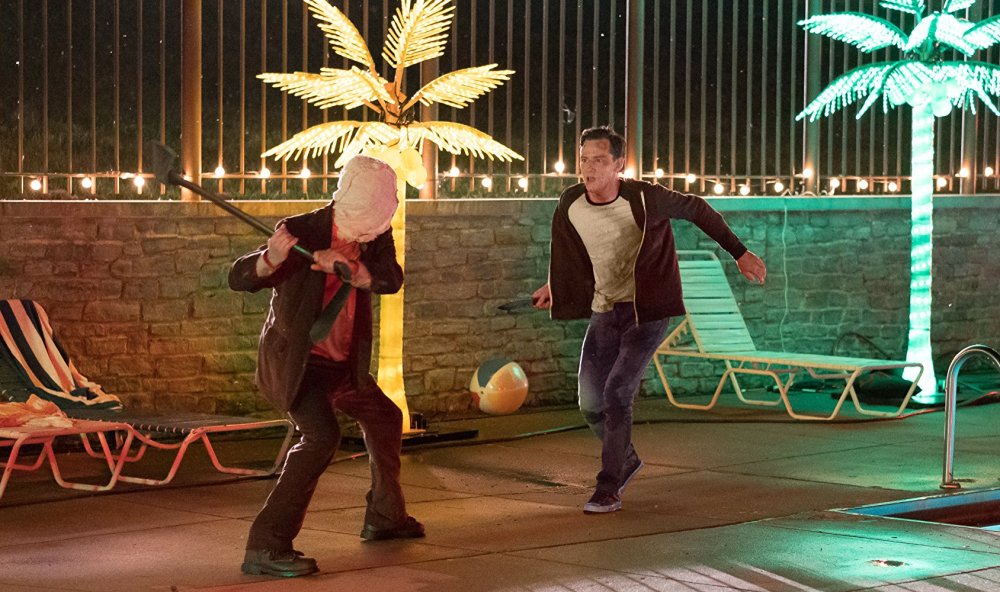
Greg Berlanti directs Nick Robinson, Logan Miller and Katherine Langford in this teen romantic comedy about a gay lad who is forced “out” when he begins communicating with another anonymous boy from his school.

Love, Simon is a safe and neat teen flick. In fact, what is most impressive about it is it deals with a teen coming out, his emotions and feelings, within the brisk, personality-lite, faded primary colour mode of any other mid budget studio teen movie of the last decade. To have a toothpaste commercial looking kid and his Patagonia model looking mates go through his standard product adolescent love life normalises the tumultuous feelings a unrepresented minority of children must go through. I get the inkling that in the long term Love, Simon will be a more important film for young gays, bis and questionings than say Call Me By Your Name. While both are idealised fantasies of high income living, one is a summer romance so prestigious and nostalgic as to be unattainable while Love, Simon at least looks and talks and posts and blands in a way a 14 year old kid might find recognisable and relatable. Which is not to say it is a great film. It lacks the wit of say The Duff or Edge of Seventeen… only the teachers get anything resembling a good line (MVP shared between Tony Hale’s gawky Vice principal and Natasha Rothwell’s stupified drama teacher). Equally there’s none of the artistry or rawer emotions of Lady Bird or The Spectacular Now. It seems quite content being a xerox of a John Hughes movie. Apeing the aesthetic and sounds of a three decades old creative to lend this relatively toothless confection an air of quality. And this sadly is where Love, Simon fails within its modest aims. Simon and his mates in their sneering rejection of outsiders, their car shares, gossiping, million dollar homes, and iced coffee binges feel more like the Blanes and the Steffs than the Andies and the Duckies. Simon lies to and manipulates his friends (albiet for a mixture of selfish self-protection and vague nobility) and even tries to change the dorkish villian by telling him not to show any of his personality or tastes. Even the unsubtle blackmailer knows he still needs to be himself. He wants to be himself, just not ignored by the cool girls. I’m not sure whether the troubling ramifications of that moment are entirely intentional. Have we just acknowledged that Simon’s gang would rather only be with their own handsome yet unthreatening clique rather than accept the loud, over confident geek on his own terms? Just look at their continued passive pity staring at the actually bravely out, effeminate gay kid. Are we supposed to like these semi-skimmed jabronis? And as for the romance aspect… there isn’t one. Two anonymous voices guessing who each other might be, while a solid plot concept, sadly doesn’t a hot connection make. Sure, they share a moment of forced intimacy together at the very end but we have no investment as to whether Simon and his “Blue” will have any kind of sexual relationship after the credits roll. Even mismatched Bender and Claire would have had a one-off, hot and heavy weekend after their Breakfast Club get together… I’m not sure how much I care about bland coward number one and bland fibber number two hanging out a bit more after so little physical contact. Given the conceit, maybe Sleepless in Seattle might have been the better movie to crib from?

5


Wildling (2018)

FC719474-FCD0-42A3-BBA1-0B873DCEF7A8

Fritz Böhm directs Bel Powley, Brad Dourif and Liv Tyler in this horror romance about a girl kept in captivity in the woods as an ageing hunter thinks she will turn into a wild beast.

Tame-ling. Dull-ling. Bel Powley waste-ling.

3


Tommy (1975)

F301B1CC-EB8B-4023-875E-1B4D1EE67FCF

Ken Russell directs Roger Daltrey, Ann-Margaret and Oliver Reed in this musical fantasy rock opera about a psychosomatic death, dumb and blind kid who becomes a pinball messiah.

A movie that never once submits to a boring shot or cut even if it slightly outstays its welcome by the end. There’s a brilliant central turn by Ann-Margaret as Tommy’s equally disconnected mother, frames of showgirls in gas masks and that brilliant The Who soundtrack. Tommy is an acquired taste for sure, of its time and wilfully nonsensical, but the sheer power of the imagery generated from the rock is undeniable. It also has four or five genuinely unsettling moments in the lengthy sequence of Tommy’s corruption.

8

Rock Around the Clock (1956)

Bill Haley & His Comets at a Rehearsal

Fred F.Sears directs Bill Haley & His Comets, Johnny Johnston and Lisa Gaye in this rock showcase movie that explores the “birth of the scene” with a framing love triangle and performances from The Platters and Freddie Bell & His Bellboys. 

The framing romance, where a sharp band manager tries to navigate himself between a savvy young dancer and a manipulative tour booker, is neat in its relative sexual frankness and the fact the ladies have the upper hand. But you haven’t come for that, you’ve come for the music and there are loads of great performances here – whether they be in village hall sock hops, Alan Freed’s nightclubs or Hollywood concert venues. This footage is fantastic, giving this cash-in cheapie a long spanning afterlife it is hard not to get caught up in.

7

Birdman of Alcatraz (1962)

8B0C69D1-B8C3-4B96-B542-D0AE70AC1483

John Frankenheimer directs Burt Lancaster, Karl Malden and Telly Savalas in this stark prison biopic of Robert Stroud, a brutalised man who begins to care for birds and study their health from his isolated cell. 

A fine, worthy biopic that transcends a lot of its unavoidable cliche through the dynamic performance of its star. Lancaster truly transmogrifies himself on screen from his normal proud, manly fighter to a sensitive, unbroken elderly man. The length and claustrophobia of the setting may be a little off putting, as does some of the whitewashing of the real Stroud’s continued criminal attitudes, but this is one of the last great black and white films.

8

Lara Croft: Tomb Raider (2001)

863FBAC7-1B5E-4A67-B976-B73DAFE603DA

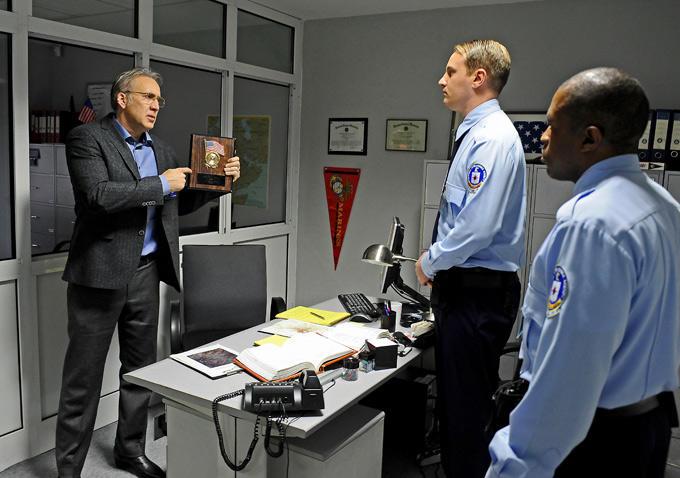
Simon West directs Angelina Jolie, Daniel Craig and Iain Glen in this first stab at making an action adventure franchise out of the voluptuous console game Indy rip-off. 

I remember this being a silly jaunt when I went to see it on release… and it still is. OK… so a lot more attention has gone into lavish set design than script and the soundtrack of big beat dance bangers lends an energy that the actors lack. There’s a couple of fine sustained action sequences, the stand-out being a bungee cord shoot-out around the Croft mansion. It is all cartoonishly passable. While the recent reboot wants to appeal to empowered young women, this had its sights set firmly on adolescent boys. Jolie fills the tight tank top and shorts curvily. Her cushiony sheen proving unthreateningly buxom for “the lads.” I’ll confess I’ve never really understood her high regard (aside from her admirable charity work) by audiences and critics. Her best film is the slightly above average Mr and Mrs Smith, a film that shares this blockbuster’s throwaway bouncy carnage and dress-up pouting. And though undeniably gorgeous, her default physical stance looks like a velociraptor who has been unwittingly transported into a smooth, hourglass shaped flesh suit. Her repetillian scanning of the room after each action salvo or line read resembles an out of place, confused leering predator that I find uncomfortably alien.

6

Escape From Alcatraz (1979)

675C6633-B359-460D-A865-3B14EBA1E6D4

Don Siegel directs Clint Eastwood, Fred Ward and Patrick McGoohan in this docudrama depicting three men’s methodical prison break from the impossible to escape jail. 

A taut and engrossing procedural that serves concurrently as an appropriate vehicle for Clint. The world of Alcatraz is illustrated with sparse elan, the effort and cunning put into the escape presented with little fan fare. There’s only one playful moment of embellished trickery and Siegel’s masterfully patient framing becomes a little more frazzled the closer to hard fought for freedom we get. Did the real escapees make it out? I’ve still no idea, despite a recent letter and photo suggesting so. Is this as compelling as the similar gruelling grind presented in Le Trou? No, but it’s a solid stab at the same emotions.

7


The Commune (2016)

C247AA8E-5A9C-45DE-A962-D4091436E1D0

Thomas Vinterberg directs Trine Dyrholm, Ulrich Thomsen and Martha Sofie Wallstrøm in this drama about a Danish family who open up their home to communal living. 

A wry and well realised drama that focuses more on a break-up of a family than the amusing politics of communal living that serve as the back drop. It is perfectly cast and sensitive to all characters yet, somewhat inevitably though, a little inconsequential. Reminded me of The Ice Storm in more than just its shared period aesthetics.

6

Dark Places (2015)

3ACE4153-7AE3-4570-8256-079395F4D1A6

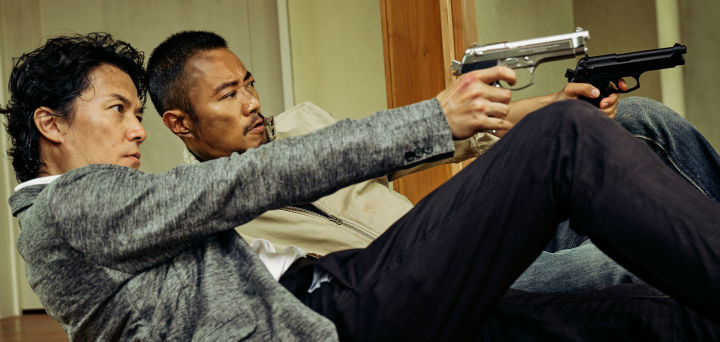
Gilles Paquet-Brenner directs Charlize Theron, Christina Hendricks and Nicholas Hoult in this crime thriller about the victim of a childhood massacre investigating her family’s murders decades later.

Gillian Flynn’s Gone Girl had a He Said / She Said hook that lent itself to cinematic adaptation. This sister thriller is as flat as week old cola in its faithfulness to her other book without that hook. The flashbacks don’t marry up to the present day framing sleuthing. We just meet older versions of the survivors and suspects who go tell us to go meet someone else, while the fateful day flashbacks play out independently and ambiguously inbetween. It could have been the imprisoned brother, the bookie Satan worshipping teen, the junkie Dad, the impoverished mom or even the de facto protagonist or even… somehow… Holt’s murder obsessed nerd kid (time travel willing). As we get close to the credits, clearly the ball is going to land in one of those roulette slots but they have all spun around so dispassionately that when the number is finally settled and the chips cashed in, all that you can do is meet the conclusion with a shrug. The route to the solution is so cold and rote it just doesn’t matter. It wastes a good cast, with only Hendricks’ doomed single matriarch managing to eke out any drama or personality or humanity in the rush. Considering the talent assembled, that is a brutal shame, more shocking than any twist this reaches. You can tell what attracted Theron to the project, her vague lead shares many of the arrested development attributes of her Young Adult anti-heroine. Whereas as that was a part that stretched her, here she ends up a mere SnapBack donning avatar to an inconsequential mystery.

4

Straw Dogs (1971)

AB2CCF16-AD6F-450D-9C6C-A156BC8B88E0

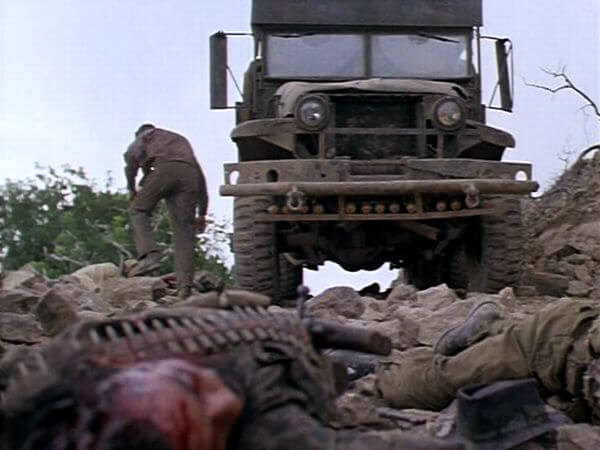
Sam Peckinpah directs Dustin Hoffman, Susan George and Peter Vaughan in this rural thriller where a nerdy mathematician and his restless wife come under threat from the unchecked aggression of the local men. 

A visceral experience that grows on me each time I watch it. My wife hit the nail on the head about its difficult reputation neutering the end product. The infamously troubling rape ordeal at its centre, that gave Straw Dogs a banned status in its home country for our entire youth, skews how you absorb a very unsettling thriller. You spend the first half ignoring Peckinpah’s astute portrait of a bullying atmosphere of toxic masculinity, waiting on tenterhooks for the inevitable sex attack to happen. When it does occur, it is an utterly gruelling sequence, but one that brushes uncomfortably with controversial moments that suggest enjoyment and some consent from the victim. And afterward it has so little effect on the home invasion finale as to feel like mere casual exploitation. Narratively, our ostensible “hero” Hoffman is never made aware of his wife’s trauma (even though there are hints he is being wilfully ignorant). And George’s mania is a more than understandable in-the-moment reaction to the lethal threat besieging their home and her husband’s out of character aggression to it, rather than as evidence of PTSD from the gang rape. So the controversial central set piece acts almost like a ironic lighthouse. It serves little narrative necessity but warns you of the dark, unsettling nature of Straw Dogs. Yet equally that overpowering scene blinds you on the first few watches as you sail too close into it, looking into its powerful bulb rather than taking in the jaggedness of the dangerous rock it is built on. The violent and bleak whole shares DNA with other classics of the time; the overpowering and bloody depiction of humanity of A Clockwork Orange, the unchecked threat of civilisation in isolation of The Wicker Man, the eerie use of horror evoking light and mist of The Fog, and the subverted Western form (Peckinpah’s genre of choice) of outnumbered white hats surrounded by marauders subverting the heroics of Shane or Rio Bravo. Hoffman is perfectly cast as the seemingly timid, rational man who loses control in the face of hostility and dominance. He proves as much a monster as the antagonists’ bullying and belittling his wife. When he finally snaps, his reaction to them, and brute authority of her, actually saves them. George (always shot with titillation in mind) puts in an ambiguous turn as an unhappy trophy wife. Struggling to find ways to get her ill-matched husband to engage with her, she exacerbates his insecurities and finds herself stirring up the less refined lusts of her old friends. It is a pessimistic portrait of a bad marriage in isolation. The savagery that eventually crosses their threshold accelerates the decline of their partnership but it is hard to see how the two would ever co-exist in isolation over much more time. Whether taken as a profane study of gender under accelerated conditions or a grim, nightmarish rollercoaster ride, Straw Dogs is an effective exercise in intent and execution.

8