The Man Who Knew Too Much (1956)

Alfred Hitchcock directs Doris Day, James Stewart and Brenda de Banzie in this starrier colour remake of his London thriller where a couple’s child is kidnapped when they learn an esoteric piece of information about an assassination.

Hitch but slow cooked. This is so at ease and off duty that when it does occasionally reset back into suspense mode it almost comes as a shock. Day and Stewart work well off each other. There are some superb set pieces but at nearly any juncture you could easily pop the kettle on, come back from the loo and set out some biscuits on a saucer and find the cogs of the conspiracy have not moved a jot during your comfort break. Hitch regulars Edith Head’s stellar costumes and Bernard Herrmann’S big score keep things classy.

7

Happy New Year, Colin Burstead (2018)

Ben Wheatley directs Neil Maskell, Charles Dance and Sam Riley in this extended family argument set over an awkward New Year’s Eve party.

Not the best Wheatley production. It apes Altman and Leigh and Festen but doesn’t have much in the way of deep things about the human condition to say. His more obvious genre works are where his talents lie but this is a watchable enough experiment.

5

Madeline’s Madeline (2018)

Josephine Decker directs Helena Howard, Miranda July and Molly Parker in this pretentious arthouse mess where a young girl loses her identity when her physical theatre group exploit her strained relationships with her overbearing mother.

Maybe this is just for Madeline. It certainly wasn’t for me.

3

Rocketman (2019)

Dexter Fletcher directs Taron Egerton, Bryce Dallas Howard and Jamie Bell in this musical biopic of Elton John, the most flamboyant, coke fuelled shy person you’ve ever met.

This is a tough one. I’ve never been a massive fan of Elton John’s music (it is, to revive a period appropriate phrase, … bloody naff) nor his personality. Yet I do I like the main cast, especially Egerton who always has an unguarded loveableness in how he throws himself broadly into the unattractive areas of his lead roles. He can do chav, bumbling naive idiot or uneven screaming queen without losing his boyish charm. The visual direction is far braver than the similar Bohemian Rhapsody but both films bear the weight of their living subjects having too much creative power. This portrait of Elton is happier to show the warts but you really want even more tantrums and less “poor me”. The film is happy to admit Elton can be an utter shit but always under the oft-repeated excuse that he really just needed a cuddle and approval. Well, there are lots of people who have cold upbringings and rocky relationships who don’t end sitting on a pile of money, cocks and coke. So I shan’t be shedding a tear for the stroppy old superstar… Not if he is unwilling to show us just how bad he gets without the caveat of “I wasn’t the worst.” I’ve bought a ticket for rocket fuelled naughty behaviour, not a therapy session to MOR hits. Doesn’t even have the common decency to end on a big Live Aid showstopper.

5

Inglorious Basterds (2009)

Quentin Tarantino directs Christoph Waltz, Mélanie Laurent and Brad Pitt in this WWII set mission movie where a Nazi colonel with a talent for detecting deception finds himself caught in a web of intrigue between a bushwacking Special Service Forces unit, a beautiful Jewish cinema owner and some of Germany’s biggest movie stars.

Basterds ends with the line “I think this might just be my masterpiece”. Brad Pitt has just carved a swastika into a Nazi scalp. So that after the war the Nazi cannot pretend he wasn’t who he was. And that’s what the film is about – people pretending to be what they aren’t. Jewish runaways are hiding in plain sight in Paris. Glamorous German film stars are double agents. Monotone milk farmers are hiding families in their cellar with poker faced calmness. Enlisted British film critics are hiding their plummy accent behind perfect Deutsch (even if the accent is a little funny). Decorated war heroes use charm and attentiveness to mask their cruel sexual appetites. And an American war killer, without two words of foreign to rub together, pretends to be an Italian stuntman at a cosmopolitan movie premiere. “GOR-LARRR-MIII!” Basterds is about being caught out not being who you are in a series of drawn out, loose yet tense interactions. QT achieves that goal. But it ain’t a masterpiece. Certainly not his.

What was sold to us as Tarantino and Brad Pitt do the Dirty Dozen has minimal war action. Like Reservoir Dogs was a heist film without the heist this is the war film without the war. And while I respect Dogs and appreciate its fine (game-changing) writing, it isn’t a favourite of mine… neither is this. This is a half dozen little Reservoir Dogs, in that each chapter resolves around one character figuring out who ‘the rat’ is amongst them? Kill Bill-style grand introductions, making every character an icon… followed by an elongated verbal spar where small talk, threat and misdirection is used to sift out the truth from unbalanced, trapped liars. Times five.

Most obvious of these is the La Louisiane Tavern sequence where bit players actually play that game of “Who Am I?”, only for key players to play the game for reals within the pouring of another round of drinks. Michael Fassbender is superb in this sequence as a man suavely losing his stronghold. It is considered a modern classic but I do wish Tarantino found an elegant way to parachute Christoph Waltz’ Nazi conniver Hans Landa into the mix. Instead we get essentially a different actor playing a similar character playing the same role. The smartest Nazi in the room, a man who convinces you that you have no chance against him and can idle in small talk until you submit the truth to him. The man with a permanent upper hand and cruel wit. To have two Swastika clad antagonists with the same traits knocking about the plot robs the film slightly… and betrays its ragged freewheeling nature.

All Tarantino films are indulgent. Scenes that hang out, shoot the breeze… that flow into each other with novelistic motion rather than a strict cinematic formula. Often this means we can explore a genre with an expansive, character rich fluidity. But with Basterds it just feels a little too…unconnected. A series of fantastic intro sequences but with no idea how to then get directly to its apocalyptic Hitler killing blow-out firesale. The middle hour has characters relay “the plan” to us at length four times with minor variations or revelations. You have the feeling once Quentin has all the pieces in play he doesn’t know what to do with them except shuffle them around the board randomly. He doesn’t want to get to his explosive gambit quite so soon. The Mike Myers & Churchill scene or the veterinary table scene hardly have the same unique, memorable quality as that opening passive aggressive interrogation on the diary farm or Shosanna’s war paint prep to David Bowie (a visual highlight for the talky director). They feel very much like wasteful filler.

Inglorious Basterd repeats itself, gets stuck in a rut… doesn’t deliver near enough Brad Pitt machine gunning the hun. That’s not to say it isn’t rich in character beats. Landa is a tremendous creation… when he arrives in a scene you smell danger for all else involved. Waltz skips gleefully through Tarantino’s writing like a child playing a winning round of hopscotch. A star is born. In a less showy role, Laurent impresses… she’s simmering with anger and revenge yet also proves good at comedy. Her expressive face doing that rarest of rare things, making a quieter creation standout in Quentin’s verbose world. And Brad Pitt, while wasted for much of running time, dazzles as Aldo Raine when given the spotlight. Part John Wayne, part Warren Oates… he’s such a broad, masculine, winning figure that you genuinely feel wobbled when suddenly the tables are turned on him in the final furlong. Inglorious Basterds is a great film, but for a filmmaker of QT’s lofty status to refer to it as his masterpiece just doesn’t past muster.

8

Aquarius (2016)

Kleber Mendonça Filho directs Sonia Braga, Humberto Carrão and Irandhir Santos in this Brazilian drama where an ageing music critic finds herself the final holdout when her apartment building is bought up by uncaring developers.

A strong central performance carries a very relaxed yet far-reaching arthouse film. We follow Clara’s memories of her home, current strained relationships (some sexually frank, others joyfully social) and her silent battle with the corporation who want to tear down her building, forcing her to sell through passive aggressive intrusions. Both cancer and termites visually signify the quiet, insidious legal corruption she battles against. You’ll need patience (and a willingness to know that nothing will be fully resolved) to get all the intelligent pleasures out of this meandering film.

6

Law Abiding Citizen (2009)

F. Gary Gray directs Gerard Butler, Jamie Foxx and Leslie Bibb in this thriller where a widowed home invasion victim plans an elaborate plot to execute everyone involved in his trangressors’ exoneration.

Two very difficult to like stars play characters with no redeeming features. The intention is for the audience to marvel at evil genius Butler’s diabolically intricate scheme but still want Foxx’s shitheel lawyer to survive it. Imagine watching The Joker or John Doe from Se7en be the hero… and that to somehow result in a rottenly glossy timewaster.

3

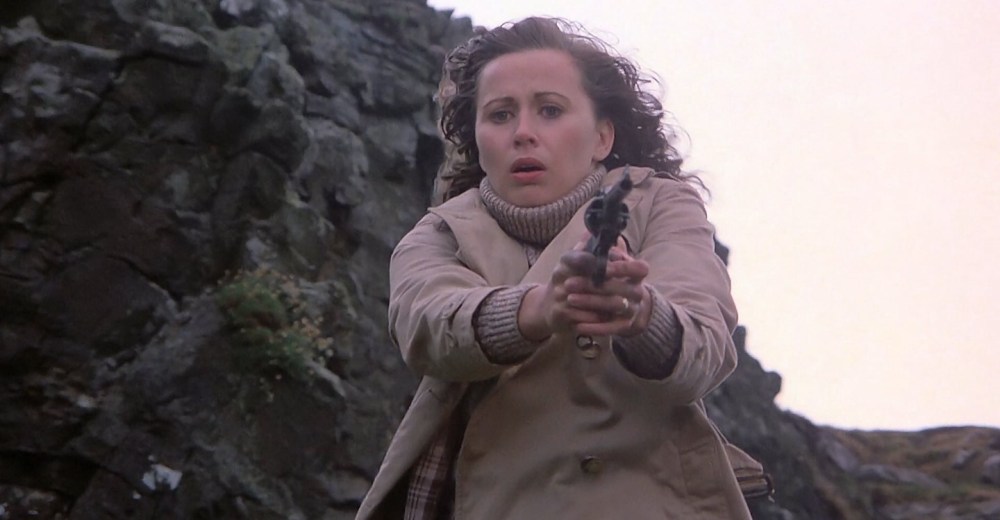
The Serpent and the Rainbow (1988)

Wes Craven directs Bill Pullman, Cathy Tyson and Zakes Mokae in this supernatural thriller where an adventuring biologist investigates Haitian voodoo during the real life island coup of the mid-1980s.

Probably the first Wes Craven movie I watched as a boy. I probably found it accessible as it doesn’t really descend into out-and-out horror until the final 30 minutes. Until then it is a looser, coarser Indiana Jones rip-off (bizarrely rooted in an academic factual book). The action can’t hold a candle to Temple of Doom and Pullman is far too silly a screen presence to convince of either heroics or threat. It also has the feel of a truncated epic. The story takes place over a long period of time but characters, plotlines and time shifts are waived off with bolted on narration and cutting room footage. Maybe the longer version has some quality girth to it. Criticisms aside this proves a fine showcase for black character actors of the period; Mokae, Paul Winfield and Brent Jennings elevate limited B-movie parts. And the spookhouse finale has a chaotic relentlessness to it. Craven buries his protagonists alive, resurrects them, owns their soul, unspools reality, unleashes rotting hell on them. He puts us the audience right into their shoes as he does all this. It is a symphony of constant shock sequences and one that absolves The Serpent and the Rainbow of its initial wobbliness.

7

The Narrow Margin (1952)

Richard Fleischer directs Charles McGraw, Marie Windsor and Jacqueline White in this film noir where a cop has to protect a mob boss’ wife on a cross country train.

All the moody noir shots, characters and back-and-forth you’d hope for. What makes The Narrow Margin stand out is the big juicy chunks of action embedded throughout and some well hidden twists. It moves without a moments drag or indulgence, making it a superior example of its genre.

9

Movie of the Week: Reds (1981)

Warren Beatty directs himself, Diane Keaton and Jack Nicholson in this epic biopic of John Reed, the socialist American journalist who covered the Russian Revolution in his seminal book “10 Days That Shook The World.”

A something for everyone movie. If you’ve come for romance then you get two for the price of one. Beatty and Keaton have great chemistry as an on-off couple who want to stake out their place in history. Then you get a side affair with Jack Nicholson’s fatalist romantic Eugene O’Neill. In just a handful of scenes Nicholson does his career best work as the famous playwright. Want historical sweep? Well then Beatty matches Lean in his globetrotting romance. There’s a wonderful shot of reindeer tearing through a snowy forest like lava from a volcanic eruption. Antique trains cross just tamed continents. Beatty and Keaton find themselves dwarfed by the tide of history. Are you left leaning? Then get ready for the giddy excitement of standing up for the working man and calling each other comrade. More right leaning? Watch the communist dream fall apart within a void of Kafka-esque bureaucracy and Python-esque factionalism. Historian?… Marvel at the talking heads reminisces of those who were actually there. Reds has the feel of ghosts narrating history, misremembered gossip becoming legend. It is a fine BIG MOVIE, one that demands return visits.

9