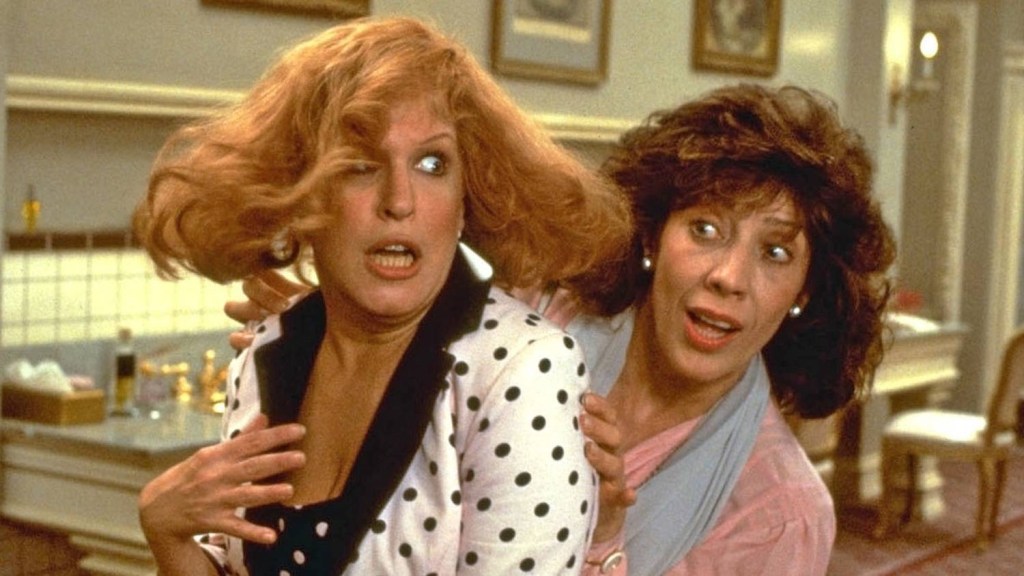
Jim Abrahams directs Bette Midler, Lily Tomlin and Fred Ward in this comedy where two sets of twins are mismatched at birth – one set from a little town based around a furniture factory, the others from the big city mega-corporation that plans to sell the community off thirty years later.
Hi-jinks ensue. The first half hour is packed with jokes and silly singing numbers but it gets lazy and repetitive long before the end. I’m not even sure the happy ending where everyone is paired off romantically and the town is saved has been earned or is what half of these characters wanted five minutes earlier? Still Tomlin and Midler ham it up even when all the movie has them do is narrowly miss each other in the hotel lobby for the millionth time on an endless loop. By the point you realise the gags have dried up, Midler’s Eighties fashions and mugging have gone into pleasing overdrive.
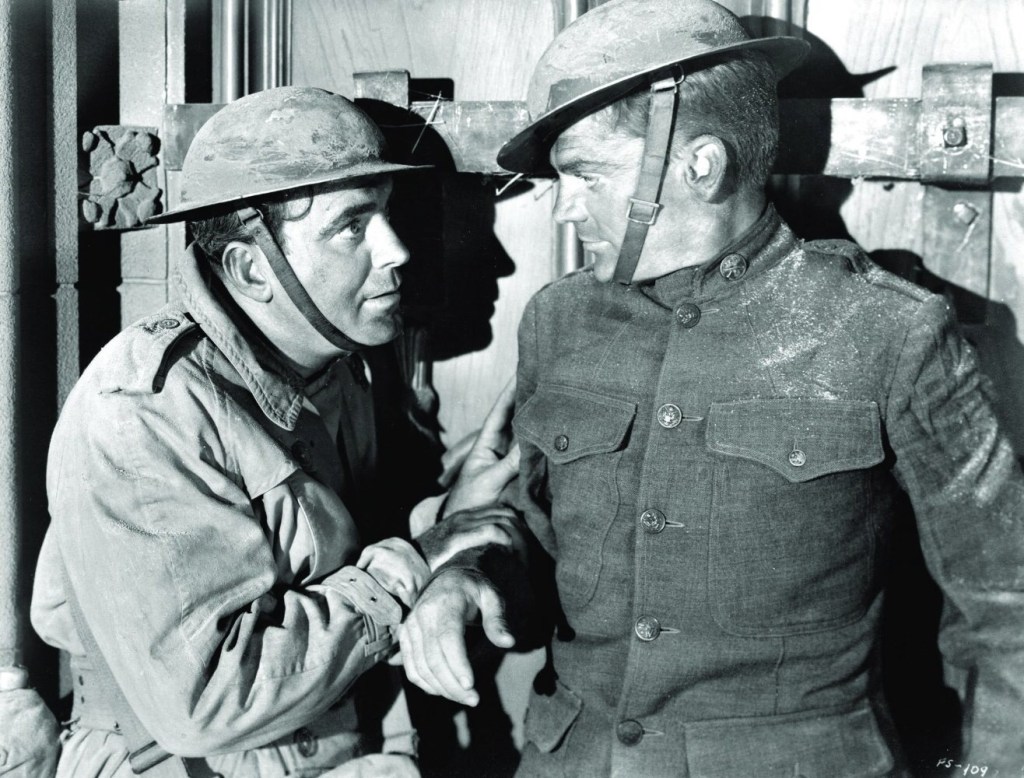
William Keighley directs James Cagney, Pat O’Brien and George Brent in this WWI drama where a regiment of New Yorker are slowly killed off by the selfishness of one bad apple.
Strange watching Cagney play an out-and-out rotter. His coward here is so unlikable and harmful that when his eventual moment of heroic redemption comes it feels thoroughly undeserved. Aside from that this is a solid oldie.
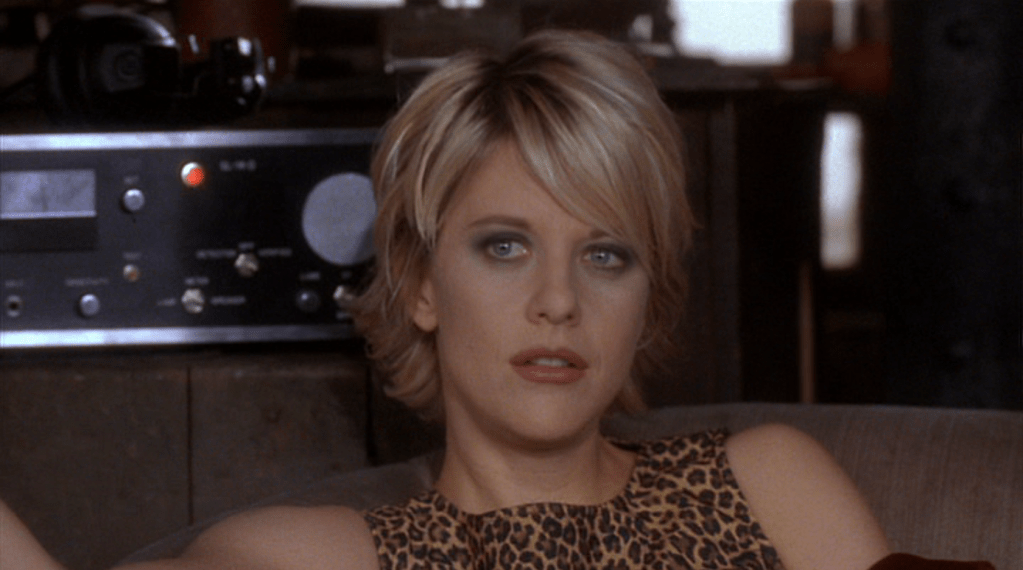
Griffin Dunne directs Meg Ryan, Matthew Broderick and Kelly Preston in this dark romantic comedy where the jilted exes of a new couple stalk, spy and plot their break-up.
You can see why this didn’t set the world on fire in 1997. Meg Ryan, the box office tyro, is a little too self-consciously kooky here. It is a role that would fit a Lisa Kudrow or a Parker Posey like a glove. America’s Sweetheart though… looks like she’s slumming it. Which is a shame as once she’s got her Mr Toad motoring goggles off she is still an enticing prospect for the wet Broderick character and, more importantly, us to fall for. Dunne’s direction is aggressively cinematic without being intrusive – he pushes for strange angles and antiquated forms of movie grammar. Broderick and Ryan use a camera obscura to watch the happy home across from their squat and he exploits the visual possibilities from this device well. Tchéky Karyo as the pompous but rapacious new lover is a horrendously punchable creation… he manages to essay someone who could steal Kelly Preston from Broderick convincingly but we still relish seeing ruined by the spurned pair of broken hearts. It is a spiky film sold as a saccharine romp. For me it has aged well. Sure… many might see the protagonists as stalkers – dangerous obsessive who try to control and bully two humans who fell out of love with them. But the film is too cartoonish to attach real world hot takes on it. If you are going to condemn Maggie and Sam’s campaign of terror… at least accept everyone is flawed, capable of unhealthy fixation and lashing out. It is how we (eventually) move on from the heartache that is the coda… the creepy bad behaviour here is the larks for the audience and unintentional flirtation for these two loons. Better than you’ve been led to believe.
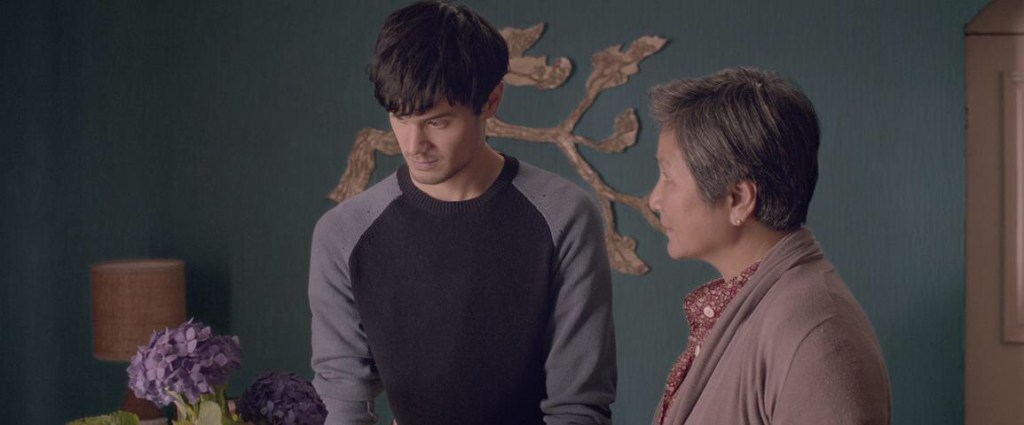
Hong Khaou directs Ben Whishaw, Cheung Pei-Pei and Peter Bowles in this drama where a bereaved gay partner reaches out to the elderly mother of his deceased lover.
A gentle, charming tale of grief, communication and acceptance. Possible a little too thin and practiced to really seduce.
Benedict Andrews directs Rooney Mara, Ben Mendelsohn and Riz Ahmed in this adaptation of David Harrower’s play Blackbird where a victim of child abuse tracks down her seducer decades later.
Well acted and sensitively shot drama which flirts with shifting into thriller territory. Definitely not interested in being a black and white study – Mara’s damaged adult is often explicitly sexualised, the flashbacks to the abuse have humanity towards both participants and Andrew’s captures the everyday threat of port towns and cul-de-sacs. A little too dry and elliptically ended to demand repeat viewings but this is a solid attempt to explore issues without passing the obvious judgements.
Gary Nelson directs Barbara Harris, Jodie Foster and John Astin in this body-swap kid’s comedy where mother and daughter spend a hectic day in each other’s skin.
Spirited performances and a very, very busy plot cover up the fact this often is all set-up and very minimal punchline. The all-action car chase and water-ski finale is pretty impressive but it is in the smaller… possibly unintentional… details like the oblivious family dog and Barbara Harris’ bubblegum blowing that make this frequently still pleasurable.
Cary Fukunaga directs Mia Wasikowska, Michael Fassbender and Jamie Bell in this interpretation of Charlotte Brontë’s ‘governess adrift in a house of secrets’ classic romance.
A very tactile, handsome sensitive drama. Every element is gorgeous to look at, yet has a real world heft from the set dressing to the human players. Adriano Goldman’s cinematography captures misty trudges and candlelit hauntings with an expert fascination. Both Wasikowska and Fassbender do sterling work, it might not be completely text appropriate but they are fantastic on the eye. A recent high point in British period cinema, this is a potent and sensual adaptation.
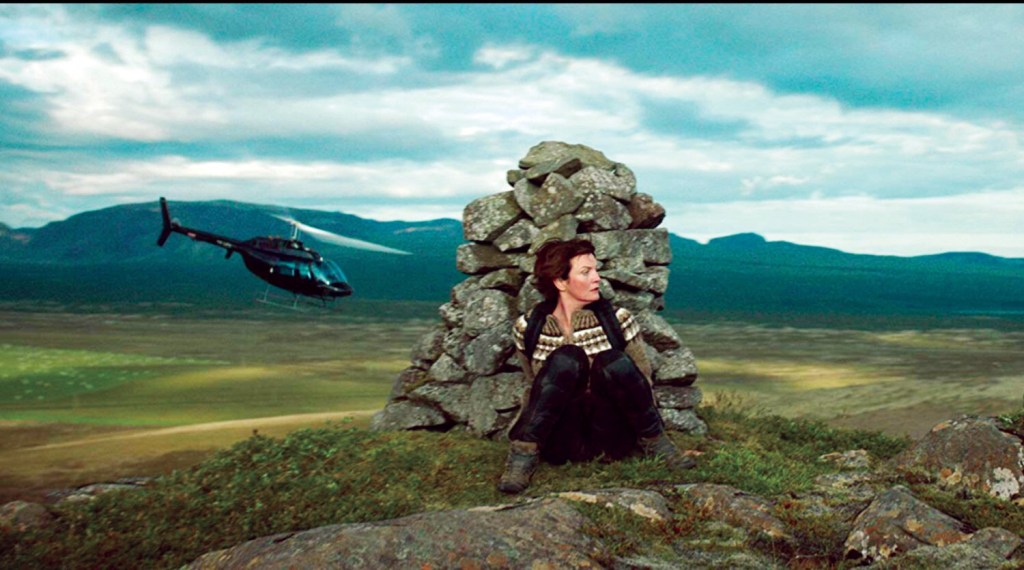
Benedikt Erlingsson directs Halldóra Geirharðsdóttir, Halldóra Geirharðsdóttir and Jóhann Sigurðarson in this eco warrior drama were a middle-aged choir master disrupts the power supply to a factory that threatens the Icelandic environment.
Better than I expected. The terrorist actions have a rugged survivalist thrill that apes The Fugitive on a low budget. Erlingsson’s direction is playful, the minimalist orchestra who score Halla’s crusade often appear on camera with her. A rebellious, quirky nod that reminds one of Jim Jarmusch or Wes Anderson or John Michael McDonagh. The final sequence makes its point with impactful cinematic confidence. No speeches needed. Our hero matches this. Geirharðsdóttir’s lead performance is sympathetic without pleading, quietly layered. She elevates a solid indie polemic that does its campaigning with wit and action.
A list of the biggest flops of all-time… studio destroyers, millions losers and star tarnishers every single one… some underserved, others not even that!
Ted Demme directs Matt Dillon, Timothy Hutton and Natalie Portman in this ensemble drama where a bar pianist returns to his hometown to find his working class school friends are all still stuck in a rut over their adolescent ideas about love, relationships and women.
A wonderful film right down to its ensemble cast and its jukebox soundtrack. Both contain picks that promote less obviously recognisable names but still are quality decisions. The entire movie has a tangy mix of hangover and seduction, regret and hope. Sure, the men are all idiots, lusting after childish ideals (in Hutton’s case the most blatantly as he starts a sweet platonic flirtation with the precocious teen next door). It is easy to mistake the film for being about men finally growing up a decade too late but I see it as them giving up the ghost on their high school fantasies of dating a super model or a immaculate sitcom girlfriend. They already know Uma Thurman’s perfect 10 and Natalie Portman’s flashback to first love or Lauren Holly’s glory day prom queen are no longer really options for them, and even if they were they wouldn’t be the right choice for these adults anyway. Desirable as they are unobtainable. Distracting as they don’t (yet) require the work and commitment a real woman does. They are faultless only on paper, lacking the care and empathy and affection and security and equality a long-term relationship brings. So we witness one last flirtation and then the come down. Reality gives these men all a good hard shake, a kicking, a cold wake-up over the course of Willie’s visit. But they already knew what the right thing to do was, who the beautiful girls they should embrace and treasure were. I wore this VHS out in the 90s. The bonhomie and running jokes were extremely comforting. This was my first watch of it after a very long time, also my first watch were I was older than the characters. The constant wit and the unshowy sophistication and the genuine heart they are written with (this is screenplay is one of Scott Rosenberg’s enviable triple run with Things To Do in Denver When You’re Dead & Con Air) still stands up. This is THE underrated jewel of 1990s cinema. With the exception of Natalie Portman and Uma Thurman just about everyone involved does their very best work. The smorgasbord of indie character actors chime wonderfully together. For once not playing serial killers, junkies or flunkies but believable flawed humans you meet down the pub. Magical.