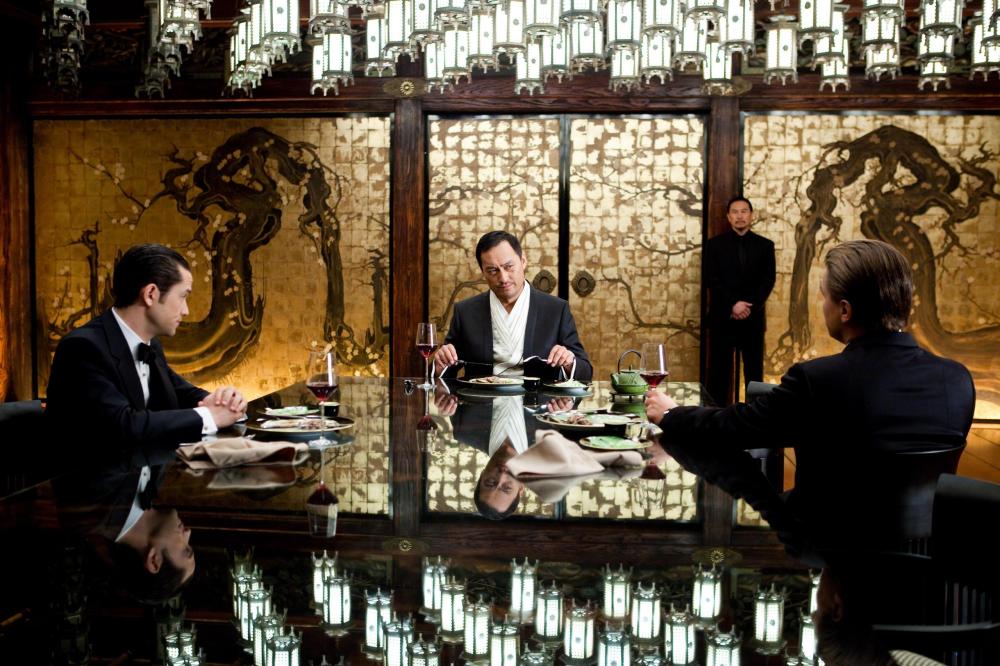
Christopher Nolan directs Leonardo DiCaprio, Joseph Gordon-Levitt and Tom Hardy in this sci-fi actioner about a team of criminals who plunge into a tycoon’s subconsciousness to implant an idea.
This is the point where Nolan climbed up from being an exciting cinematic voice in the blockbuster field to that rare ground occupied only by Hitchcock, Kubrick, Spielberg, Tarantino, and maybe Fincher. A maker of event cinema so consistently imbued with intelligence, ambition, technical mastery and scope that each release feels more urgent and relevant than the latest episode in even the most popular of franchises. This is where Nolan became a cinematic luxury brand of the rarest quality. His name means you are going to see things you never have before in the multiplex. Go on opening night.
And for all its outlandish concept, labyrinth plot and looping mysteries (one of Inception’s strengths is the sheer density of the endeavour means that repeat viewings aren’t just rewarding but essential – there’s no way to absorb all its surprises, subtext and sidebars in a few sittings) it works best as a simple men on a mission adventure story. We get sequences that rival James Bond in their elan and sheer goddamn size: shoot-outs in ornate flooding shiros, gravity defying hotel corridor brawls and ticking clock paramilitary raids on brutalist mountainside clinics. All are given surrealist twists to match their dreamscape setting but all conform to a restrictive, stake setting logic. Anything can happen in the world of dreams but “anything” comes with a tension increasing set of rules to fight against. “You musn’t be afraid to dream a little bigger, darling.”
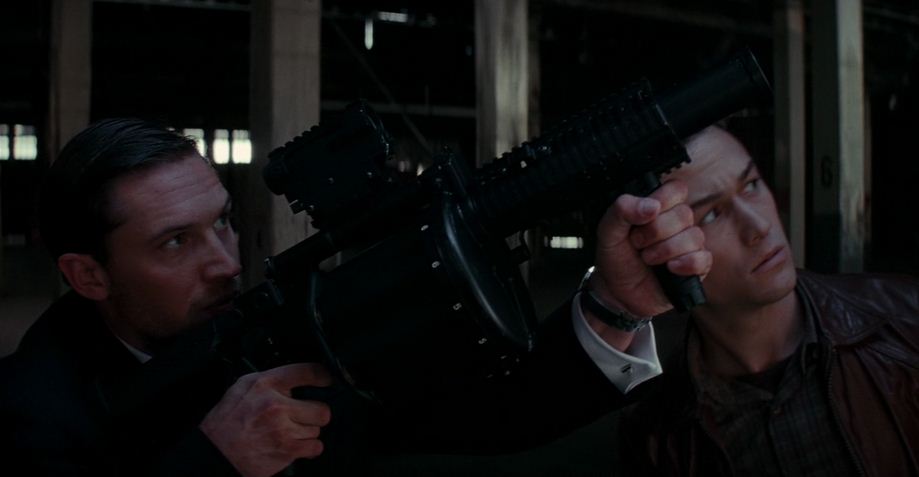
Having said that, for all the snow ski chases and trains rumbling through rush hour traffic jams grandness, the most gripping sequence takes place in the real world (… possibly?) The Mombasa foot chase is a mad dash scramble where DiCaprio’s Cobb dodges and scrapes through the tightest of spots, a relentless pursuit that would make even Jason Bourne want to stop and have a breather. One of my favourite set pieces ever, the screen rumbles with the same reality falling apart ferocity as any of the dream maze mindbenders.
I keep harking back to Bond as clearly it is a touchstone for Nolan. Away from the aped confidence and magnitude, and even the unbelievable tech, it is the impossible lifestyle that Nolan matches here. Sure, he already convincingly conceived on the big screen the lavish wealth of billionaire vigilante Bruce Wayne, but Inception has a tailored, globe trotting opulence that matches only 007. Skyscraper rooftops, bullet trains, first class compartments and varnished oak panelled Parisian university lecture rooms represent the real world… When Cobb’s team of forgers and theives create a brain maze they truly pluck it right out of the five star, Michelin rated, 1001 Places To See Before You Die gloss pages of a tycoon’s travel brochure. I bet the toilet paper is like velvet in that imaginary penthouse suite. And while that lush life never dissipates, as we go deeper into the subject’s mind the worlds we visit do become blanker. We start (probably) in the bustling cityscape, drop further into a high end but subtly corporate hotel, eventually finding ourselves falling into blank snowscapes, and finally the void of the sea and a beach. Detail gives way to canvas the more pressing the mission becomes.
Inception’s other key strength is its ensemble. Sure, the illustrious likes of Michael Caine, Ellen Page, Dileep Rao and Ken Watanabe are often leant on to be exposition spoutters or dumps, but that is, at the very least, quite the band of charismatic thesps to talk us through Inception’s complex terms and conditions. They all get nice bits of business away from explaining and enquiring. No one needs to hand back their Oscar just because there is a tanker load of information to implant in the audience. In fact considering just how much world building Inception has to do, it is credit to Nolan just how breezily he lays out the game.
Of the lead performances there is a four way tie, which means we, the audience, ultimately win. Leonardo DiCaprio gives his corrupt master thief a Bogart-esque world weariness, a mode that he previously worked similar magic with in Blood Diamond. His compromised Cobb is a compelling creation who never lets his personal tragedy or addiction take the viewer away from the task at hand, even if it throws all manner of obstacles into his crew’s path.

Joseph Gordon Levitt gets most of the action and the moments of quiet heart as the straight edge second-in-command, Arthur. It is nice to have the man of action in a blockbuster be the most restrained and clipped. He brushes flintily but rewardingly against Tom Hardy’s flamboyant gun-for-hire forger Eames. His laidback and cocksure arrival midway into the plot redraws the dynamic of the team brilliantly and we get the undeniable treat of seeing the moment a star is born right before our eyes. In fact, it is hard to tally the equally impressive grunting brute superstar we now love with the lady’s choice posh boy who (almost) steals the show here. “It’s a shame, I really wanted to know what was going to happen in there. I swear we had this one.”
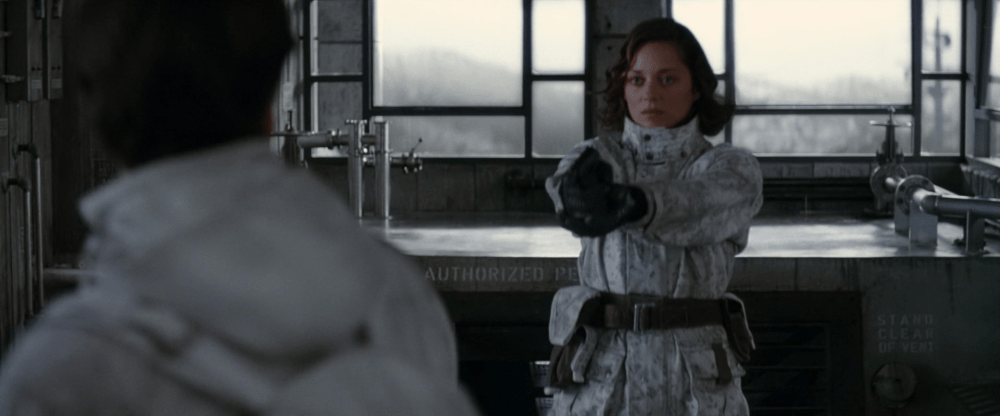
Marion Cotillard has never been more beautiful in a role, one that should make her cipher but is filled by her with rage, confusion and threat. As a violent projection of Cobb’s wronged wife, she becomes a harbinger of doom. Whether she arrives in evening gown or arctic combats when Mal appears the mission is one false move away from fucked. The personification of risk and disaster.

Then we have Inception’s greatest puzzle. Is the mission about ‘simply’ inspiring a business heir into splitting up his father’s empire or is it really about getting Cobb to forgive himself and re-enter the real world? Or both? Even when we are in what we assume is reality the architecture has a puzzle like circuitry, the screen occasionally wobbles, the mazes we wander around have a detailed anonymity. Can we ever claim to know when we are in the real world? Each character has a totem, a physical object that lets only them know if they are in reality from how it reacts to physical force, as long as only they know how it feels? Yet Cobb’s totem, the iconic spinning top, is actually Mal’s and has been touched by his mission setter Saito. So how trustworthy is it? When Cobb is taken to see a basement full of dream addicts, his pharmacist warns him he may not like what he sees. Probably as nothing wakes one from a dream faster than realising it could be one. How long has Cobb not been “stateside”?
If we look at the foreground mission with Cillian Murphy’s target, it reveals the recipe for Inception. The target needs to be emotionally engaged with the idea, feel like it is his own, and be conned into becoming part of the team’s sting to open up the deepest level of his emotional subconscious so the inception takes grip. Once we see this play out, could we not say Cobb has gone through the same journey? Have his friends made up a mission, so that Cobb can be distracted into unlocking and confronting his deeply buried guilt and return to reality? The more you watch the movie with this in mind, the more it becomes apparent we are watching two Inception heists.

Beyond hidden bonus plots, Nolan has made Inception as an ode to movie making itself. The team create worlds, limited yet convincing, so that action and drama and personal growth can take place. Like a movie set, if you were to wander off to the edge you would realise the con. Like a well edited scene, if you stayed for too long in one place you’d question the artificiality. But if the trick is convincing, distracting and dazzling… well forged as Nolan does masterfully, the viewer can believe a fake idea. You can use special effects to warp reality, turn cities on top of themselves or blow up an avalanche but the more you do it the more you bring attention to the pretence.
Like a great magician or skilled grifter or the finest auteur, Nolan shows us how the flim-flam is done, tells us it is flim-flam but does it so assuredly we get caught up in the magic. We believe. That’s what makes a perfect blockbuster. Inception.
10




 Bobby Carroll's Movie Diary