The Adventures of Priscilla, Queen of the Desert (1994)

9E19DA61-E00E-494C-81D9-508A58F654AF

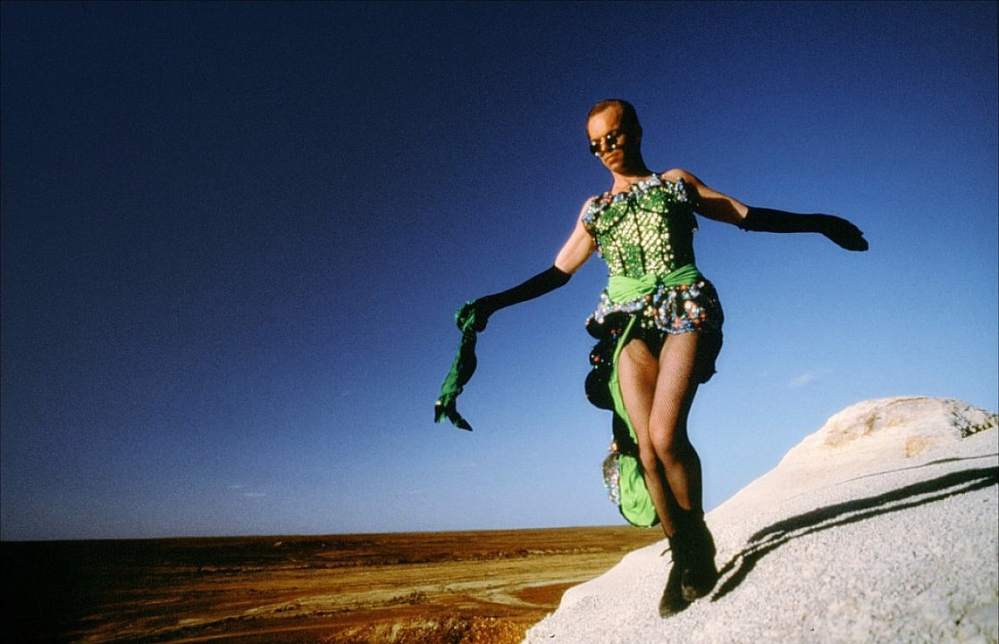
Stephan Elliot directs Terence Stamp, Hugo Weaving and Guy Pearce in this road movie about two drag queens and a trans performer heading to a show in the outback in a big pink bus. 

Coarse, shrill and grating… but then what else would you expect? The outlandish frocks add a surreal colour to the beautiful landscapes we visit, the lessons learnt have real heart. Weaving is superb as the man at a crossroads in his life, his interactions with his estranged son are hopeful and positive about the future. Rightly so. Stamp looks more than uncomfortable in the performance sequences and the female characters get very short shrift… that aside Priscilla gets by on spirit and bluster.

6

L’Amant Double (2018)

791CC6AB-FE2B-4C8E-A586-2D886B14CF4D

François Ozon directs Marine Vacth, Jérémie Renier and Jérémie Renier in this psychosexual thriller about a woman caught in an affair between two look-a-like brothers, both shrinks, who might be the same person. 

So many larks when it is a kinky mystery… a conundrum of fluid, smooth flesh conjoining and separating. Once Ozon shifts from the alluring confusion to the conclusion, the expected starts solidifying and it disappoints. Hitchcock for pervs, De Palma for nerds.

6

The Wolverine (2013)

5C36D008-B026-432C-BCA7-F76A119BFA0D

James Mangold directs Hugh Jackman, Tao Okamoto and Rila Fukushima in this X-Men film where Logan goes to Japan to protect the daughter of a man he saved in WW2.

Oof… we are tantalisingly close to a great film here. There are moments of brutality, isolation and sentiment that warn us of the eventual quality of Logan. There is a prolonged chase sequence from funeral to bustling streets to bullet train that feels like a Frank Miller / Chris Claremont issue come to life. Jackman, though subdued, gets plenty of room to shine… a restrained romance and nice buddy dynamic with his psychic ward (a stand-out Rila Fukushima). We get so close to the finish line following a route of noirish intrigue and bubbling emotion that it almost looks like The Wolverine will pull it off. Wash away the bad taste of the toyified mess that was Wolverine: Origins. Jackman arrives in a picturesque Japanese town for the final showdown, ninjas anchor him in arrows and chain… and then we end up in a fucking lab with fucking robots, fucking monsters and fucking falls off endless metal balconies. The franchise reverts to its baser instincts. It doesn’t just go full comic book, it goes full shit comic book. Sacrificing atmosphere and tension for mindless, weightless clatter. We almost got there. We get there eventually.

6

Filmworker (2018)

58AE73C6-4F6E-4131-A317-CCFDF63A83B2

Tony Zierra directs Leon Vitali, Stanley Kubrick and R. Lee Ermey in this documentary about the man who gave up a promising acting career to become Stanley Kubrick’s constantly on-call assistant.

Full of fascinating late period Kubrick anecdotes and trivia this is treasure trove for fans of the master. This a portrait of a man who clearly loves Kubrick, to devotional levels, and considering we all must love the great director to some extent, it is perfectly understandable. Do we get any great new personal insight into the famous auteur? Not really. He remains the fastidious enigma he always will be. Do we get an insight into the level of commitment he demanded from his trusted allies? Yes. And that relationship, while artistically worthwhile, feels vampiric and tragic. To see where Vitali begins his career to where he ends up, reveals a man who worked hard to facilitate another’s dreams then found few continued options when the dreamer died. Corporate Hollywood has no use for him, you’d struggle to think of another director who would require his Herculean skillset. Vitali is a ghost of filmmaking past. But as footnotes go his story is compelling.

8

My Top 10 Stanley Kubrick Movies

1. The Shining (1980)
2. A Clockwork Orange (1971)
3. The Killing (1956)
4. Barry Lyndon (1975)
5. Dr. Strangelove Or: How I Learned To Stop Worrying And Love The Bomb (1964)
6. Paths Of Glory (1957)

075D0179-3721-4E2E-B32E-F750E9007125
7. Spartacus (1960)
8. Lolita (1962)
9. Full Metal Jacket (1987)
10. Killer’s Kiss (1955)

Moonraker (1979)

450110C9-9F99-4CBB-A187-B24706EADE4D

Lewis Gilbert directs Roger Moore, Lous Chiles and Richard Kiel in this 007 action adventure that finds Bond investigating a genocidal space program and heading beyond the stratosphere.

One of the weakest Bonds. It sells out… chasing a trendy buck by going all sci-fi for the last half hour. Yet giving us one of dullest, least convincing Bond finales ever. Extras wobble about on wires and the villian, a watery Drax, is easily defeated. It is daft. Joke heavy… but jokes that make no sense. Gondolas end up having secret weapons… Jaws goes good and all for the love of a buxom midget nerd woman… Bond shoots a man in front of witnesses and then just saunters out of a country house front gate. A PIGEON DOES A DOUBLE TAKE!!! It essentially is a tonally off retread of The Spy Who Loved Me. The action isn’t as strong, the Bond girl isn’t as memorable and Rog doesn’t seem to be having anywhere near as much fun. A watchable car crash.

4

The Kings of Summer (2013)

F1840C68-8291-43A7-B0EC-C479A29BCD03

Jordan Vogt-Roberts directs Nick Robinson, Gabriel Basso, Moises Arias in this teen comedy about a group of kids who build their own home in the woods and runaway for the summer. 

Tries so hard to be stylish and affecting. Achieves the former and fails at the latter. Essentially a sexless Superbad for kids who pretend they don’t wank. Looks nice.

5

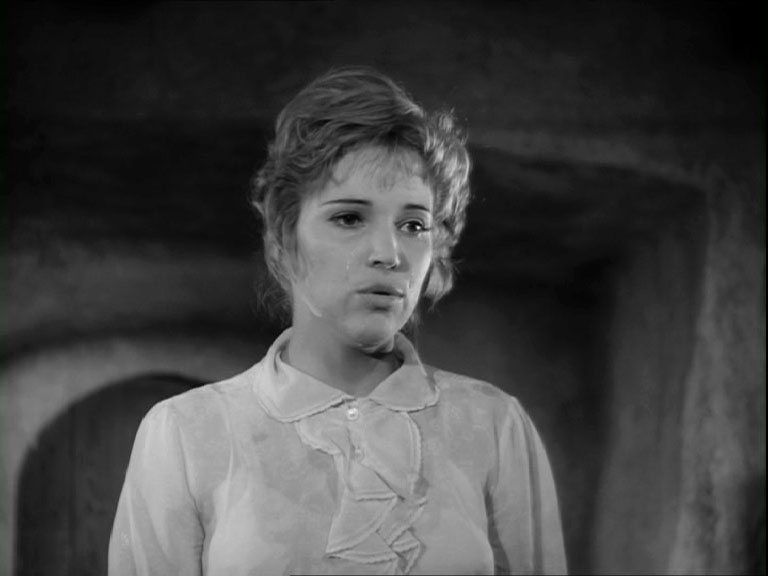
Jeux Interdit (1952)

ED5443B9-0B52-4B3E-9389-21554B69AE82

René Clément directs Brigitte Fossey, Georges Poujouly and Laurence Baudy in this wartime romance between a farmer’s youngest son and a diddy Jewish war orphan in rural France.

Incredibly cute and unavoidably dark, we open with a sequence of harsh sentimentality that out manipulates Spielberg. A refugee family is shot down on a bridge, the only survivor a cute infant in a party dress carrying her dead puppy. Things get better, a bickering family take her in, the son takes a shine to her and to avoid the horrors of war and death they begin stealing crucifixes for a makeshift animal cemetery of their own creation. There’s neighbour squabbles, cute flirting and prankish larks… but eventually reality catches up with the pastoral fun.

8


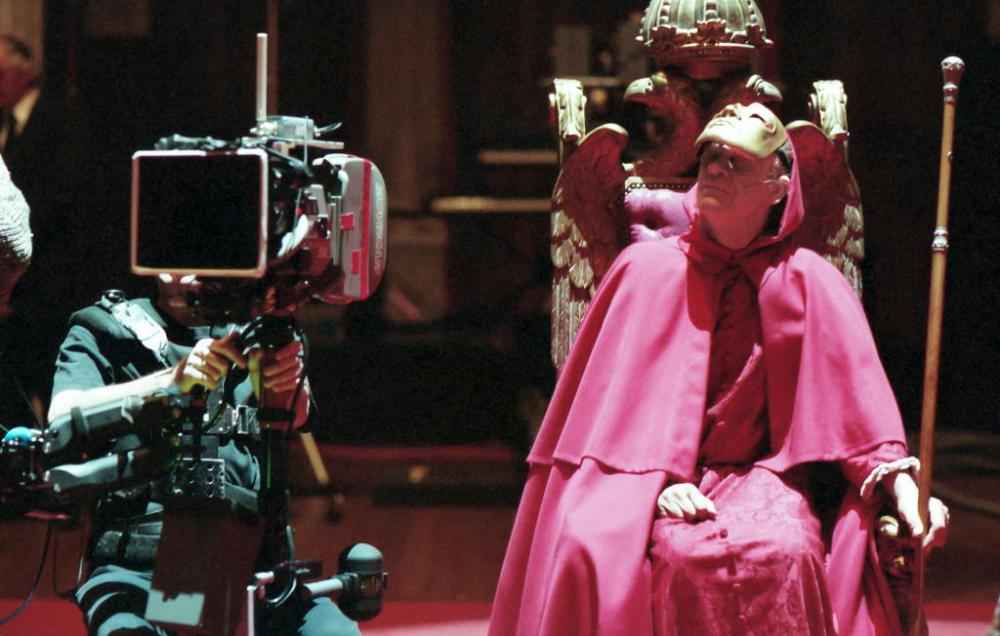
The 6th Day (2000)

B1AE8C21-9C9F-42A7-9797-9DBC4CB200D8

Roger Spottiswoode directs Arnold Schwarzenegger, Tony Goldwyn and Arnold Schwarzenegger in this cloning sci-fi thriller where Arnie’s helicopter pilot comes home to discover he has been replaced… by himself. 

It says something when the most intriguing concept a blockbuster throws out there is a Nacho flavoured banana. Made in that down period when Arnie was eyeing up politics – his box office power was on the wane and he avoided having guns or violence in the marketing materials – The 6th Day is neither fish nor fowl. It follows the template of Total Recall almost slavishly yet avoids gore and glee. It feels more akin with similar flat, rote futuristic chase movies of the era (Paycheck, Minority Report, Hollow Man) presenting a clean, sheeny world of hologram advertising, glass corporate lobbies and aluminium labs that seem too glossy to ever occur. It is almost like the millennium hit and Hollywood saw no fun in the idea of imaginatively conceptualising the future now we were actually living in it. At the script’s heart, it is a clone of Harrison Ford’s The Fugitive. With an innocent man being doggedly pursued while trying to figure out how his life was destroyed. Yet the thrill of The Fugitive was seeing Harrison Ford’s regular guy dive headfirst off from a real cliffhanger, run desperately through real moving traffic and slip through the net milliseconds before it would have ensnared anyone else. Arnie has always been superhuman. He eats cliffs, the traffic swerves to avoid him and he wears bear traps as earrings and nooses as a necktie. Arnie is the roadblock. You don’t come to a Schwarzenegger flick for conspiracies and close shaves. You come for carnage. Now, there are laser battles and, in one neat moment, feet and fingers are severed by them. And there is a finale involving two Arnies teaming up. Guess what? Arnie has great chemistry with himself… even if he struggles to look himself in the eyes. But that all comes a little too late. The plot is just too uninspired, the set pieces a little too safe. It passes the time but it never raises the pulse. Arnie himself works hard, there is a dated humour to it all that tickles the nostalgia receptors but it just never comes to life. A tale about cloning that never replicates the spirit of the various movies it unashamedly apes.

4

Kings of the Road (1976)

F6B21710-794A-4F20-9345-3EA2C00968BA

Wim Wenders directs Rudiger Vogler, Hanns Zischler and Lisa Kreuzer in this West German road movie about an itinerant, hipster truck driver who picks up a lost man and warms to the idea of company. 

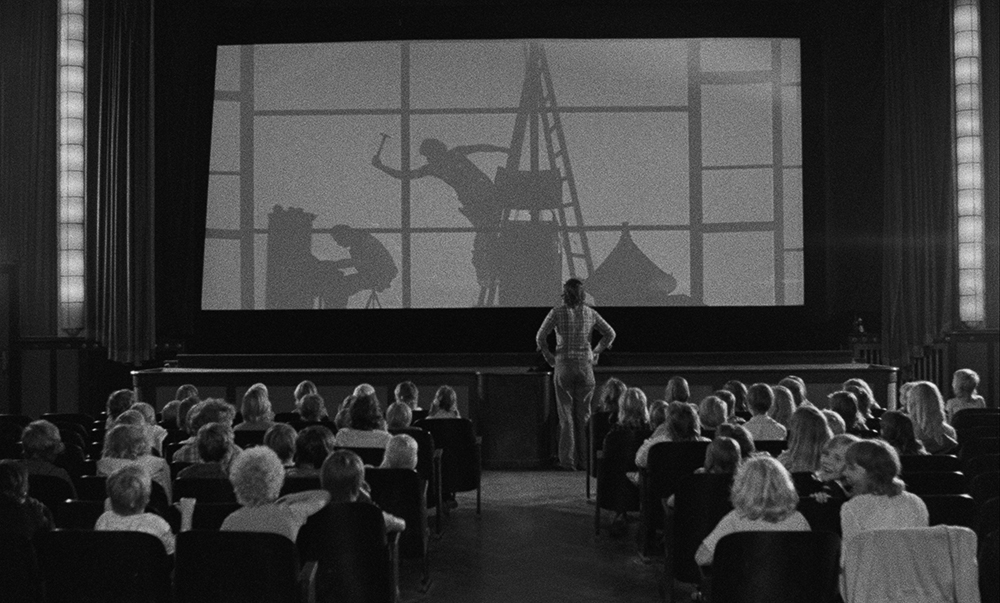
I came to Wim Wenders arse backwards. In my youth his contemporary releases were pretentious gubbins like Million Dollar Hotel and his accessible classics like Paris, Texas and Wings of Desire were a bit too mature and ponderous for a teen to appreciate. I reckon I would have dismissed Kings of the Road too, if I had sat through its three hours of nothing in my callow, restless years. Nowadays I can see the wizardry in spinning a plate for a feature length, especially when the pole the trick is performed with lacks the strength of story and the flexibility of resolution. To enrapture the viewer through mere mood, emotion and character is a dazzling skill. To let us get driven through a country with no map, no destination and no familiar signpost is to gift us with a freedom rarely experienced in cinema. If anything Kings of the Road most resembles Richard Linklater’s best works like Dazed and Confused or Boyhood where we watch the coming and goings of a group of characters with only their pleasures and boredoms dictating the unforced, unremarked upon growth we witness. Only Wenders does not fall back on the distractions of busyness and over population. In this time capsule of two men drifting across 1976, we explore their faltering friendship. One is taking an unplanned time-out from city life after a break-up. The other has chosen a mobile hermitage. Driving his truck of cinema parts through out the small, dying cinema circuit of small town West Germany. At first our driver, Bruno (a charming Rudiger Volger) seems like the more relaxed and happy of the two. He has chosen his life of isolation and separation. Yet having the continued companionship of another through his days of shitting in fields and shaving in a wing mirror puts him off. He passive aggressively bristles at the idea of continued friendship. His new friend (Hans Zischler as the scruffily urbane Robert), sensing his intrusion (they after all share the undivided cab of a truck as a living space), makes excuses to break away and rejoin en-route. Self consciously giving his loner benefactor reprieves so their freindship can continue. He loves having the countryside and the lay-by as his holding pattern but seems to know it is an interlude rather than a way of life. He warms to but never embraces the driver’s isolation.  And all this is communicated pretty much wordlessly.  There are stirring vignettes… the boys find themselves in proximity to a crash, an awayday from the truck on a motorbike and sidecar, an unfulfilled overnight seduction of cinema usherette Lisa Kreuzer and a hall of children are entertained as the repairmen become shadow clowns for them. Robby Müller’s gorgeous monochrome cinematography hunts for the starkest road side scrubland and the most tellingly populated crossing points. And lastly, Wenders’ best film is a love letter to cinemas themselves. The few times the boys stopover in civilisation with others, they are delivering or repairing ageing projectors. Talking to the owners about a world under threat. Less people are coming, the movies have changed, they no longer speak to the common man rather than tell him what to think. Kings of the Road feels like the accidental antidote to the very symptoms it highlights. A celluloid love letter to unspectacular interaction and the beauty in the everyday. Its aimlessness gets you in right in the feels,  promises you an envious way of life you never knew you wanted.

8
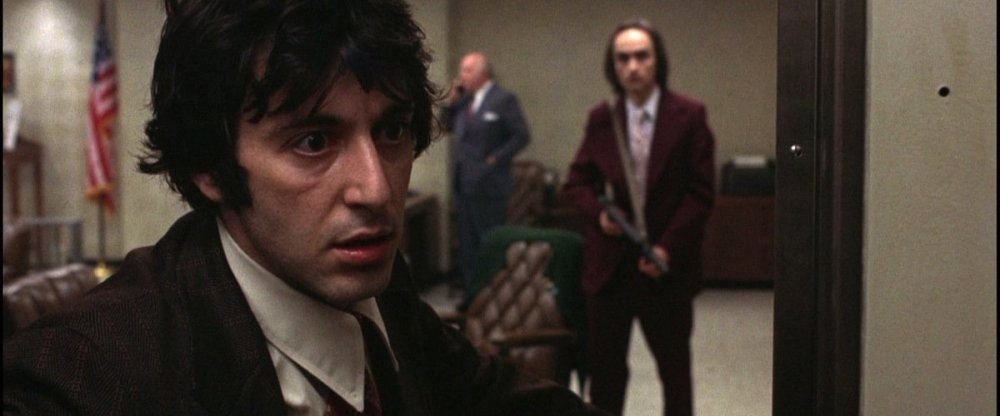
Movie of the Week: Dog Day Afternoon (1975)

4BECF674-C707-4C47-BFDB-2CE870381E0A

Sidney Lumet directs Al Pacino, John Cazale and Charles Durning in this true crime story of a bank robbery that goes wrong in New York City, inviting a police siege, a media circus and no way out for the inexperienced criminals.

One of the finest films ever made – it bungs you right dead centre into its chaos. You feel every emotion of the unravelling farce of the robbery and then share the mounting pressure to escape. A film that deftly explores police brutality, gay rights and the reality of criminality yet keeps its wry sense of humour. Pacino is superb, delivering probably his most nuanced performance as a frazzled first time robber walking the highwire tightrope of keeping himself and the hostages safe while still desperately trying to negotiate a break. He is showy, slightly effete, without being hammy. Still and silent John Cazale’s simple and unhinged partner in crime is a liability… a troubled, confused man with a machine gun. Fine, if they were in and out in five minutes but not built for the day long tensions of the stand-off. Lumet’s recreation is one of reportage – he wants to capture the heat, the antagonism, the circus and the mania of the extreme situation. It helps he is on home turf. New York plays itself perfectly here, it wouln’t have quite the same energy if set anywhere else. In terms of pacing… we probably get stuck a little on Pacino’s Sonny meeting loved ones a tad too much in the final stretch. But it is an indulgence you can forgive a near perfect, gripping and classily pleasurable drama.

10