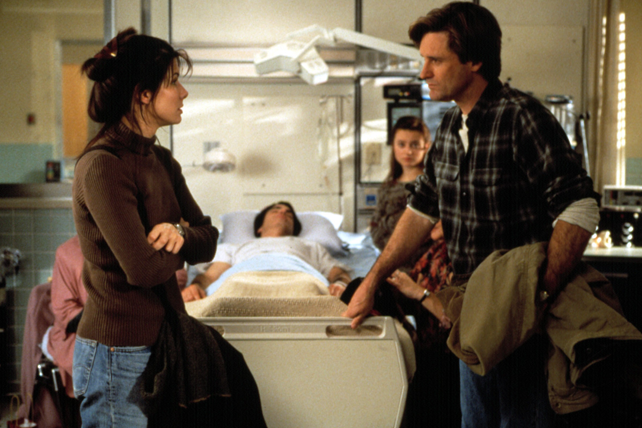
Jon Turteltaub directs Sandra Bullock, Bill Pullman and Peter Gallagher in this romantic comedy about a transit worker who saves a handsome commuter, then pretends to be his fiancée while he sleeps in a coma.
Petty much standard Hollywood product for its time. Only really notable for promoting Bullock and Pullman to star and leading man status respectively. They had languished as second fiddles for most of their careers and now they were carrying a movie. Suprising, only in how their likability manages to spin the bad taste premise (coma victim family conned and exploited by stalker) out without ever even looking into the shadows of it. This stays cutesy wootsy, safe a milk throughout. In fact, it goes into overtime with the plot machinations and somehow outstays it’s welcome… there’s a far earlier moment in the narrative where everything can be tied up neatly without testing the patience.
Gore Verbinski directs Armie Hammer, Johnny Depp and Ruth Wilson in this mega budgeted western about a masked lawman and his native sidekick.
The Pirates of the Caribbean team produce their best Pirate film with nary a long sail or swashbuckle in sight. This large cartoonish western has issues. It is way, way, way too long and convoluted. Depp’s Tonto is good value within the fiction but difficult to defend in the real world marketplace. Yet if you can get past these stumbling points, then there is an unprecedented scale, kineticism and visual unhingedness running throughout that creates a lot of daft larks. Unpack it, unpick it and there’s a joyously OTT movie here, and a western to boot. The William Tell Overture scored railroad demolition derby finale, for example, is a manic joy to behold. Very watchable.
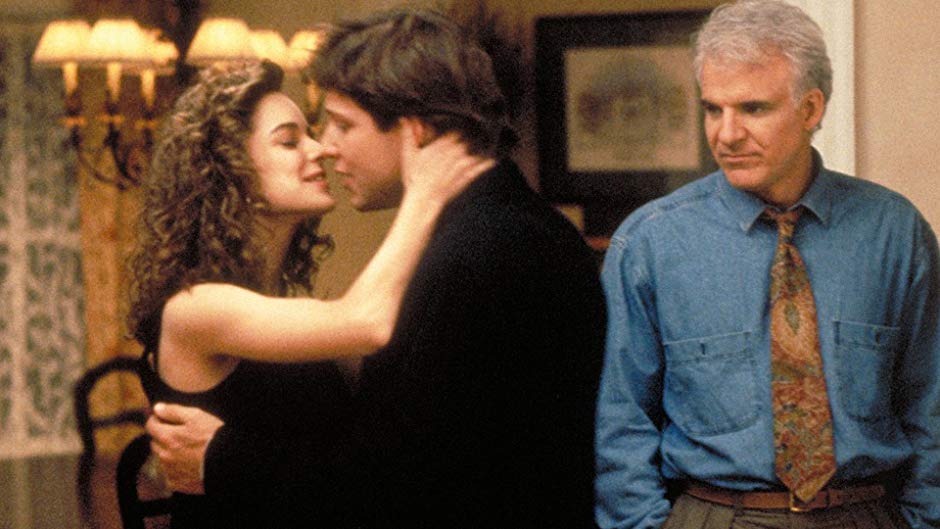
Charles Shyer directs Steve Martin, Martin Short and Kimberly Williams in this family comedy about about a loving father not quite ready to let his little girl go when she announces she is getting married.
A remake of a Spencer Tracy movie, and let’s be honest Steve Martin is no Spencer Tracy. Strange that he choose to suppress his trademark wild and crazy energy to play straightman in a series of glossy, interchangeable family comedies. It feels a waste having him in such light, manipulative fare. Yet if you can get past the lack of jokes and palpable deficit of craziness, you can see why he made the shift. These projection booth soufflés made more box office dollar than his wackier jaunts in the 1990s. The film itself is easy listening filler, pleasingly gliding through its own warm sugary doughyness. The wealth on display is slightly offensive, no one lives like this and complains about the cost of a wedding. But part of the hook is seeing the chocolate box lifestyle turned into something even more… ‘aspirational’? Maybe tastefully gaudy is the more apt words. Anyhoo… you can’t blame a film for being what it is, not when it is so masterfully assembled. A product, made not for me, but made well.
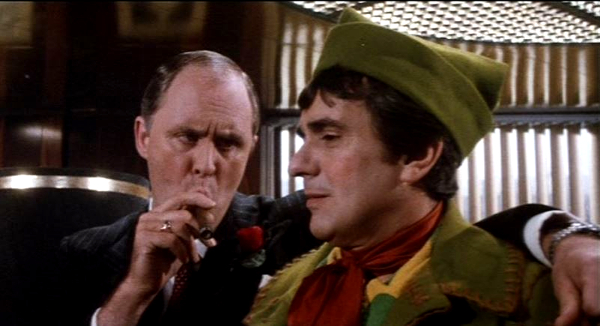
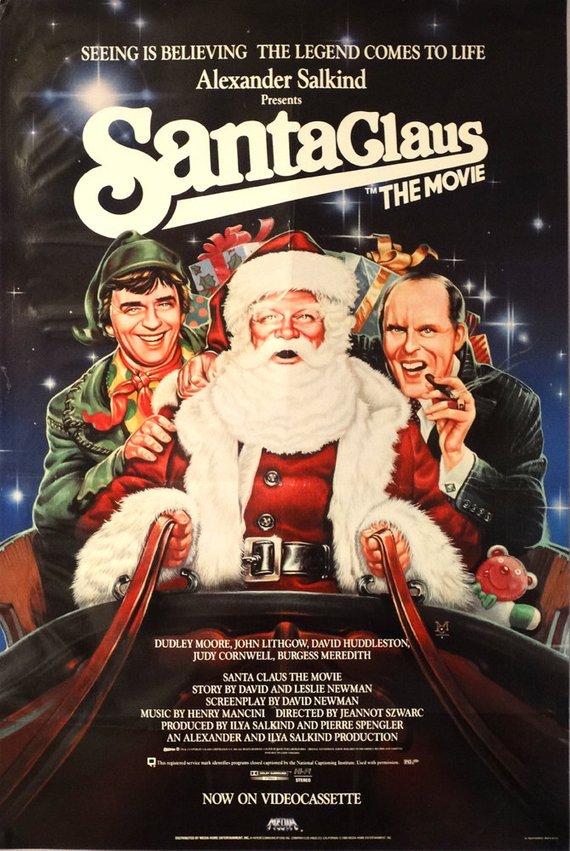
Jeannot Szwarc directs Dudley Moore, John Lithgow and David Huddleston in this Christmas “classic” about the creation of Santa and a runaway elf who makes some dangerous magic candy canes.
A Christmas perennial. I remember going to see it as a child, in a cinema so rubbish it had no foyer. You had to wait in its cold, wind inviting shared doorway, shared with a smoky snooker club. Then I remember watching it again at our church community centre. A bizarre three coloured lightbulb projection system was used that you only saw at youth clubs and caravan parks. A big wooden box, a plywood piano of image generation, was rolled out in front of the children seated on hard floor and we peered at a murky, dim picture for two hours. And then it was on ITV, programmed with so many adverts it devoured a whole afternoon. Every Christmas, Santa Claus: The Movie in all its gaudy, uneven glory.
I know everything wrong with this film. The two, basically unrelated halves. One a Father Christmas Begins that brushes over the fact the Clauses and his mortal reindeer freeze to death in the first ten minutes. The second a dry run of Elf, where Dudley Moore’s accident prone toy making creature teams up with an exploitative capitalist. The two plots are cleaved down the middle by a homeless kid watching people eat McDonalds and enjoying a can of Coca Cola. The film literally takes a half time break to show us what happens in a fast food restaurant in 1985, getting us salivating for a post cinema Big Mac. Big Macs were massive in 1985. The Salkinds are infamous for producing two movies out of one production shoot, conning actors out of double fees and recycling sets and costumes. This is the opposite. Two barely connected stories, smashed together by a product placement sequence.
Dudley Moore, has the most screentime over both sections… and is dreadful in this. Every other line a pun on the word “elf”. Elf improvement, Elf and safety, Elf determination. Pffffffff. Lithgow is a belter though as the smarmy capitalist bad egg, B.Z.. A pantomime villian for a movie that doesn’t realise it is a pantomime. As for The Big Lebowski himself as Santa… he kinda gets lost in his own movie. He does help a homeless kid but then leaves him on the street two winters in a row. A more realistic film would show what a burnt out shell that street urchin becomes from being abandoned to the doorways by Santa for the other 364 days of a year.
It is too much movie, none of it holds together well, with loads of creepy toy making montages whenever the energy threatens to drop to flatline. Yet I regard it fondly. For a bad film it never bores. I know all its beats back to front. Like Christmas dinner with the family you know it is not the most pleasant dining experience but it reorders your soul, brings you back to a comfortable place, easier to digest than a new experience. Having justified the film in a hippy dippy way, I’ll conclude by saying I’d never ever watch this beast of cheese outside of December. You shouldn’t either.
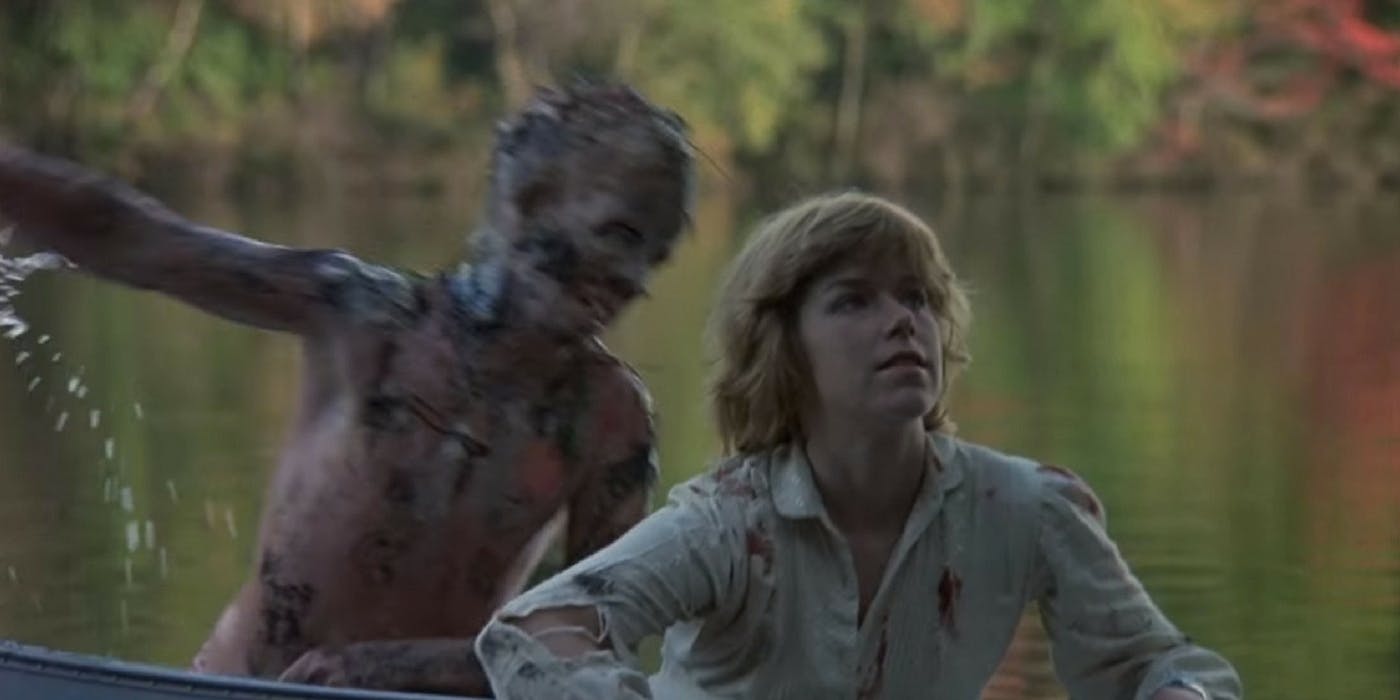
Sean S. Cunningham directs Betsy Palmer, Adrienne King and Kevin Bacon in this slasher film set at a summer camp with a tragic past.
Not a well made film, nor even an effective horror but I revisit it surprisingly often due to its cult popularity. I should probably stop revisiting it, there’s little here that isn’t done far, far better elsewhere.
Bob Clark directs Olivia Hussey, Keir Dullea and Margot Kidder in this festive slasher flick that kick started the whole cycle.
The original if not quite the best. There’s a solid ensemble – Kidder stands out for the right reasons, though poor gorgeous Hussey cannot even answer a phone convincingly. Luckily she has beautiful flowing brown hair, rivalled only by Katherine Ross in the straightness stakes. The Christmas setting adds a nice creepy juxtaposition. Plotwise it works, the girls are heading off to see their families which means missing teens can and are overlooked. What makes carol singers and twinkly lights so cinematically menacing? It must be more than the cold outside, unforgivingly turning your breath into a ghost and making your hands ineffectively shake. Maybe it is a time that should be joyous and colourful still can’t stop a killer nor protect the vulnerably lonely? The kills themselves aren’t that imaginative but the killer POV sequences were copied by pretty much every horror that followed in Black Christmas’ wake, even the mighty Halloween. The best bits are the disturbing, taunting sex phone calls, that appear to be the work of five maniacs. Black Christmas’ coup de grace is we never find out who the killer is. Yet it has an air of self parody that slows things down and probably needs one extra stalk and kill sequence at the one hour mark to take some of the hot air out of it. That is hindsight now we know what works in the genre, this first stab is still better than most of its bland imitators.
Matthew Robbins directs Jessica Tandy, Hume Cronyn and Dennis Boutsikaris in this sci-fi parable about the residents of a derelict apartment building saved from eviction by tiny living flying saucer robots.
How did this ever get greenlit? The leads of this kid’s movie are Alzheimer’s ridden wrinklies (Cocoon had been a sleeper hit.) The alien robots are off screen for almost two thirds of the meandering plot (it was originally an Amazing Story for TV that Spielberg liked so much they expanded it to feature length.) The Amblin brand and the Drew Struzan drawn poster misled us into the cinema. I definitely went to see this on release. There’s not enough fun here for kids, it is too saccharine for adults. Yet it conned money out of my mum’s purse 30 years ago and again stole two hours of time out of my nostalgically curious adulthood this week. Well crafted but redundant.
Boots Riley directs Lakeith Stanfield, Tessa Thompson and Armie Hammer in this anti-capitalism satire that follows a cold caller who is promoted within his company opening up a dark, fantastical conspiracy to exploit the workforce.
A wildly unpleasant surprise, possibly the best cinematic satire since the long forgotten Bulworth. What starts out as a keen and quirky parody of race suppression in a sales environment suddenly spirals maniacally out of control into shocking and absorbing directions. As visually outlandish as the storytelling becomes the points made feel apt and humanistic. It helps that every piece of casting is a smash, marrying interesting faces with unique roles. Lakeith Stanfield in particular, continues on from his fine work in TVs Atlanta (a spiritual cousin in formal invention and subversion), with his lynchpin lead. His complicit victim is weak willed yet self aware, physically hunched over as if he carries the ethical weight of all the world’s ill on his shoulders. He is mirrored in the eventual arrival of Hammer’s self absorbed, thrusting tycoon. The bullying air of threat is soaked into every friendly gesture of this familiar megalomaniac. Of course, this would all fall apart if Sorry to Bother You wasn’t funny. Boots Riley manages to hit all his targets with a cruel wit and escalating mania, you can’t help but laugh out loud at the horrors he unfolds.
Clea DuVall directs Melanie Lynskey, herself and Natasha Lyonne in this ensemble drama about a group of friends who reunite in a former plantation house to tell one set of pals that they should divorce.
One of those films with a cast you really like struggling with problems you really couldn’t care less about. White people problems. I’m white but I’m not this white. Not the worst of its kind, but blurrily undefined in every movie making quality, so it can be absorbed and lost among its unspectacular sub-genre peers.
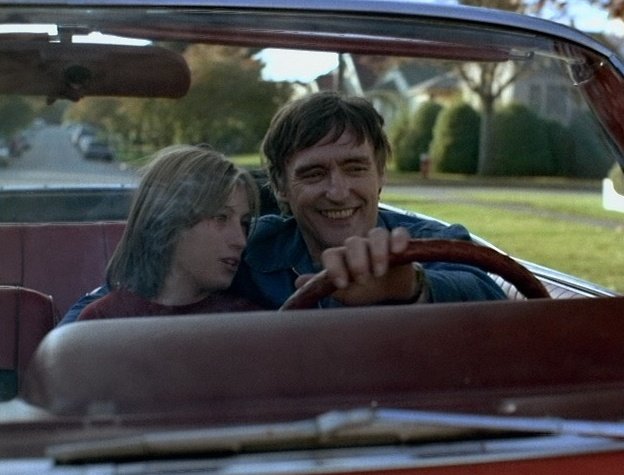
Dennis Hopper directs Linda Manz, himself and Sharon Farrell in this grim coming of age tale where a tough kid explores punk just as her trucker Dad is released from prison.
Had high hopes (ordered the DVD from Australia) for this but it proves to be aimless, sleazy and depressing. For nihilists who like seagull shit only.