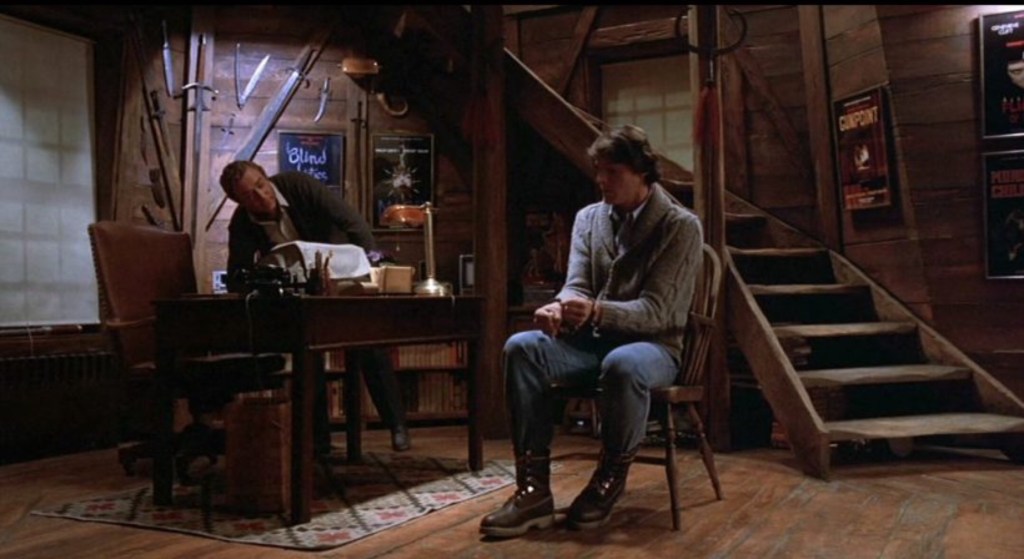
Sidney Lumet directs Michael Caine, Christopher Reeve and Dyan Cannon in this filmed play about a murder mystery playwright who needs a smash even if it means killing someone.
Very meta. Have seen this live and it works better. Always nice to enjoy Reeve in a non-Supes role. The silly psychic character feels like a deep tongue-in-cheek choice that tears a hole in the face. Fun but not earth shattering. Side note – I like Lumet’s habit of working every year but alternating between big meaty dramas or crime pics and then relaxing into just taking a Broadway hit and figuring out the camera set-ups and which movie stars would work in an intimate environment for his fallow year. Kept him busy, stopped him becoming stale.
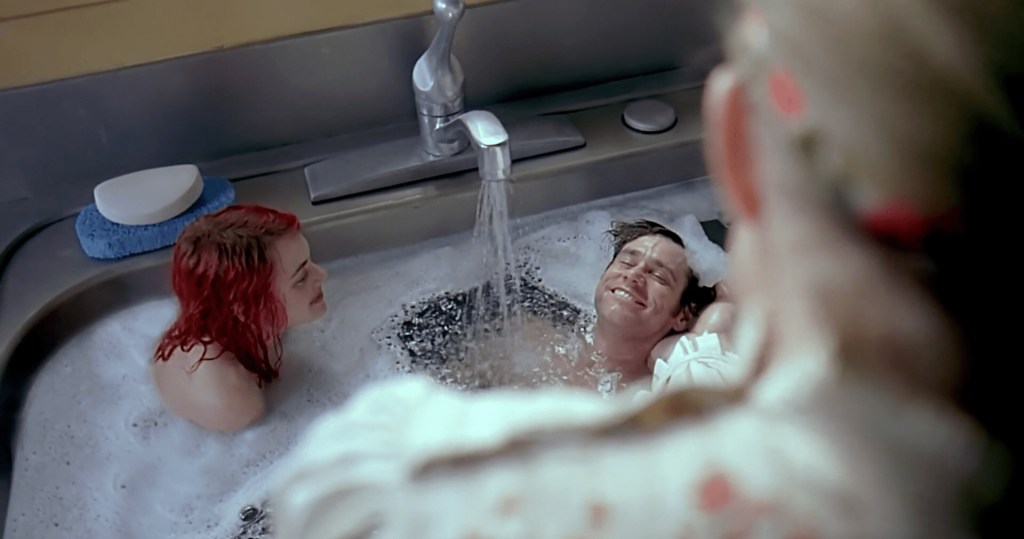
Michel Gondry directs Jim Carrey, Kate Winslet and Kirsten Dunst in this surreal anti-romantic comedy where a heartbroken man gets all the memories of his ex wiped.
Charlie Kaufman is a fascinating writer and film maker. His work is deadpan but emotionally rich. Surreal but grounded in the mundane. Literate to the point of being obtuse (there are at least two of his movies whose titles I wouldn’t be confident saying out loud in public) yet the feelings his complex meta narratives interrogate are universally recognisable. He picks away at the scabs of modern living, modern relationships and our vicious internal lives and turns these assassinations of the now into vivid, original flights of fantasy. Watch our protagonist’s Joel Barish’s memories crumble, wipe, self destruct and eliminate before our very eyes. A bleaker, sustained visual metaphor for forgetting has never before been realised on screen. Quirky French video director Gondry might have come up with the methodology but Kafman’s script of brain immolation is the blueprint for this stunning live delete. The central invention of the story could only occur in a pre-social media age. So this 2004 baby gets in just under the wire as one of the last analogue era artefacts of relationships before Facebook. Now our memories aren’t hidden in shoeboxes or on dusty album shelves, contact with people is a lot more difficult to switch off. Few of us truly leave our hive never to be heard from again. Our footprint left in others lives is impossible refill and our contact with others who share contact is harder to sever. It is quite quaint seeing Kaufman and Gondry’s world of cassette tapes, mass mail outs and hand written notebooks. There’s a bleak cynicism to the narrative thrust. After starting to have his memories of Clementine erased Joel begins to realise he loves her. He needs the context of the last few years, the adjacent memories of books read and knowledge earned… he tries to stop the delete and save the relationship. Hold onto one last recognition of her so he can reignite the partnership once the process is complete. But he only starts his quest once the hurt, paranoia and doubt has been removed. Who is to say Clementine and Joel will fare any better on the second attempt? Or even if this new attempt will be only their second attempt? How many previous tries to make a go of it have already been wiped? The final act is genuinely heartbreaking… revelations, reconciliations and important moments in one’s emotional development reduced to fading whispers. “I need your loving like the sunshine. Everybody’s gotta learn sometimes.” A paranoid nightmare and the finest break-up movie ever made.
Sarah Polley directs Rooney Mara, Claire Foy and Jessie Buckley in this drama where the women of an insular religious community decide what to do when it is revealed some of the men have been raping them in their sleep over the decades and they are now instructed to forgive them.
A #metoo The Crucible… only nowhere near as compelling. Allegory. Talky allegory. Characters who represent reactions rather than fully blooded humans. Viewpoints rather than actual women. Moments of magical realism that clang. Attempts to humanise with bursts of levity and laughter that make no sense. Women Talking can feel almost parodic at times… I guess that’s the ultimate peril of sincerity. The poetry and meaning of the monologues and representations might be worth unstitching if it wasn’t so fucking boring. It does at least look beautiful. Like a Terrence Malick film with the nitrate scraped off. You can’t deny the quality of the cast… although Frances McDormand fans might feel poorly catered for. The slightly touched man sat behind us at the multiplex read the BBFC content warning out loud just before it all began. “Sexual violence references, sexual threat, domestic abuse.” “Ooh excellent!” he proclaimed unguardedly. That was the closest we got to entertainment here.
Peyton Reed directs Paul Rudd, Jonathan Majors and Kathryn Newton in this threequel Marvel movie where the extended Ant-Man family face down Kang The Conqueror in the Quantumverse.
Now I went into this with lowered expectations and found it wobbly but pleasant. There was nothing I loved but plenty I liked. The character design of the Quantum Realm denizens – some of whom are glimpsed for only the blink of an eye was consistently excellent. Think Bioshock, think Flash Gordon, think Hellraiser, think Pixar. Michael Douglas, Michelle Pfeiffer and Newton get plenty of memorable time on the playing field. Almost to the point where Rudd (to an extent) and Evangeline Lilly (in particular) feel underserved. No Michael Peña = sad face. This is a Kang movie though in all but name… And Majors brings an alluringly different energy than we are used to in Marvel. There’s definitely shades of Star Trek’s Khan here and I doubt anyone really ends the movie not wanting a lot more from the character. After we sat though the end credits, the packed house of fanboys I saw it with made bestial noises about the mere idea that he and another character, one who gets plenty of episodes and isn’t exactly a shock reveal, might appear in the same room together. I couldn’t see what all the fuss was about myself. Action-wise the portions are too small, comedy wise the jokes are a bit bludgeoned. 90% of the movie is done in front of greenscreens recalling the worst indulgences of Attack Of The Clones. The overall flow of light but portentous throwback adventure isn’t too dissimilar to the Lucasfilm prequel trilogy. I’ve seen the busy FX and slightly uninspired landscape visuals come in for a real kicking online. There’s one returning character who actively splits the room in terms of their strange reincarnation. I was alright with him and the other serviceable cameos and meh fan service. Ant-Man 3 works as a disposable one watch stand-alone romp and I digged that aspect more than I thought I would.
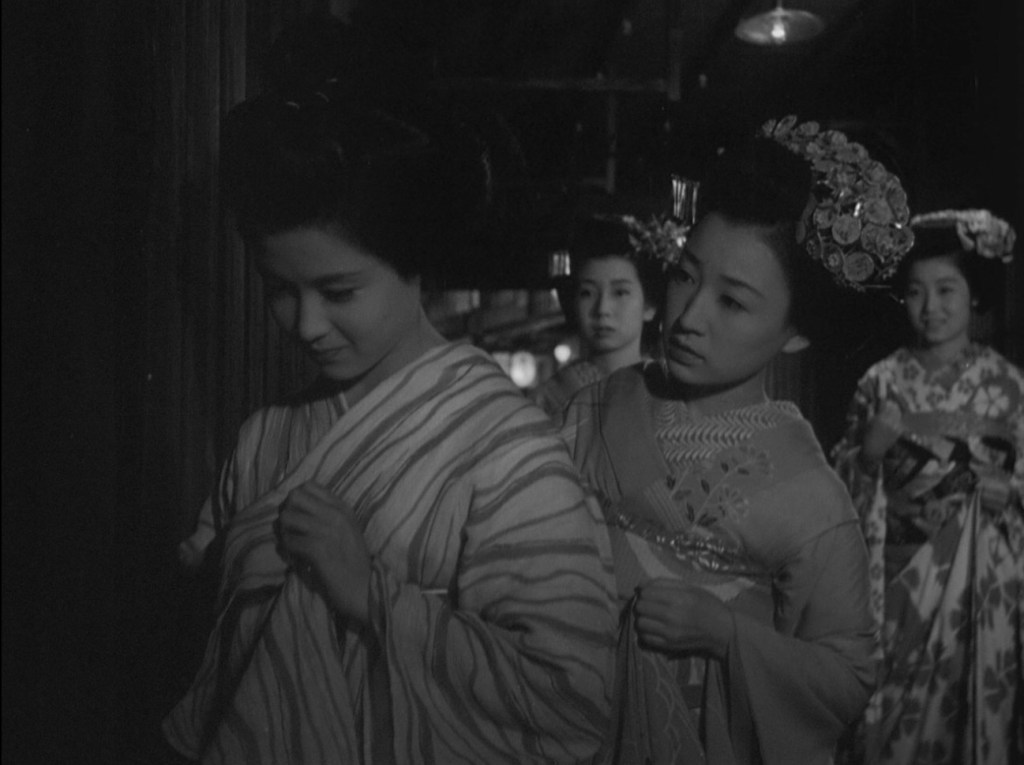
Kenji Mizoguchi directs Michiyo Kogure, Ayako Wakao and Seizaburō Kawazu in this Japanese drama where an independent geisha takes on a protege.
Beautiful but stark drama about how outside (craven, capitalist) forces will peck away at a perfect thing until they destroy it. You can’t own perfection. We should all have to go to geisha training camp – wish there was another movie completely set there.
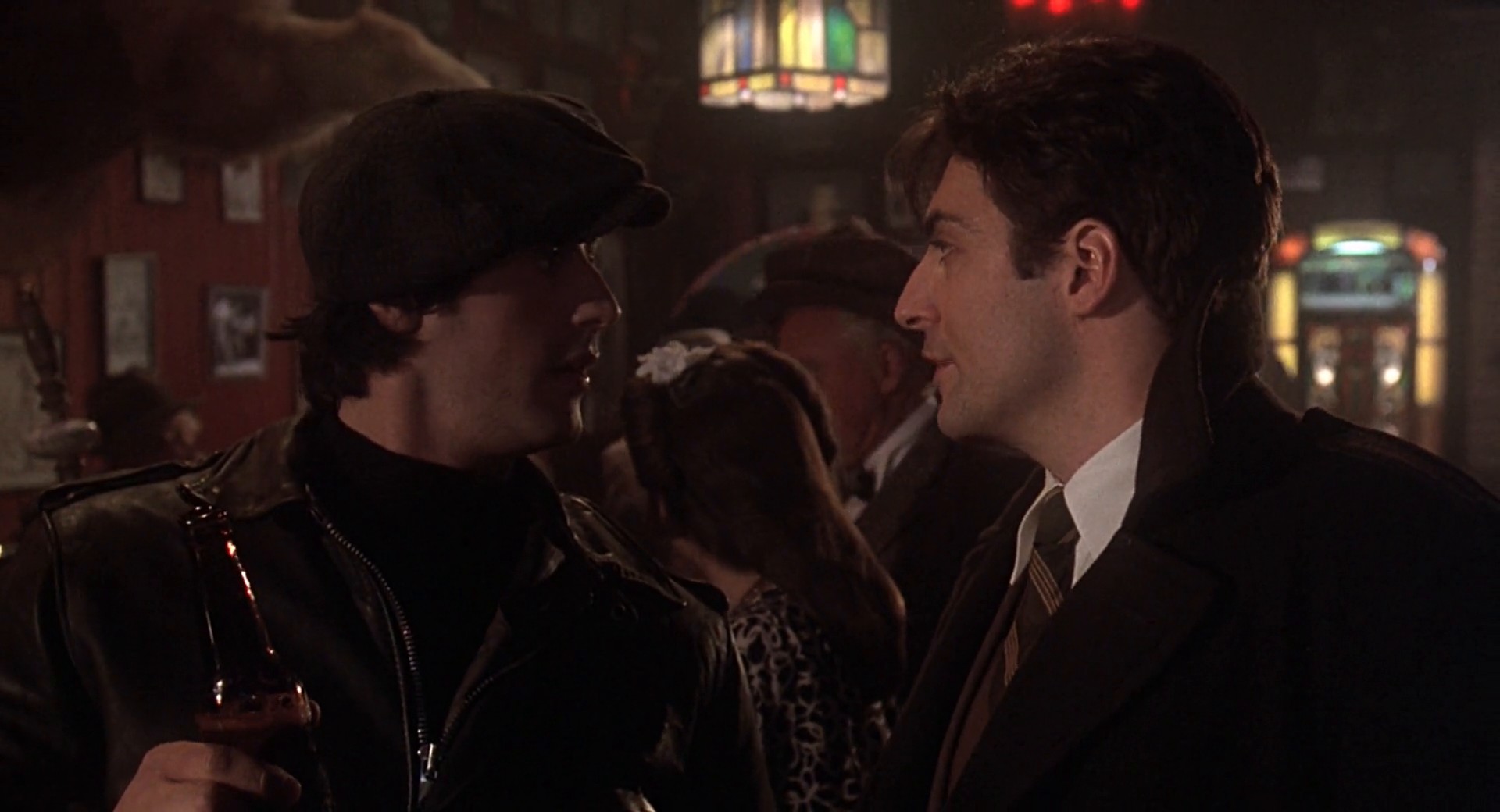
Sylvester Stallone directs himself, Lee Canalito and Armand Assante in this drama about three brothers in post-war New York who hustle themselves into the wrestling game.
A weird tone – kinda like a Depression era Sixties Batman episode (sans superhero vigilantes) but set in the decade in between both those strong flavours. It is also quite similar in family dynamic to Visconti’s Rocco And His Brothers. The whole vanity project mish-mash was quite alienating to begin with, Stallone even croons a miserable theme song. Yet it coalesces into something quite sweet and the wrestling stuff is as rousing as a Rocky’s boxing. A sleazy treat.
Harry Wootliff directs Ruth Wilson, Tom Burke and Hayley Squires in this British drama where a depressed Job Centre worker’s life goes off the rails once she starts fucking one of her users.
Not as erotic as I’d hoped for. Quite miserable and often too vague. There’s every chance this is more grim fantasy, even more so than say Repulsion, Saint Maud, Censor, etc. And this never goes flat-out horror but it is a tale told in much the same mode. Wilson and Burke are indisputably captivating screen presences and they save this from being a complete drone.
George Cukor directs Katharine Hepburn, Cary Grant and Doris Nolan in this romantic comedy where a whirlwind romance hits a bump when the young free thinking man obviously has more in common with the black sheep sister of his betrothed’s family.
Essentially a filmed play but Grant and Hepburn have some lovely moments together. Feels as much about responsibility and philosophical freedom as it does fancying your sister’s fiancée.
7
Perfect Double Bill: The Philadelphia Story (1940)
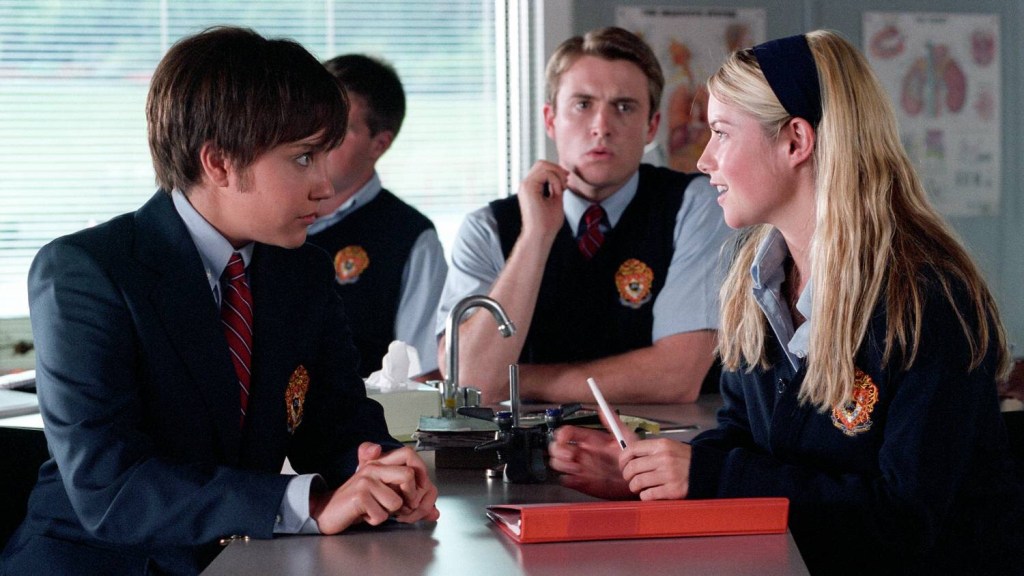
Andy Fickman directs Amanda Bynes, Channing Tatum and Vinnie Jones in this teen comedy romance where a keen footballer is shut out of her high school team due to sexism so she poses as her brother at his new boarding school to play with the boys.
Formulaic but you couldn’t accuse Bynes of going at any or every line reading at half mast. She powers through weak jokes and predictable contrivances like a spasming dynamo. More power to her.
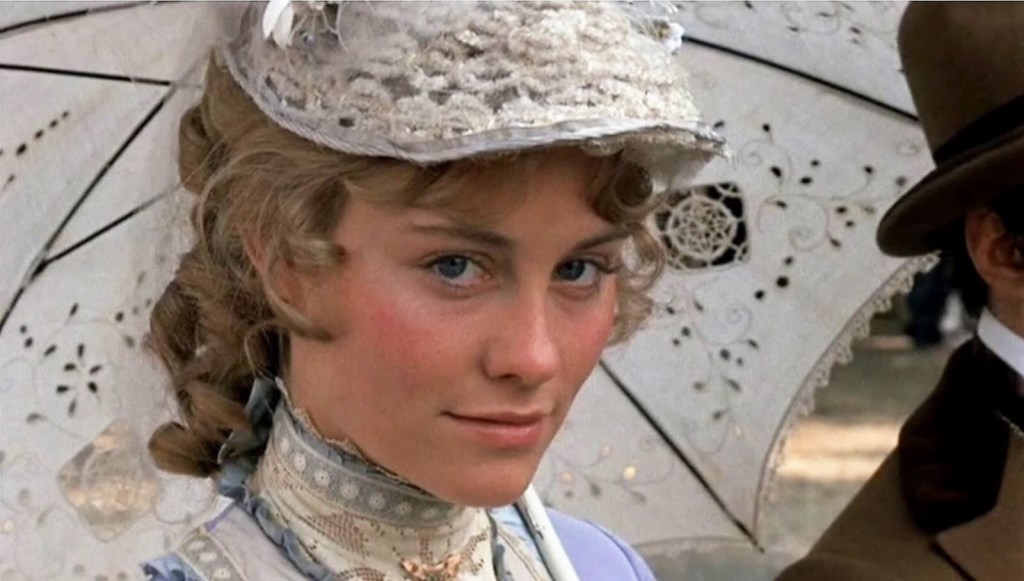
Peter Bogdanovich directs Cybill Shepherd, Barry Brown and Cloris Leachman in this period comedy where a young man of good standing falls for a devil-may-care American beauty as they travel through Europe.
Sought out due to a whole chapter being devoted to it in Quentin Tarantino’s Cinema Speculation. Also as Bogdanovich has always been a nagging blind spot in my New American Cinema knowledge. Starts gratingly. The rapid dialogue and awkward comedy of manners is a turn off. But once you submit to the rhythms of Daisy Miller, Cybill shines. Flighty, enigmatic, vital. This might be her best cinematic role. The ending is unexpected but there are visual clues as to where this is ultimately headed throughout. It won me over, there are some lovely pregnant shots here. And I had the nagging suspicion I had watched this as a kid, probably not knowing what it was, as it felt eerily familiar.






 Bobby Carroll's Movie Diary