Jeux Interdit (1952)

ED5443B9-0B52-4B3E-9389-21554B69AE82

René Clément directs Brigitte Fossey, Georges Poujouly and Laurence Baudy in this wartime romance between a farmer’s youngest son and a diddy Jewish war orphan in rural France.

Incredibly cute and unavoidably dark, we open with a sequence of harsh sentimentality that out manipulates Spielberg. A refugee family is shot down on a bridge, the only survivor a cute infant in a party dress carrying her dead puppy. Things get better, a bickering family take her in, the son takes a shine to her and to avoid the horrors of war and death they begin stealing crucifixes for a makeshift animal cemetery of their own creation. There’s neighbour squabbles, cute flirting and prankish larks… but eventually reality catches up with the pastoral fun.

8


The 6th Day (2000)

B1AE8C21-9C9F-42A7-9797-9DBC4CB200D8

Roger Spottiswoode directs Arnold Schwarzenegger, Tony Goldwyn and Arnold Schwarzenegger in this cloning sci-fi thriller where Arnie’s helicopter pilot comes home to discover he has been replaced… by himself. 

It says something when the most intriguing concept a blockbuster throws out there is a Nacho flavoured banana. Made in that down period when Arnie was eyeing up politics – his box office power was on the wane and he avoided having guns or violence in the marketing materials – The 6th Day is neither fish nor fowl. It follows the template of Total Recall almost slavishly yet avoids gore and glee. It feels more akin with similar flat, rote futuristic chase movies of the era (Paycheck, Minority Report, Hollow Man) presenting a clean, sheeny world of hologram advertising, glass corporate lobbies and aluminium labs that seem too glossy to ever occur. It is almost like the millennium hit and Hollywood saw no fun in the idea of imaginatively conceptualising the future now we were actually living in it. At the script’s heart, it is a clone of Harrison Ford’s The Fugitive. With an innocent man being doggedly pursued while trying to figure out how his life was destroyed. Yet the thrill of The Fugitive was seeing Harrison Ford’s regular guy dive headfirst off from a real cliffhanger, run desperately through real moving traffic and slip through the net milliseconds before it would have ensnared anyone else. Arnie has always been superhuman. He eats cliffs, the traffic swerves to avoid him and he wears bear traps as earrings and nooses as a necktie. Arnie is the roadblock. You don’t come to a Schwarzenegger flick for conspiracies and close shaves. You come for carnage. Now, there are laser battles and, in one neat moment, feet and fingers are severed by them. And there is a finale involving two Arnies teaming up. Guess what? Arnie has great chemistry with himself… even if he struggles to look himself in the eyes. But that all comes a little too late. The plot is just too uninspired, the set pieces a little too safe. It passes the time but it never raises the pulse. Arnie himself works hard, there is a dated humour to it all that tickles the nostalgia receptors but it just never comes to life. A tale about cloning that never replicates the spirit of the various movies it unashamedly apes.

4

Kings of the Road (1976)

F6B21710-794A-4F20-9345-3EA2C00968BA

Wim Wenders directs Rudiger Vogler, Hanns Zischler and Lisa Kreuzer in this West German road movie about an itinerant, hipster truck driver who picks up a lost man and warms to the idea of company. 

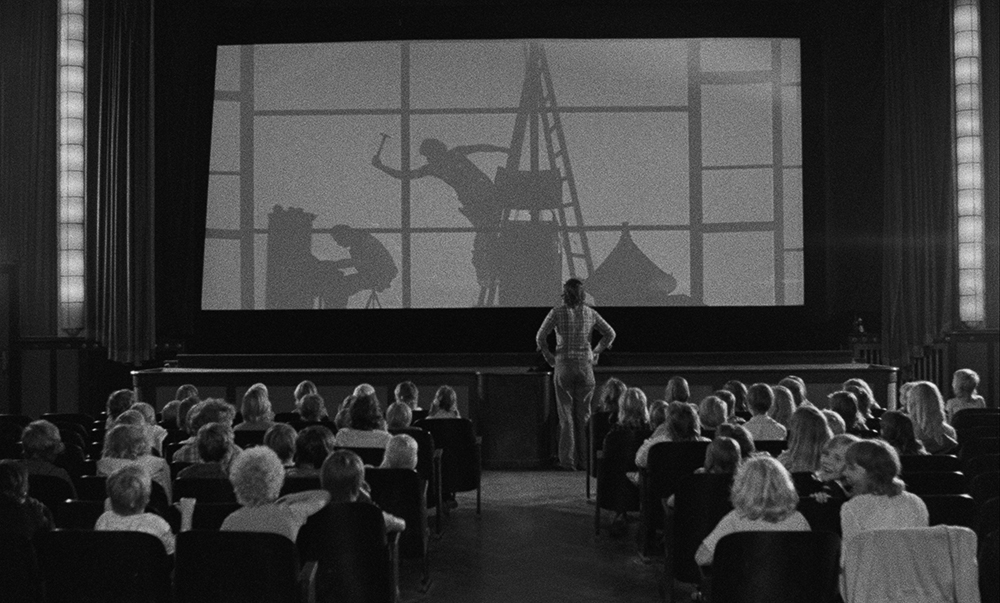
I came to Wim Wenders arse backwards. In my youth his contemporary releases were pretentious gubbins like Million Dollar Hotel and his accessible classics like Paris, Texas and Wings of Desire were a bit too mature and ponderous for a teen to appreciate. I reckon I would have dismissed Kings of the Road too, if I had sat through its three hours of nothing in my callow, restless years. Nowadays I can see the wizardry in spinning a plate for a feature length, especially when the pole the trick is performed with lacks the strength of story and the flexibility of resolution. To enrapture the viewer through mere mood, emotion and character is a dazzling skill. To let us get driven through a country with no map, no destination and no familiar signpost is to gift us with a freedom rarely experienced in cinema. If anything Kings of the Road most resembles Richard Linklater’s best works like Dazed and Confused or Boyhood where we watch the coming and goings of a group of characters with only their pleasures and boredoms dictating the unforced, unremarked upon growth we witness. Only Wenders does not fall back on the distractions of busyness and over population. In this time capsule of two men drifting across 1976, we explore their faltering friendship. One is taking an unplanned time-out from city life after a break-up. The other has chosen a mobile hermitage. Driving his truck of cinema parts through out the small, dying cinema circuit of small town West Germany. At first our driver, Bruno (a charming Rudiger Volger) seems like the more relaxed and happy of the two. He has chosen his life of isolation and separation. Yet having the continued companionship of another through his days of shitting in fields and shaving in a wing mirror puts him off. He passive aggressively bristles at the idea of continued friendship. His new friend (Hans Zischler as the scruffily urbane Robert), sensing his intrusion (they after all share the undivided cab of a truck as a living space), makes excuses to break away and rejoin en-route. Self consciously giving his loner benefactor reprieves so their freindship can continue. He loves having the countryside and the lay-by as his holding pattern but seems to know it is an interlude rather than a way of life. He warms to but never embraces the driver’s isolation.  And all this is communicated pretty much wordlessly.  There are stirring vignettes… the boys find themselves in proximity to a crash, an awayday from the truck on a motorbike and sidecar, an unfulfilled overnight seduction of cinema usherette Lisa Kreuzer and a hall of children are entertained as the repairmen become shadow clowns for them. Robby Müller’s gorgeous monochrome cinematography hunts for the starkest road side scrubland and the most tellingly populated crossing points. And lastly, Wenders’ best film is a love letter to cinemas themselves. The few times the boys stopover in civilisation with others, they are delivering or repairing ageing projectors. Talking to the owners about a world under threat. Less people are coming, the movies have changed, they no longer speak to the common man rather than tell him what to think. Kings of the Road feels like the accidental antidote to the very symptoms it highlights. A celluloid love letter to unspectacular interaction and the beauty in the everyday. Its aimlessness gets you in right in the feels,  promises you an envious way of life you never knew you wanted.

8

Movie of the Week: Dog Day Afternoon (1975)

4BECF674-C707-4C47-BFDB-2CE870381E0A

Sidney Lumet directs Al Pacino, John Cazale and Charles Durning in this true crime story of a bank robbery that goes wrong in New York City, inviting a police siege, a media circus and no way out for the inexperienced criminals.

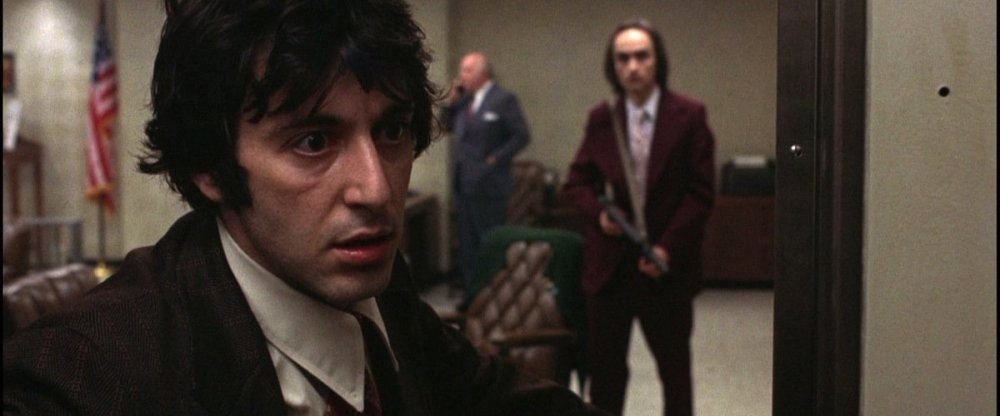
One of the finest films ever made – it bungs you right dead centre into its chaos. You feel every emotion of the unravelling farce of the robbery and then share the mounting pressure to escape. A film that deftly explores police brutality, gay rights and the reality of criminality yet keeps its wry sense of humour. Pacino is superb, delivering probably his most nuanced performance as a frazzled first time robber walking the highwire tightrope of keeping himself and the hostages safe while still desperately trying to negotiate a break. He is showy, slightly effete, without being hammy. Still and silent John Cazale’s simple and unhinged partner in crime is a liability… a troubled, confused man with a machine gun. Fine, if they were in and out in five minutes but not built for the day long tensions of the stand-off. Lumet’s recreation is one of reportage – he wants to capture the heat, the antagonism, the circus and the mania of the extreme situation. It helps he is on home turf. New York plays itself perfectly here, it wouln’t have quite the same energy if set anywhere else. In terms of pacing… we probably get stuck a little on Pacino’s Sonny meeting loved ones a tad too much in the final stretch. But it is an indulgence you can forgive a near perfect, gripping and classily pleasurable drama.

10


The Driller Killer (1979)

12E7E61C-251D-4C0A-ACBA-F6F49B01C0EC

Abel Ferrara directs himself, Carolyn Marz and Baybi Day in this exploitation horror about a struggling artist in the New York punk scene who takes up power drilling homeless people.

The grungy crossover point between Taxi Driver and American Psycho. Only this troubled New Yorker does actually kill, kill and kill again while the others two are essentially dangerous fantasists. Even then, one rampage, spree night aside… a whole lot of The Driller Killer’s runtime is devoted to alienation and the pressures of urban living rather than saleable gory nastiness. Our eponymous anti-hero can’t make rent, can’t connect to his girlfriend or her live-in lesbian partner, can’t finish his masterwork of a bull in a maelstrom, can’t stand the New Wave band The Roosters who have moved in downstairs. He’s good at pinball, knocking around a helpless ball between violent flippers and bumpers. We are teased for a long old time… disturbing nightmares, actual DIY, red paint being stirred, adverts for portable power tool batteries. No drilling killing though. When he gets down to getting rid of his frustrations on a bum it feels like just another shitty occurrence in his busy week of misery. Ferrara starkly captures that grim Big Apple that no longer exists. A hellish urban island of desolation and hedonism. I watched this in a double bill with A Bucket of Blood. It could easily have been paired with The Bad Batch. Down and dirty, not for everyone, disposable.

6

Star Trek: The Motion Picture (1979)

755E73D5-1FC5-42D3-840A-B943DCB0AB7A

Robert Wise directs William Shatner, Leonard Nimoy and DeForest Kelley in this first big screen continuation of the classic space exploration adventure series. 

A strange beast of a blockbuster… narratively unambitious, drawn out, ponderous and completely enthralling. While no die hard Trekker, I have a massive soft spot for the original series. 20 years past its sell by date by the late 1980s and yet we as a family watched it pretty much whenever it was repeated during my childhood. I couldn’t tell you the philosophical difference between a Klingon and a Romulan but when I do catch an episode it is as familiar in my memory as my first bedroom. And I must have wasted a forgotten youthful afternoon watching this first attempt to translate Kirk and Co to the big screen at some point before puberty rebooted my priorities.

The plot has Shatner (Wig? Girdle?) retaking command of his old crew and ship when a mysterious drifting interstellar cloud threatens to wipe out all life it encounters. And it is headed straight for Earth! The eventual answers behind what is at the centre of this destructive nebula will be familiar to anyone who has casually watched even just a few episodes of the sixties’ syndicated programmes. There’s not much more plot here than your basic 45 minute Trek story. Only streeeeeeeeetttccchhheeedd over a bonus two hours.

562DFE82-609F-4493-929B-3903582B11CF

The Enterprise has a new captain (not for long) and sexy navigator who have ‘Third Act Red Shirts’ written all over them. Every one in the old gang gets their comeback entrance scene. It fills an hour nicely. Spock temporarily has hippy hair and Bones temporarily has a tramp’s beard. Nobody mentions it has been decades since they last worked, especially awful Yeoman Janice Rand (she lasted only a handful of stories in the 1967 season before being mysteriously written out)  even makes a glaring one scene return where her actions instantly cause 2 deaths. A gruesome transporter fuck-up that lingers in the fear receptors.

But once everyone is settled on the bridge… they stay on the bridge. It is just another work day with very little sparkle. They stare at the viewcsreen for pretty much 90 minutes. The Enterprise floats slowly further and further into oblivion. Bridge, viewscreen, float. Bridge, viewscreen, float. Bridge, viewscreen, float. Bridge, viewscreen, float. They FINALLY reach the root of the problem, red shirts sacrifice themselves, everyone you care about zips off, away from the Federation in their old iconic space jalopy. “THE HUMAN ADVENTURE CONTINUES” Have the codgers just stolen the Enterprise on a pensioners joyride? Minimal excitement, minimal action, minimal banter even.

44E0FEF1-FC0A-4076-8CA9-647E1EDCFE91

This must be an awful movie, right? No.

Yes, it essentially is a filmed play set in the cockpit set of an old TV cult classic where no notable big events occur. But during that languid journey there is a strange beauty. Douglas Trumbull’s galactic miniature work and spacescapes are eye poppingly gorgeous. At times the meteor dust and radiation vibes look like those Magic Eye paintings from the 90s. Sure nothing happens in these expansive vistas either, apart from the Enterprise slowly floating across them ominously, but they are unlike anything committed to cinema before. Not the stark, star speckled abyss of Lucas’ Star Wars… these are colourtastic special effect masterworks. And while the endless bridge scenes lack emotion, agency or camaraderie, again that trippy FX work intrudes for occasional bursts of marvel. A warp anomaly makes Kirk and Co. go disco. A lightning bolt of pure energy investigates the crew like a glowing bandsaw of the Gods. Spock goes on a 2001 inspired space walk through the death cloud’s psychedelic heart.

69D84670-EF46-49C9-A126-4BD4A0E8DCD6

The film is the last Golden Age Hollywood epic. The last David Lean / John Ford / William Wyler old fashioned afternoon devourer. It happens to be set in space. It happens to be based on the type of cheap, episodic TV that almost killed cinema. It happened to come out in the movie brat era. But it is classical in its form and its bold anachronistic intention. It starts with an overture for fuck sake. What does old school,  twilight years Robert Wise (journeyman director of The Haunting and The Day The Earth Stood Still) bring to this strange production? Grandeur and scale. He adopts this diluted and ill fitting reboot episode of a cancelled TV show and nurtures it like it is galactic Gone With Wind. The sheer majestic size of it overwhelms. Jerry Goldsmith’s score abandons the famous wooing theme tune of telly and creates an adventurous belter of orchestral superiority. So good they nicked it for The Next Generation.

I reckon back in 1977 Robert Wise wouldn’t have been able to pick the U.S.S Enterprise out of a police line-up. But by 1979 he know instinctively that the old girl deserved a ten minute glamour sequence where James T. and Scotty approach and circle her like the revered empress of the stars she is. The reverence. The sheer goddamn, patient reverence. “Welcome to Jurassic Park!” Perhaps Spielberg was taking notes about how the old hack approached framing, respecting and promoting to legend the icons of this abandoned cult novelty. He turns the trivial into testimonial.

7E67C6D6-7A47-45F6-A3F4-D06E193D7BEC

Wise elevates, rises up his source material. Makes  Doctor Zhivago out of “Wagon Train in space”, treats the middling TV name cast like they are Olivier and Guinness and Brando and Tracy all together at last. To watch the sheen and craft and respect leant to a show that used to be mainly be about a cocky space shagger, his pointy eared first mate and, more often than not, a monster in a rubber suit chasing them around the desert is truly a sight to behold. Who cares if it is a slog? It boldly slogs where no intellectual property has ever slogged before.

PS… My highlight is when Kirk’s learns that one of his crew and the form of  “villian’s” probe takes had a relationship once, his instant reaction is that the bloke should seduce it. Some things never change. Surprised he didn’t try himself first.

7


A Bucket of Blood (1959)

B6845854-A096-4930-87D4-7CFA2DB33561

Roger Corman directs Dick Miller, Barboura Morris and Julian Burton in this Beatnik horror comedy about a murderous busboy who becomes an art world sensation when he starts covering his cadavers in clay. 

A quirky little time capsule, capturing a cartoonish assessment of Beatnik pretentious and style. Amusing rather than funny, it is a satire played relatively straight faced. Mainly of interest to me as one of the ubiquitous bit part star Dick Miller’s few lead roles. He has a similar nebbish quality that Rick Moranis or Crispin Glover later cribbed in their work.

5

The Man From U.N.C.L.E. (2015)

DAN_4287.DNG

Guy Ritchie directs Henry Cavill, Armie Hammer and Alicia Vikander in the big screen reboot of the seminal sixties Cold War spy TV classic.

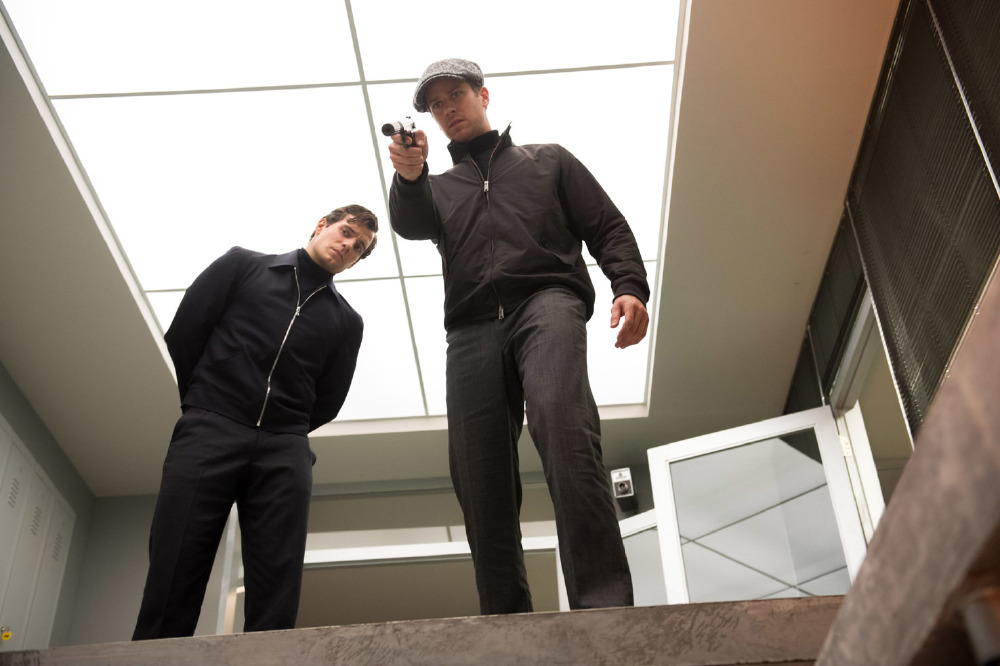
Like Adam West, Happy Days, Star Trek, Technicolor westerns and Laurel and Hardy omnibuses, The Man From U.N.C.L.E reruns were a teatime staple from my childhood. Suave, cartoonish spy capers where, over 45 episodic minutes, watches and apples became pop art bombs and the suits were killer. It never felt dated as a child. Robert Vaughn and David McCallum were the coolest men on a mission ever. And since then studios have threatened to update it for cinemas… like they did with Mission: Impossible or The Fugitive, but not like they did with The Saint or The Avengers. We’ve had names like Tarantino, Cruise and Clooney attached (all great shouts) and for over two decades it kept brushing near but not past a green light. You get the feeling Warner Bros. eventually put it into production just to get the annual development red off their ledger. So we get the compromise casting of available and rising Cavill and Hammer, a pairing who were always going to struggle opening a movie of this size (though with their box office appeal and cool growing… maybe they were just a few years premature). And it is a tough sell to modern audiences… a forgotten property, set in period, with a focus more on glossy style than spectacular action. The leads have great chemistry, the girls have glamorous moments, the plotting is playfully light… it works, but it doesn’t astound. It certainly isn’t essential. The Man From U.N.C.L.E. ends up an amusing fancy, utterly likeable and Guy Ritchie’s most restrained caper. Well worth a watch, probably not worth the $90 million dollars gambled on it. You could pop it on at teatime and be perfectly placated.

6


I Am Not a Witch (2017)


2B7CA36B-358A-485B-8ED1-483B3CE557B4

Rungano Nyoni directs Maggie Mulubwa, Henry B.J. Phiri and Nellie Munamonga in this drama about an 8 year old girl who gets sent to an old lady witch camp in Zambia.

Nyoni’s debut starts strongly, giving us a nicely satirical overview of how a young girl or any woman can be ostracised by their community, tied to a ribbon in the wilderness and condemned to indentured labour as a “witch”. It catches the strange mixture of bureaucracy, hysteria and superstition while making it plainly obvious that this subjugation of lone women is unjust and exploitative. There’s some beautiful imagery and telling glimpses of another world within. How true it all is? Not for me to say. But the narrative is constrained by a very closed off lead performance from the child “actor”. And the eventual tragedy is alluded to, but not depicted, robbing the finale of much power.

6

The Bad Batch (2017)

4730E69B-677F-4681-BAF9-52018308C018

Ana Lily Amirpour directs Suki Waterhouse, Jason Momoa and Keanu Reeves in this dystopian western where a desert has become a fenced off prison for America’s unwanted, a land of cannibalism, exploitation and hedonism. 

A loving father puts on music before butchering a captured person, he makes the mistake of listening to her ragged pleas, and kills her prematurely, wasting her body to decay in a land without refrigeration. A township raves under the watchful eye of a leader protected by a harem of uzi toting pregnant slaves. A new girl is chased by muscle bound women in rickety golf carts. Just some of the delights within. While far from a perfect experience (its metaphors are blunt and its entertainment value stilted by indulgent pacing), The Bad Batch is an admirable piece of genre filmmaking. Told with confident near silent visual elan, swinging from brutality to tenderness, and using fading stars as shimmering landmarks… this is auteur cinema. Will it develop a cult following? Can the man on the street wanting, if not another Mad Max, then at least another Doomsday, appreciate it? I don’t know. But it has a power and an energy and a black, pumping heart that’s undeniable.

6