Ferris Bueller’s Day Off (1986)

IMG_2351

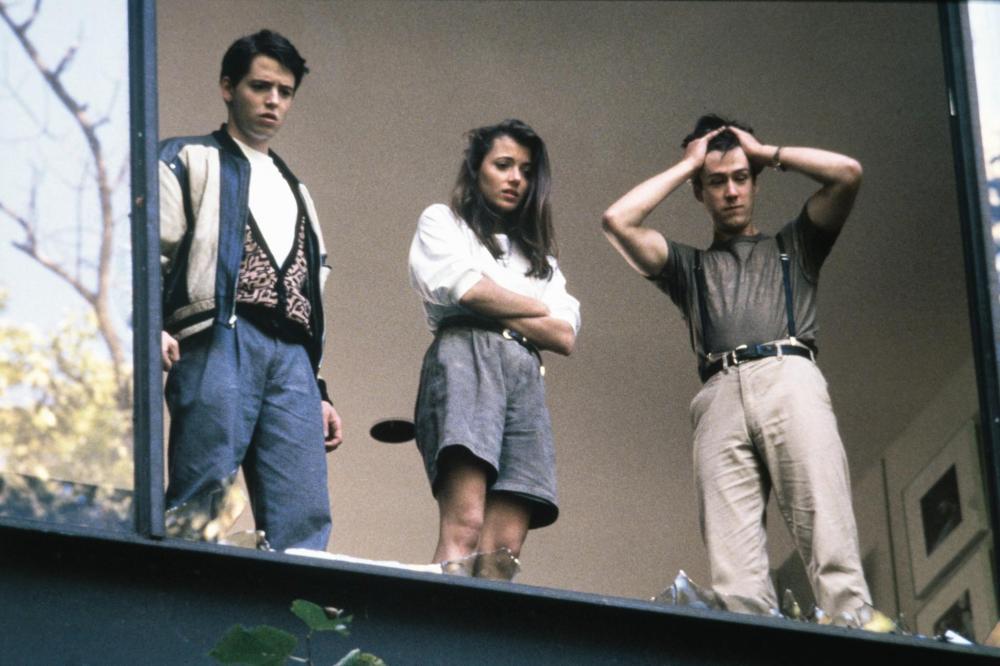
John Hughes directs Matthew Broderick, Alan Ruck and Jeffrey Jones in this 80s teen comedy fantasy about a wordly wise teen who orchestrates the most epic school bunk ever. 

One of those cherished movies I’m way too close to to in any way assess properly. This film is like a summer holiday girlfriend – the nostalgia, the soundtrack, the energy and the intense proximity make it impossible to be critical of. Broderick’s direct to camera talking, master of the universe is a key symbol to the slacker generation. He could excel at school, (and does by all accounts), but is more interested in enjoying life and maxing out relationships. Ruck’s unique Cameron Frye is even more relatable – the nice kid already feeling caged in by his depressing present and his optionless future. His moment of self determination at the wrap up is a superb piece of acting, unlike anything seen in a glossy teen romp. We don’t need to witness the confrontation with his father to know it is a life defining point of victory. Jennifer Grey is excellent as the sister, frustrated that everyone else is seduced by Ferris’ shit. Like Ruck, she’s a rarity in this genre; a female character with an agenda outside of dates and makeovers. Anger personified deliciously. And we get a brilliantly inept adult villian in Jeffrey Jones’ Principal Rooney. Grown Ups suck. There are beautiful moments – the entry into Chicago by Ferrari, a kiss in front of some modern art, Grey’s awkward loved up exit from the police station, the final mad dash home. There are killer lines (“Cameron’s so tight, that if you stuck a lump of coal up his ass, in 2 weeks it would turn into a diamond.”). And there is the coolest soundtrack never collected as an actual LP… Dream Academy, The Beat, Yello, The Beatles. Perfection!

10

Mallrats (1995)

IMG_2350

Kevin Smith directs Jason Lee, Jeremy London and Jason Mewes in this scatalogical day in the life farce following the slackers that populate a New Jersey shopping mall. 

Straight to video when released in the U.K. yet I’d struggle to find anyone of my generation who hasn’t seen it, this was a poster on my wall as a teenager. Nowhere near as thoughtful or genuine as Smith’s no budget debut Clerks but pleasingly broader and more colourful, Mallrats hits many of the same geeky (Stan Lee, the cast being named after Jaws characters, Jedi Mind Tricks) and foul mouthed buttons (“You’re gonna listen to me? To something I said? Jesus, man, haven’t I made it abundantly clear during the tenure of our friendship that I don’t know shit? I mean, half the time I’m just talking out of my ass, or sticking my hand in it.”) with the indulgent abandon of someone who is making a movie with Universal’s money rather than personal credit card debt. Like Desperado or Pulp Fiction or Dazed and Confused, a Sundance lauded director clearly had a load of budget and freedom thrown at them with the instruction “Do the same thing as you just did with $50 and a camcorder, but more… mass market.”  It is a looser film, the dialogue energetic even when punchlineless and the more physical stuff is knowingly awkward rather than impressive. John Hughes and John Landis are name checked in the credits but you could equally bung in Porky’s or Police Academy. For every sensitive piece of verbose emoting and spot on soundtrack choices, there are a pair of crowbarred in breasts (“What can I say? I love tits.”), for all the longing the boy’s have to “woo” their exes back, their exes are paperthin dolls who bend which ever way the wind of the plot blows them. All the girls are painted as happy to move onto the next dick within hours, whereas the boys are left in a yearning funk. Is this progressive? Sexist? I don’t know, it is hard not to see the actresses as mere prizes to be re-won or stereotypical sluts. The boys standout with the best lines and most compelling performances. And that’s what makes Mallrats an unsung great among 90s studio comedies; three brilliant central turns. Ben Affleck’s fashion shop villian is a cruel bully – boo-hiss perfect. Jason Mewes reprises his Clerks’ Jay and it is glorious. His introduction banging on the pet store glass at some kittens is perfect, as are his new weird baby talk catchphrases “Snootchie-bootchies.” But Jason Lee, in his first starring role, takes aim at the inherently unlikeable character of Brodie and just runs full pelt at it. No matter what offensive nonsense he is left to spout he imbues it with enthusiasm and heart, he also knows how to softly undersell the smarter lines so they stand out. I had a jacket like his at his age, and his defensive loud bluster. I’m not sure how loved this throwaway film is outside my own thin demographic but for us, the few, it is our It Happened One Night, a generation’s American Graffiti. Flaws and all. And the running gag about Magic Eye picture is a true thing of beauty.

9


It Comes At Night (2017)

IMG_2349

Trey Edward Shults directs Joel Edgerton, Kelvin Harrison Jr. and Riley Keough in this post apocalyptic thriller where a survivalist family let strangers into their fortified house. 

More a drama in the clothing of a horror flick, this is a convincing and taut journey. Gruff performances and well rationed shock images keep you on your toes but the economic, untrustworthy interactions are where the movie comes alive. Shults twists you around and around and around his finger, breaks your heart and then still looks you right in the eye before he leaves us. Efficient as fuck if not exactly a song and dance man crowd pleaser. We have a new name to keep tabs on. This would make a good double bill with Get Out.

7

The Eight Diagram Pole Fighter (1983)

IMG_2348

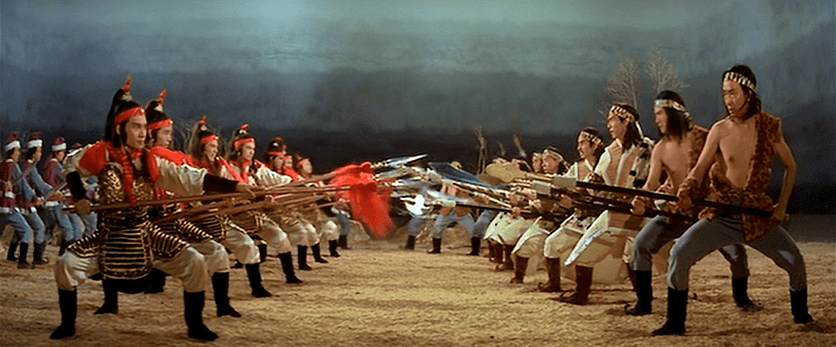
Lau Kar-leung directs Gordon Liu, Kara Hui and Alexander Fu in this Shaw Brothers weapons based martial arts soap. 

Gold leaf lavish yet still formulaic and cheesy – this feels like both a last hurrah of the old school kung fu epics and a lost in time arthouse revival picture like the self consciously beautiful House of Flying Daggers. Watching Gordon Lui accidentally find himself in his first starring role is good value. The opening sequence feels more like a Broadway musical full cast curtain closer than a battle to the death. Later, a series of attackers are hit in the gob by a pole which rips their teeth out on to the wood of the weapon, red paint bloodily. I couldn’t explain the plot to you a week later now, even if you offered me a million quid for a three sentence synopsis.

6

Forrest Gump (1994)

IMG_2347

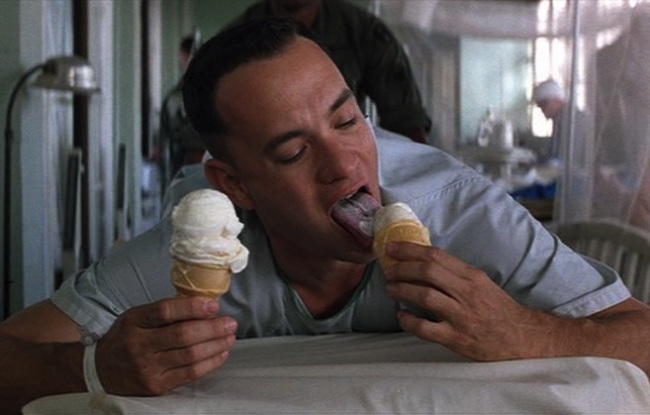
Robert Zemeckis directs Tom Hanks, Robin Wright and Gary Sinise in this biopic of a below average intelligence man who never existed but seeming came out on top of every major historical moment of recent American history. 

Like most discerning movie fans I am troubled by Forrest Gump. It won the Oscars over a slew of far better films (1994 is one of the finest Hollywood vintages – so maybe because it was the least offensive choice, the higher quality contenders split their votes into a series of minorities and Gump won by default rather than conservative reaction?) It has a despicable message, whether intentional or not, that to not question or engage intelligently with the events, corruption and changes around you is the only way to survive history. Although that isn’t actually all that terrible practical advice in this age of hollow clictivism and echo chamber politics. Shut the fuck up and eat your chocolates (“A box of”… TM). And the initial undeniable magic of seeing Hank’s nice moron blithely interacting with dead presidents, celebrities and newsreels via the power of cutting edge FX peters out a good hour before we reach the viciously saccharine conclusion. After Vietnam, Gump becomes a far less entertaining trundle, the humour drains, the comeuppance of his Jenny to AIDS… or Hep C… or whatever liberals who enjoyed themselves should die from… is treated in my mind like a victory rather than a passing. You can’t help but think it is all some blackly comic attack on the American right that was just too effective. That cruel scene where Hanks asks if his surprise son shares his deficiencies has an underlying self awareness that is cripplingly brutal for such a surface level light blockbuster. Has Gump been hiding all his stalkery, lashing out, political ambivalence behind the fact he was written off as retarded early on? As he clumsily flourishes through history taking more than his share of ice cream, Dr Peppers, shrimp and blue chip stocks, is he playing dumb to get away with it all? After all, “Stupid is, as stupid does.” We’ve all been stuck with the nutter at the bus stop who knows enough ways to manipulate the situation so you have to endure their presence, they know you are unlikely to tell them to “fuck off” so they continue to talk in a way that leaches interaction from you as they ramble.  Has Forrest figured out the game better than all of us? Perhaps that is what makes Gump the movie work. It is so poker faced it is hard to ascertain its true intent. It can be something for everyone. A melancholy comedy nostalgia road trip that it was marketed as, and made millions from. An idiocratic realignment of the American Dream concept that offends as many people as embrace it. Or simply just a nice leisurely movie with strong charming performances (Hanks, Wright and Sinise all deserve praise) and a few good gags. I remember being entertained but unimpressed by it in the cinema. I remember a New Years Eve night I spent in, watching it on telly, a mate in a similar boat on the other end of the phone line watching it across London too. We ran up our parents phone bills and chatted and enjoyed it. A communal experience, nowhere near as bad or a good as its reputation deserves. Just a well made bit of Hollywood product.

7


Berlin Syndrome (2017)

IMG_2346

Cate Shortland directs Teresa Palmer, Max Riemelt and Emma Bading in this pretentious sex thriller where a backpacker is held captive by her one night stand in a Berlin apartment block. 

Watchable and pretty, but by half-arsedly trying to be something more than its The Collector set-up, it ends up achieving very little. As a thriller it is a bit too aimless to ever take hold, as a psychosexual encounter nothing particularly experimental or erotic occurs. A few decent moments of creep (a breathing leather recliner, a German child terrified of hearing a foreigner speak, the discovery of a clipped fingernail, a mangled hand) can’t hide the fact that this is an attempt to avoid cliche, but with nothing new to say instead. We just end up with some grungy beautiful imagery and two blank leads waiting around for their delayed final showdown.

6


Shadow of a Doubt (1943)

IMG_2345

Alfred Hitchcock directs Teresa Wright, Joseph Cotten and Patricia Collinge in this thriller where a niece begins to suspect her glamorous visiting uncle might just be a serial killer. 

A great solid Hitch this, more interested in character than suspense but delivering more of both than its modern day descendants. Cotten’s rotten guest is given charm and, curiously, a lot of the foreboding imagery of Dracula (look at how he entombs himself from the light on his cross country journey, his almost psychic link with his favourite niece). Whenever cornered he is framed in German Expressionist shadows, and you see his little tricks to interact with people civilly slipping as he feels more and more threatened. The facade can’t last forever. Teresa Wright is equally as strong as the sleuthing relative. At first seduced by her worldly uncle, then repulsed, even a little culpable. And Hitch’s grisly sense of humour is a lot more open here. The dinner table hobby of plotting the perfect murder, the younger sister’s less guarded misanthropy. Any one member of this “average, American” family could be a Merry Widow Murderer.

8

Supernova (2000)

IMG_2344

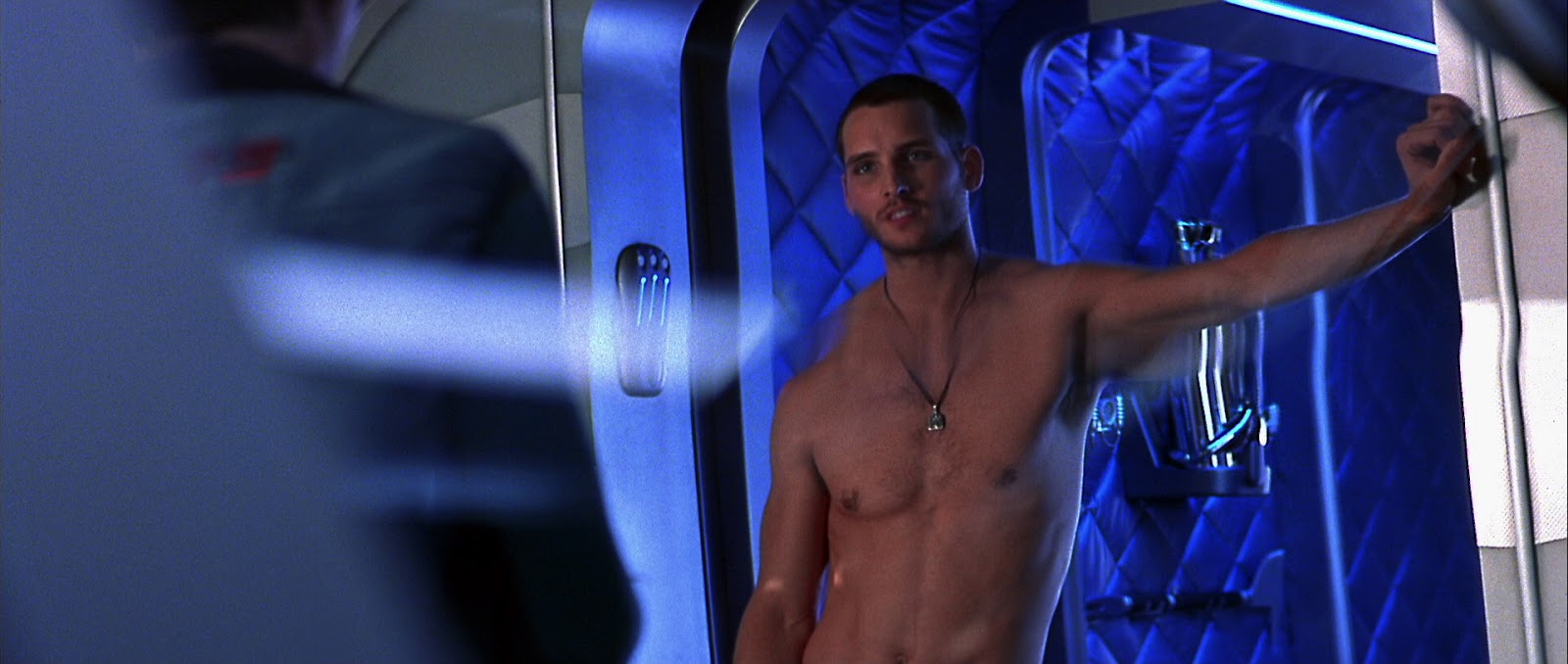
Walter Hill, Jack Sholder and Francis Ford Coppola direct James Spader, Angela Bassett and Peter Facinelli in this ‘Dead Calm in Space’ rip-off with an infamously troubled production. 

I like a stinky Hollywood clusterfuck. Not for reasons of schadenfreude either, I enjoy looking for signs of a frustrated process; the director changes, the late reshoots with their wigs and actor weight shifts, the wonky fudges to reedit the storyline. A good post mortem to figure what tragedy occurred , like a ghoulish crossword puzzle, even if the film is face value terrible. And they aren’t always awful. I contend the longer version of Alien3 is a masterpiece even if Fincher was put through absolute bureaucratic hell making it, Rogue One with its reshoots and creative consultants is the best Star Wars movie despite tons of late in the day “correction”, and World War Z’s completely rewritten final half hour closes off a surprisingly intense summer thrill ride that I had very little excitement for going in. But they can’t all be winners, kid. And Supernova is a prime example of the latter catergory. A simple enough spaceship set horror with a decent cast and no originality went through more directors than cast members almost, and more money than ever should be spent on a movie that consist of three electric blue lit sets where just about every male actor wanders aimlessly around topless for 90 dull minutes. The biggest sign of tinkering is the zero gravity sex scene where the character are changed in the editing process. The far older James Spader suddenly has the arse of a 20 year old, while Angela Bassett has the body shape of Robin Tunney… and yes Robin Tunney is not a black lady so they digitally alter her skin tone too. Oh dear! The movie itself is unambitious yet ineffective. The focus seems to be on a sex romp on a ship ruined when a psycho gets on board. But the romp is never jaunty or attractive, the thriller elements never gripping. It just goes through it juddery motions and you are left with mysteries you either missed the explanation for as they are so brief or they just gave up on linking together. How did stranded on the planet surface Spader get back on the ship to save the day? Did I blink? Surely that should be a set piece, not a problem solved with a quick line of exposition dialogue? The trailer was edited to Tom Jones’ cover of “Momma Told Me Not to Come”. Momma was right, the studio couldn’t be accused of false advertising. This ain’t no way to have fun. A completely redundant exercise.

1

The Lord of the Rings: The Fellowship of the Ring / Film of the Week: The Lord of the Rings: The Two Towers / The Lord of the Rings: The Return of the King (2001/ 2002 / 2003)

IMG_2338

Peter Jackson directs Elijah Wood, Ian McKellen, Viggo Mortensen, Sean Astin, Andy Serkis, John Rhys-Davies, Orlando Bloom, Miranda Otto and Christopher Lee in this high fantasy epic adaptation of J. R. R. Tolkien’s classic good versus evil in Middle Earth novel. 

It is fair to say The Lord of the Rings Trilogy came at exactly the right time. I had spent my adolescence almost completely devoted to blockbuster cinema. Tarantino and Beat Takeshi were as about as left of field as the teenage me went, comics were my only other passion. But when eighteen hit then came drinking, girls and eventually university. The Phantom Menace, Pierce’s terrible final two Bonds and John Woo’s dire Mission: Impossible 2 had jaded me. The first X Men movie and an extended rerelease of The Exorcist were the only two (just TWO?!) Hollywood films I got excited about in all of 2000. My plan of going to film school hit the wall of being utterly useless at basic art (the only accessible courses were at art schools that wanted you to do a year of illustration and have a portfolio before you got access to film learning and equipment), grants disappeared and were replaced by fees and loans. I had stopped buying Empire, I had started exploring older and arthouse-ier  stuff at the Edinburgh Film Guild rather than going to the Odeon each week. I gave my massive, cherished but increasingly obsolete VHS collection to a charity shop and was avoiding its format usurper, DVD, with a disgruntled chip on my shoulder. I was falling out of love with big modern, spectacular movies… and then Peter Jackson’s massive gamble came along.

I always remember my Dad’s copies of The Hobbit and The Lord of the Rings sitting on his bedroom chest of drawers. The Hobbit was well read and looked like it wouldn’t survive another reading. The Lord of the Rings was immaculate and unwieldy. I daren’t touch either of them. But what we did share was trips to the cinema. So each Christmas, when I dutifully returned from Edinburgh to London, a massive sword and sorcery crowd pleaser that even my Dad wouldn’t turn his nose up at was a must go to. And for three years going to see the latest instalment of The Lord of the Rings with him, my mum, my sister and even my little old Nanny became a family tradition. All three experiences restored my faith in popular movies.
IMG_2339

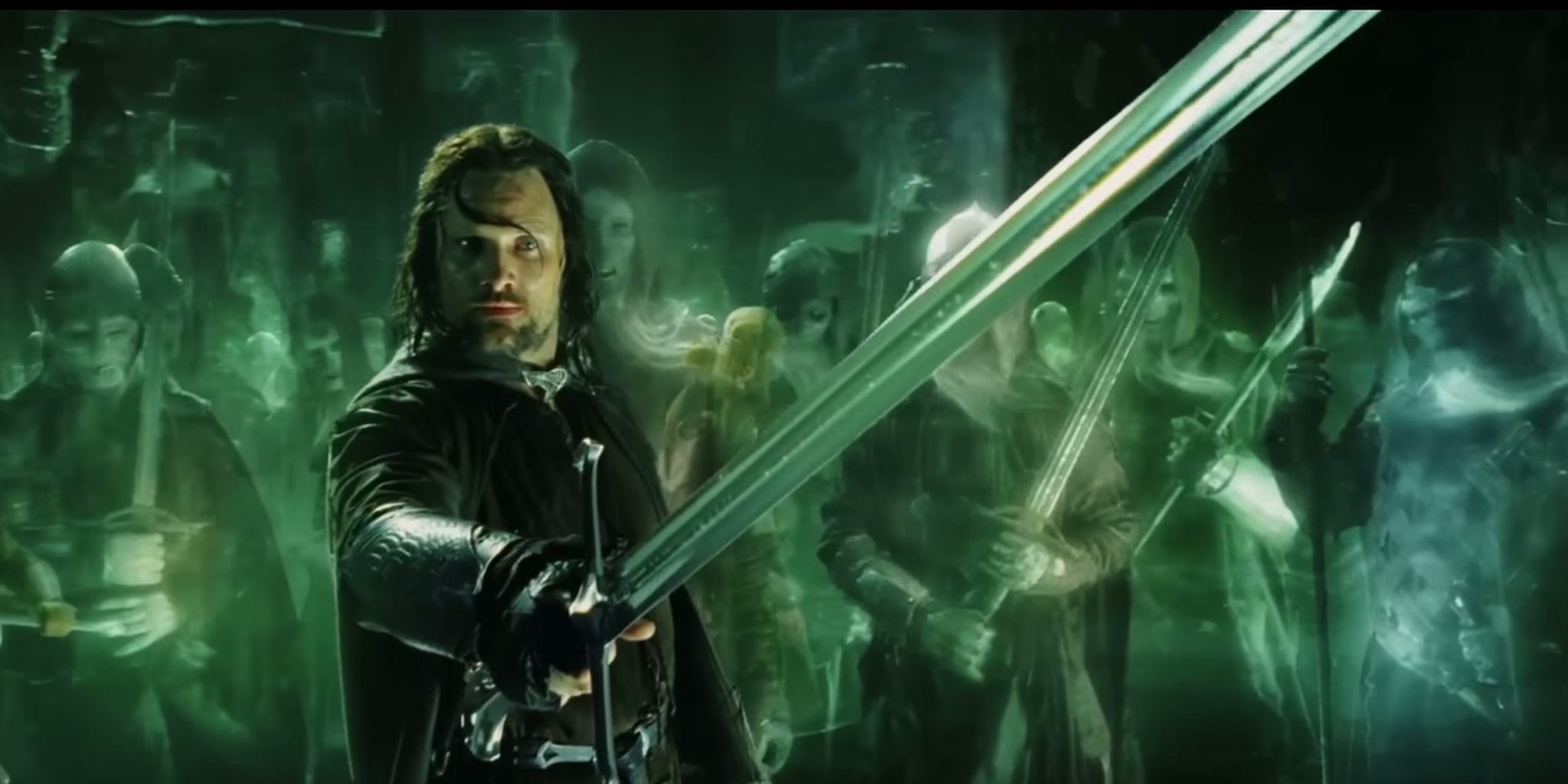
Why did the Lord of the Rings work quite so well? Sure the scale was both phenomenal and rare but that wasn’t quite it. The action and FX work, although constantly of a top quality, was not particularly groundbreaking – Gollum aside. What it was, was consistent and always used for storytelling, which in itself felt luxurious. I think what truly sets the trilogy apart is that it was the first time such a mythological and naive piece of genre narrative had been told with a straight, authoratative voice. No on screen winking to modern audiences, no fumbly half measures in production and no abridging to cherry pick merely the crowd pleasing stuff. That a tale of wizards, orcs and dragons had been afforded with a generous budget, an indulgent running time and a creative freedom to feel unconstrained by merely appealing to the uninitiated… and therefore ironically was accessible to all. The first time the axes, the keeps and the cloaks were made by a production crew who were not trying to get away with cribbing what camp fantasy flicks had cobbled together before, but who cared about building from scratch a world so convincing in its detail it more resembled a period prestige picture than Krull or Conan. The achievement of the trilogy was to lend the journey of hobbits trying destroy a magical ring with the same sense of verisimilitude as Spielberg brought to his recreation of the Holocaust or Mel Gibson in his reenactment of the William Wallace legend. Peter Jackson, Fran Walsh, Philippa Boyens and Weta painstakingly take you to and keep you in Middle Earth with every stitch of its hessian shirts, every Uruk-hai scar, every dirty fingernail that claws at the one ring. Tolkien’s words are treated as a sacred text, every idea and concept is afforded the best quality tools to realise it on screen or it is deviated from so the rest of the adaptation can thrive.
IMG_2335

As with all productions of this size, The Lord of the Rings is the work of thousands. To lay all the praise at Peter Jackson’s feet is churlish. Yet you have to admire his achievements. A decade before he was a cult director of low budget schlock. Inventive, gory, self aware, penny wringing, imaginative schlock (Bad Taste, Meet the Feebles, Braindead) but schlock none the less. But then he leapt along two stepping stones. Heavenly Creatures proved he could do serious and get critics on board, The Frighteners showed he could work within the studio system and deliver an effects based film that was cutting edge and convincing. It is a very similar route Sam Raimi took from being the independent Evil Dead guy to Sony’s Spider-Man auteur over the same period with his more grounded studio endeavours (A Simple Plan, For the Love of the Game, The Gift). Jackson convinced New Line he wasn’t just all about red spatter and rubbery brains, he could marshall a professional film crew and deliver something sheeny and respectable (that still contained enough of his punkish exuberance). But he somehow convinced them to finance three films shot together (rather than one at a time or even back to back), with three hour running times per film that were highly uncommon back then and at costs that often bankrupted studios. And in a genre that has never really turned any exhibitors record profits. That is some fucking convincing. It has never been achieved before or again.

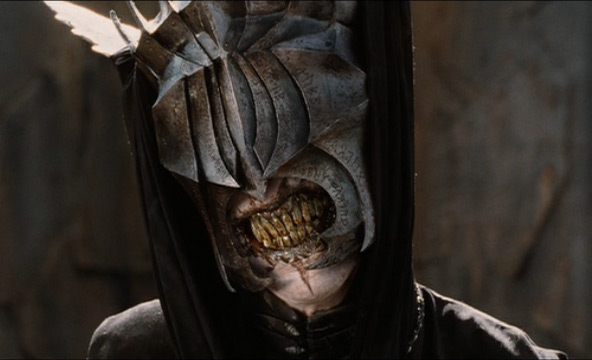
Of course,  if you come at The Fellowship of the Rings as someone who fully embraced the zombie babies and serial killer flashbacks of Jackson’s previous output it can seem more than a little tame. Studio interference?  His own uncertainty against putting in any splatterhound flashes that might lose him his PG rating or mainstream audience? Or the fact Tolkien’s first part is naturally more innocent, what with hobbits being the sole focus and Mordor a distant threat? Whatever the reasoning, by The Two Towers we start to get more and more imagery that satisfyingly looks like it belongs on a heavy metal album sleeve. Ghost armies, wraiths flying eel-like dragons over ruins, decapitated heads catapulted at besieged walls, soldiers behind those walls being visibly disgusted when the pelted heads land on them, gallons of censor untroubling black goblin blood as lurid fantasy creatures are hacked, impaled and squashed. My own personal favourite bit of trademark Jackson nasty is the diplomat of Sauron who turns up to goad the armies of good before the final battle. Slimily played by the brilliant Bruce Spence and looking like a refugee from a Clive Barker novel, it is no surprise that such a full flavour grotesque was held back from the multiplexes and saved for the extended editions. Then at least the kiddie winks can hide behind the throw pillows. I wonder how many mums and dads desperately reach for the fast forward button at that bit?
IMG_2336

Another success of the trilogy is the budget casting. Star power is actively avoided. Sure, you get the best homegrown actors Australia and NZ have to offer filling out the ranks (David Wenham and Karl Urban are strong in early roles, Cate Blanchett and Hugo Weaving regal), some well placed Hollywood C-Listers out in front on point like Wood and Mortensen, plus a host of solid Brits. Liv Tyler was the biggest name involved in 2001 but she feels crowbarred in, as does the amount of screentime devoted to a wobbly Miranda Otto. Tolkien didn’t really care for female characters so to scour the footnotes for them is brave but not always a successful move over the extended running time. Admirable but not overly necessary.

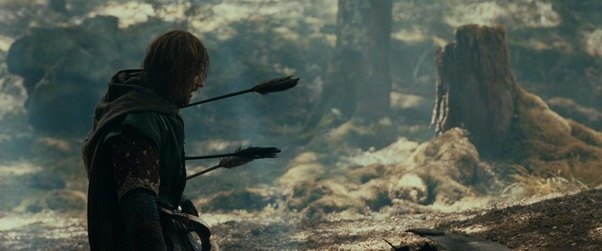
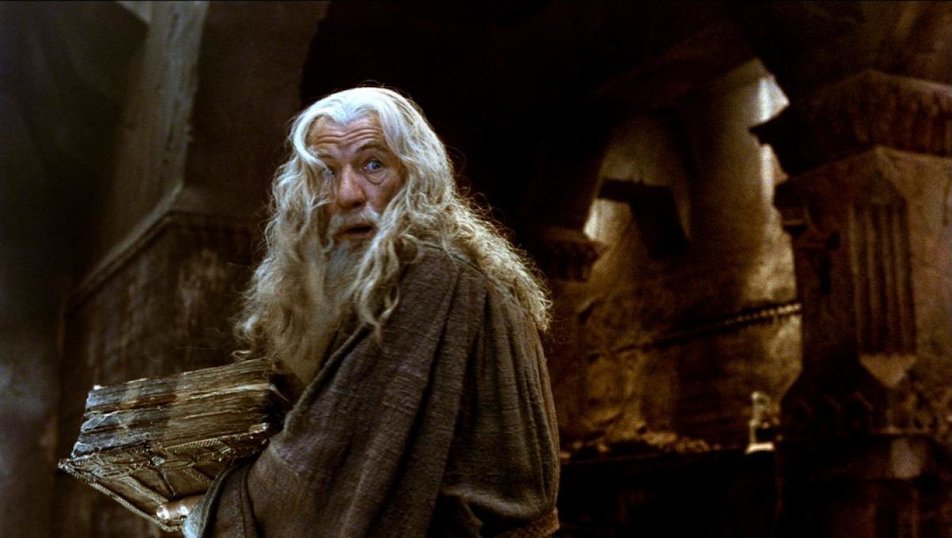
There are five stand out performances though. Sure, Sean Bean dies as always but he also adds a much needed bit of gritty humanity to the often overly positive first episode. McKellen’s Gandalf is very loveable and compelling as Gandalf the Grey, less so as Gandalf the White. There’s just something untrustworthy about the newer incarnation (I can’t be the only one to feel this) and you yearn for the rationed flashes of the original more playful, paternal variant on McKellen’s craggy face. John Noble’s blinkered and petulant Denethor is a smaller role but one that feel noticeably fully formed when surrounded by unwaveringly dignified and brave heroes. No one would discredit Andy Serkis’s brilliant performance capture and voicework as Gollum and Smeagol. Whether battling with himself, hobbits or cooked dinners he is a vicious, sympathetic, stroppy and self centred tour de force.
IMG_2340

But while all those above actors have a bit of duality to play around with in a world where even the most likeable protagonist is admittedly one dimensional in their heroics, the one true pleasant surprise is Sean Astin as Samwise Gamgee. A unwavering friend to the end, reluctant hero and a symbol of all that is under threat by cursed rings, orc hordes and glowing eye-shaped necromancers. Astin imbues his little loyal hobbit with the right stuff. While everyone else wants to become legend or martyr he just wants to get back home, and home means with his friend still alive and unsullied by the burden of the ring. Goonies Never Say Die!

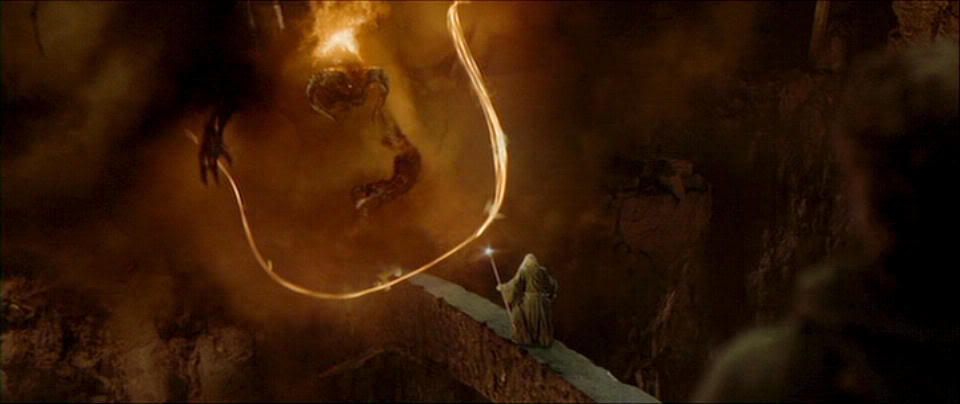
One thing I noticed on this watch is the pattern of the openings. All three parts kick off with a flashback. We start with an epic montage of a battle to end all battles after the formation of the ring. By the Two Towers, our opening is revisiting the one on one climatic battle between Gandalf and a monumental Balrog. And by the final part, our prologue is Smeagol’s murder of his lover over the ring on a river bank, followed by his fall into becoming the Gollum. Jackson reduces the scope each time, from the legendary and overwhelming to the personal and intimate. The first opener has to set up a universe. The last one, the stakes for Frodo and the tragedy of Smeagol. That is how invested we are in the quest by Return of the King. No thunderous clashing of swords and lava is necessary any more, character is key. We just need to see how one character was wholly corrupted by the ring, and know that Frodo could at any point murder his own friend now he similarly is in the small inanimate object’s thrall. It is no longer a battle for castles, towers and lands but for one soul.

IMG_2333

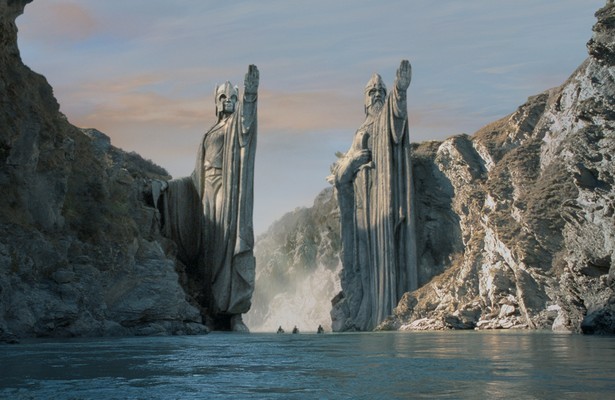
How do the films hold up individually 15 years on? The Fellowship of the Ring is the most family orientated. It sets out the characters and the world well. As a travelogue of an imagined country it is awe inspiring. The highlight is the battle in the Mines of Moria. I remember at the cinema being overwhelmed as the Fellowship raced through the caverns with goblin armies flowing at them seemingly from every orifice.
IMG_2331

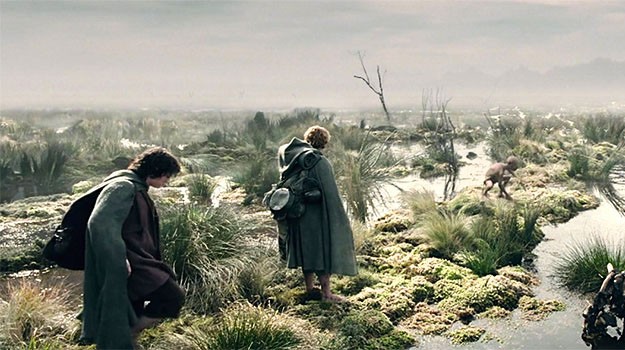
To me the indisputable masterpiece of the series is the pure war movie though; The Two Towers. Action packed, propulsive, with the freshest look at Gollum and most confident in its fantasy imagery. The siege of Helm’s Deep has to be the most gargantuan sustained battle ever committed to cinema. Game of Thrones, the TV series, was born in its cacophonous wake. I also have a lot of time for the poetry spouting Ents. Probably the adaptations’ biggest risk, like Gollum they are CGI creations that cause wonder and convince. Their eventual storming of Isengard is one of those moments that definitively couldn’t exist in any other franchise nor be as smartly conceived by any other director.
IMG_2334

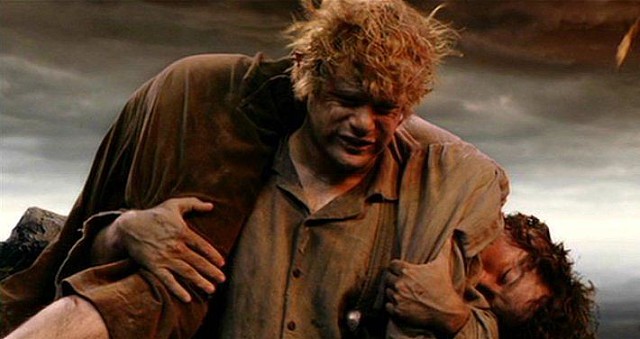
Which leaves The Return of the King and its many, many, many endings. Obviously when viewed as a 12 hour mega epic boxset you expect a bit of epilogue but the sheer amount of conclusions, amendments and fade to blacks feel like a patience testing pisstake even now. And I would argue, while Return is obviously cut from the same high end cloth as the previous two chapters, it is troublingly more indulgent. Frodo and Sam’s battle with Shelob is not just carried over to the last entry from the already action packed The Two Towers but doesn’t arrive until midway through. This leaves them and Gollum covering a lot of the same ground (literally and figuratively) as in Part 2 for another hour until we get there. It is not bad company but does feel superfluous when things could coming to a head a lot faster. Likewise the battle for Gondor is easily one of the most elaborate elephantine scale set pieces in cinema but it lacks the urgency of Helm’s Deep. The Return of the King is a fine blockbuster but it betrays symptoms of the rut and excess The Hobbit prequels would be hamstrung by when Jackson ill advisedly returned to the well. Surprising this was the one that swept up at the Oscars, but it is the Academy, so go figure.
IMG_2332

Obviously these days, like all fans, I watched the trilogy in their DVD extended editions. My memory is starting to fade as to what was pure original cut and what was fan friendly reinstatement. But I think it is fair to say that maybe, just maybe, the original theatrical cuts are the better movies. Sometimes what is edited out to make something a more endurable experience is a good thing. Even if you lose a little meat you can enjoy all the flavours of the meal more. 12 hours of Middle Earth shouldn’t seem greedy in this era of Breaking Bad and House of Cards binges. But those shows are episodic. They break up neater and have smaller, purposely compelling internal arcs to keep you gripped. With the Rings extendeds, some of the form and the shape and definitely the pace of the original vision is squandered. It often turns a quest into a ramble, sometimes that lacks direction, sometimes that harms your love for all that is magnificent . But I’d still rather not give up the hideous Mouth of Sauron, so three extra hours it’ll be next time again.

9/10/8
Movie of the Week: Drive (2011)

IMG_2329

Nicolas Winding Refn directs Ryan Gosling, Carey Mulligan and Bryan Cranston in this violent romantic thriller about a getaway driver who falls for his next door neighbour.

One of those fantastic pure cinematic experiences that the second it ends you wanna start it right up again. It is about absolutely nothing, an exercise in ultimate style, but it trips along on a steely resolve, a woozy yearning summer lovin’ rush and eventually a grim baroque cataclysm of barbarity that is achingly seductive. A precise score and soundtrack combine with confident cinematography to create a world of constant beauty. Beauty found in an abrupt piece of parking, a supermarket uniform, the detritus strewn by the banks of a waterway and a forearm being slashed open by a straight razor. Gosling is marvellous as the quiet man so capable in his skillset that he sets the terms. That sums up Drive also, it is so expertly orchestrated who cares if it doesn’t do any more than it sets out to. It does that so well, so grippingly, so gorgeously, so disturbingly, it would be selfish to ask for more.

10