The Devil Rides Out (1968)

IMG_2037

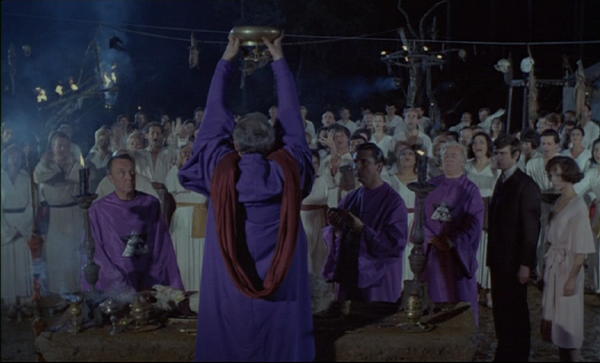
Terence Fisher directs Christopher Lee, Charles Gray and Nike Arrighi in this tale of a group of friends trying to rescue a mate from the grip of a cult of devil worshippers.

Probably the best Hammer horror ever made with both a relishable Lee front and centre, a brilliant final half as the heroes try to survive a series of diabolical attacks inside a chalk circle AND a time slip. The appearances of the devil and daemons are well designed, cleverly fleetingly deployed (the less we read into the first one being a staring middle aged black man in his swimming trunks is likely for the better though). Sure, sure… it suffers from the shonky charms of all Hammer productions – entire scenes exist merely because a country house and sitcom actors were available and it will all appear very dated to unloving eyes. Get caught up in its overwhelming positives though and it’s an imaginative, sexy and propulsive sixties horror.

8

Beauty and the Beast (2017)

IMG_2036

Bill Condon directs Emma Watson, Dan Stevens and Luke Evans in this live action remake of the animated Disney classic where cursed brute and intelligent maiden fall for each other just in time to break a spell. 

Fabulously (almost grotesquely) ornate, ridiculously expanded from its source movie by a whole hour, bravely wearing a fittingly modern and inclusive diversity on its sleeve… I still can’t see a situation where I’d pop this on again at two plus hours over the brilliant 85 minute animated original. Only Luke Evan’s rippling Gaston matches his hand drawn counterpart. The normally fantastic Stevens and Kevin Kline seem neutered amid the CGI, while Watson’s Belle is annoyingly toothsome. As she winsomely barked at a wardrobe “I’m not a princess” I thought “Jog on, love, and stick your pretty dress on.” The wardrobe seemingly agreed. Like a good tranny drag act, this passes as a big screen blockbuster, but we all know it is miming along to a more talented original’s work.

6


Elle (2016)

IMG_2035.JPG

Paul Verehoven directs Isabelle Huppert, Laurent Lafitte and Anne Consigny in this very dry and dark comedy of manners about a middle aged woman who is raped and then enters into a power struggle with everyone around her as she tracks down her assailant.

… AND he’s back. The provocateur is back. And even if this wears the ageing trappings of an upper middle class drama, the true intent is made explicit from our opening shot.  We start with a pet cat dispassionately observing a rape and things only get more shocking from there. Every scene messes with your sensibilities, even if it does it a bit more subtly than a robot cop heroically throwing a suspect through windows while reading him his rights or a murder suspect flashing her gash at the cops interviewing her. Unlike his extremely full on, Hollywood blockbuster entertainments, here Verehoven luxuriates in his European art house milieu. Meaning he can explore the diverse interactions of awful people trapped by family ties, workplace commitments and evolving sexual needs rather than the immediate violent reactions his genre works required. If you are a Guardian reader, you’ll find pretty much each and every cold twist and turn troubling. Good… you are meant to. You can leave your politics at the door and enjoy the often laugh out loud fun at safe distance (like that cat). Or you can work through the intellectual, ethical and emotional challenges as they calmly bombard you. Verehoven has created a gilded gauntlet for you to survive, it’s just a gauntlet of office parties, Christmas dinners and five star restaurant meet ups rather than gaudy satirical dystopias or cokey sleazy nightclubs. And Huppert brings her usual cold fish act and expands it into every crevice of the film. Constantly onscreen, constantly pushing to maintain her hard fought for upper hand, convincingly portraying a woman who refuses to be the victim. It is a playful powerhouse of a performance; brittle yet open, witty and attractive. Since Basic Instinct, pretty much every Verehoven film has had a strong, sexually confident, multi faceted female lead front and centre (Starship Troopers aside but that had its own discordant agenda). Let’s hope we get at least another one from him now he enters disgraceful old age.

9

The Hallow (2015)

IMG_2034

Corin Hardy directs Joseph Mawle, Bojana Novakovic and Michael Smiley in this Irish rural horror about a family plagued by fairytale forest “folk”.

I’m all for the slow burn in a horror but the first hour of The Hallow moves at such a grinding dawdle I almost gave up. Luckily the last 25 minutes provides a fair bit more of the old school (and excellent) creature design, a burning scythe and shifting loyalties within the family. A show stopping last act just about redeems the endeavour, gifting us with a director worth keeping a bloodshot eye on.

6


The Runaways (2010)

IMG_2033

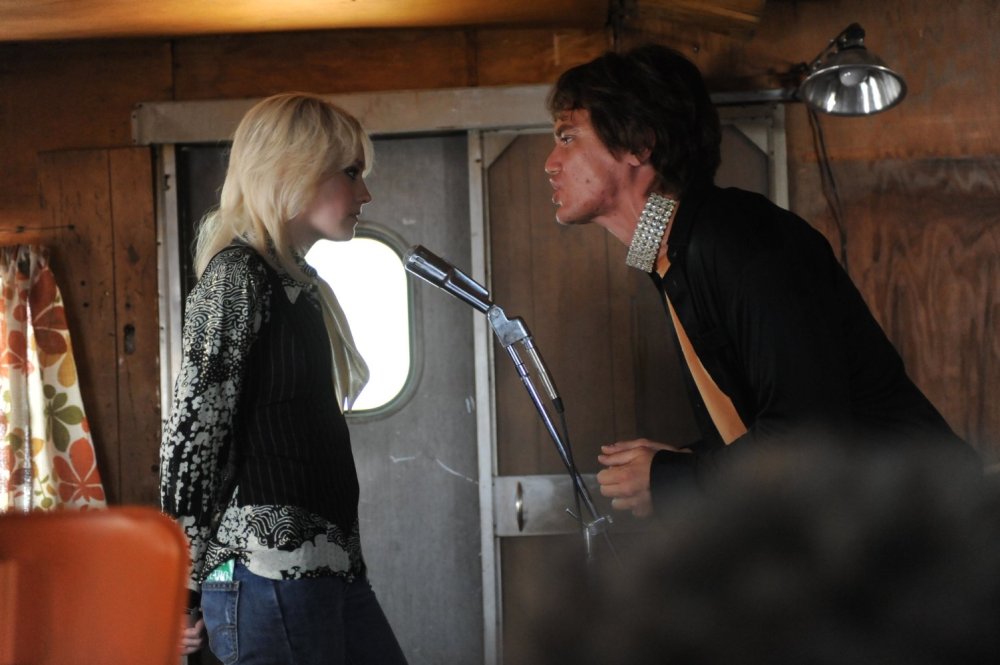
Floria Sigismondi directs Dakota Fanning, Kristen Stewart and Michael Shannon in this rise and fall biopic of 1970’s all girl rock sensations The Runaways.

OK… so as a narrative this isn’t going to blow anyone’s socks off. If I asked you what you would expect from such a film, and you scribbled your ten cliched expectations on the back of a fag packet and then we ticked each off as they came to pass…. Well… you’d struggle not to get 10 ticks. Let’s sidestep that, as you wouldn’t criticise The Magnificent Seven or say The Fugitive for doing exactly what they say on their tins. What Sigismondi brings to the endeavour is a constantly coulourful beat (the motions are at the very least gone through at an apt punkish pace) and an unjudgemental eye on the debauchery and rebellion – whether huffing glue, roadies or each other, it is all painted positively as kids having fun and exploring new experiences. The eventual fall of one character is down to the nature of the business rather than punishment for any “sin”, in fact it closes on a feeling quite close to the penultimate shot of Goodfellas or Mike Milligan’s cruelly mundane “reward” in the last episode of Season 2 of Fargo. What really punts this into a watchable experience though is a brilliant turn from Shannon (no surprises there). His punk impresario Kim Fowley is a fucking on uppers belter of a performance – villian, preacher, fairy godmother, coach of the underdogs, rooster in eyeliner, right in your face. Stewart does her usual winning vulnerable, shy, tough schtick in the mid-background too.

7


Red Dragon / Film of the Week: The Silence of the Lambs / Hannibal (2002 / 1991 / 2001)

IMG_2021

Brett Ratner, Jonathan Demme and Ridley Scott direct Anthony Hopkins, Edward Norton, Ralph Fiennes, Jodie Foster, Ted Levine, Frankie Faison, Julianne Moore, Gary Oldman and Ray Liotta in this trilogy about a captured high functioning psychopath who has affections for the FBI agents who ask politely for his help and for eating people. 

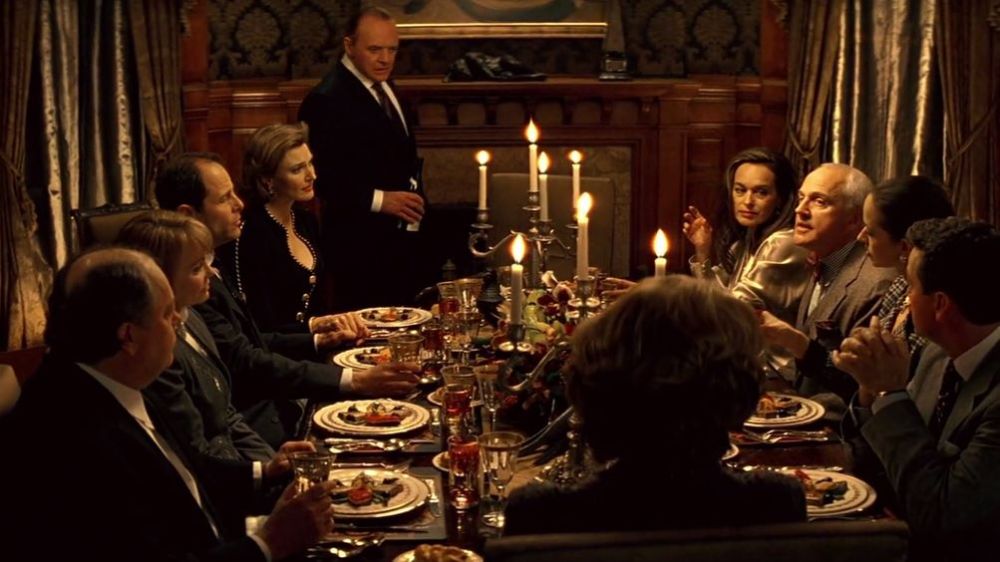
I’m going to be controversial here. Anthony Hopkins is a bit rubbish as Hannibal Lecter. He won an Oscar as him, starred in three films that collectively made over $800 million dollars at the box office (unheard of for a hard R rated series 15 years ago) and entered into the public consciousness as the character in a way that no movie icon has since… apart from maybe Austin Powers. So there’s your problem by sentence number 3 of this retrospective, I’m easily comparing Hannibal the Cannibal to Austin Powers. And the comparison fits. What was genuinely a seductive, chilling and full fat role when dished up through short, puzzling bursts in Silence of the Lambs got expanded by near continual parody in the intervening years. Lecter became a character that had been filtered and redefined by a decade of spoof by the time he returned. So when a cash-in sequel and prequel came along, they foolishly upped the Lecter content, stretching the good doctor thin thin thin so we are left with a wispy pantomime villian; a Xerox of an impersonation of a punchline to a great support character. The pair of subsequent movies piggybacking off Silence have way too much Lecter to bare scrutiny, and Lecter not as the coiled, enclosed god, waiting to bite off your jaw or tinker with your mind, but as the closing sting japester, in his wig and Panama hat, cheekily telling Clarice “I’m having an old friend for dinner.”

Hopkins’ caged genius predator was truly great when rationed out, but once the big paychecks to return rolled in and the narratives are being carried by his hands alone we get parody and repetition… why for example in Red Dragon does he start doing his Okie impression of not yet met Clarice, apart from misguided fan service? Okie Dokie!

And it doesn’t help that Brian Cox’s brief appearance in the same role in the earlier Manhunter is more blankly intriguing; that Mads Mikkelsen’s expanded, erotic and eminent central turn in the recent brilliant TV series is so winning. Hopkins unsuccessfully returning with his bucket to the Thomas Harris well twice pretty much ranks him down as the third best Hannibal Lecter. Only the German guy no one can remember who played diddy cannibal in that prequel no-one watched comes in behind the great actor in his most famous role. We start with the personification of unstoppable danger, we end with essentially a travelling Frasier Crane who is willing to gut a man.

Toughens the nipples, doesn’t it?
IMG_2020

The last film to be made yet the first in the chronology, Red Dragon has to be the most redundant movie ever made (cash takings aside). Michael Mann’s 1986 adaptation Manhunter may have flopped on release but as a genre flick it is one of the finest ever made, joining Se7en, Zodiac, M and Silence itself in the rare club of 5 star serial killer thrillers. And Bryan Fuller’s TV series uses the well plundered source material again to close down all the story arcs with a run through of the same plot and characters that somehow still manages to feel experimental, vital and relevant third time around. Brett Ratner’s prequel on the other hand feels like a student thesis, a project to remake a classic film in the backyard for a weekend… only gallingly with a brilliant cast putting in minimum effort, only with a mega budget that adds a paint by numbers sheen to the whole forgery. Not unlike Gus Van Sant’s shot for shot Psycho, you spend the entire rehash looking for variations rather than getting caught up in the experience. And whenever bonus Hopkins can be crammed in, the cramming begins. The source story is an absolute cracker, no weak cover version can diminish that strength, and Fiennes clearly wants to bring something new to Francis Dolarhyde (though he lacks Tom Noonan’s otherworldly ownership of the part). It’s watchable but why look at a pavement chalk drawing of the Mona Lisa, when Michael Mann’s superior original is so accessible.
IMG_2025

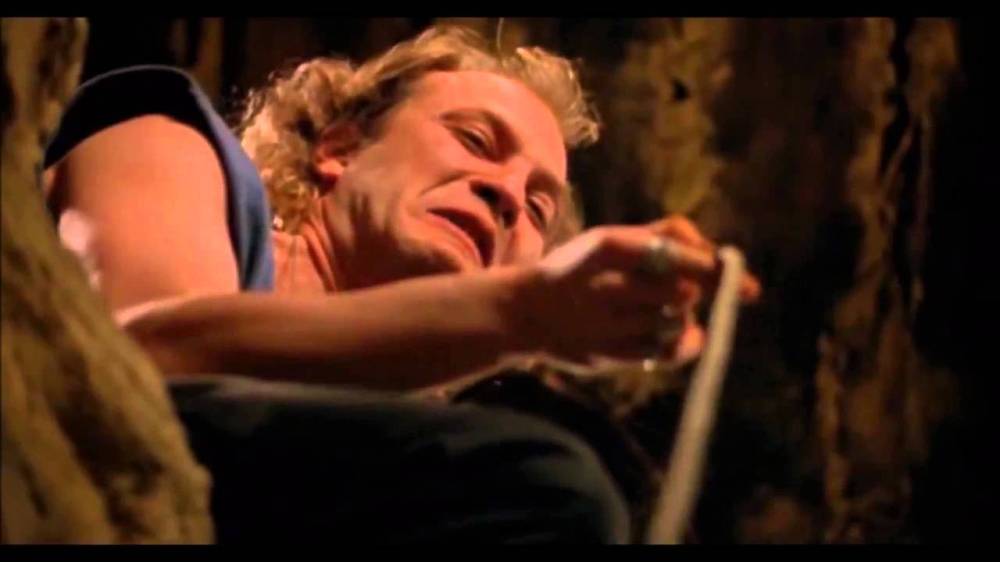
The Silence of the Lambs, is a masterpiece though, and still a masterpiece, despite its unruly spawn. An absolute corker of a ghost train ride with both villians hurtling along parallel tracks for maximum shock. Jonathan Demme (usually the maker of interesting rather than great cinema) deploys every trick in the book to keep you guessing, tense and unnerved. Then, in the final coup de grâce, when we accidentally find ourselves at Buffalo Bill’s house, invents a whole new piece of big screen conjuring. Yet he drips it all in a prestigious autumnal sheen so that the constant grindhouse nasty feels intelligently deployed, sensitively handled and the by-product of a tasteful, classy affair. C movie content, A movie craftsmanship. The actual intent is vice versa, but this worked on the Academy, they gave this grim freak show the 5 biggest awards. That puts Silence in the exclusive company of It Happened One Night and One Flew Over the Cuckoo’s Nest. Not bad for an airport novel shocker, and not in anyway undeserved either.

So many moments from the film have entered in the modern lexicon, become touchstones within western culture as a whole. Yet some of the most sinister gristle remains untalked about. “I can smell your cunt.” Clarice surrounded by ominous State Troopers (the uniform of her dead daddy) being dismissed and viewed sexually at the same time. When the lights go out in Bill’s basement. Hell, Bill himself. Ted Levine is sickening as the beast wanting transformation. From his skin suit to his swastika bedspread to his ratty little poodle he has the nomenclature of hell made flesh. When he orders his next kill to put the lotion in the basket it is inhuman, when his composure breaks and a slither of relatable anger and frustration bubbles though… just a pop, just a smidgen, mind… it is tragic. The one strength of the series entire is its main “antagonists”; The Tooth Fairy, Bill and Mason Verger are the complex stuff of nightmares and they fight hard to wrestle the spotlight from Hopkins increasingly hammy, top billed supporting turn. They all wrestle well, if they never pin him, they win on points. Mason Verger in particular I’ll talk about and praise more in a bit.
IMG_2024

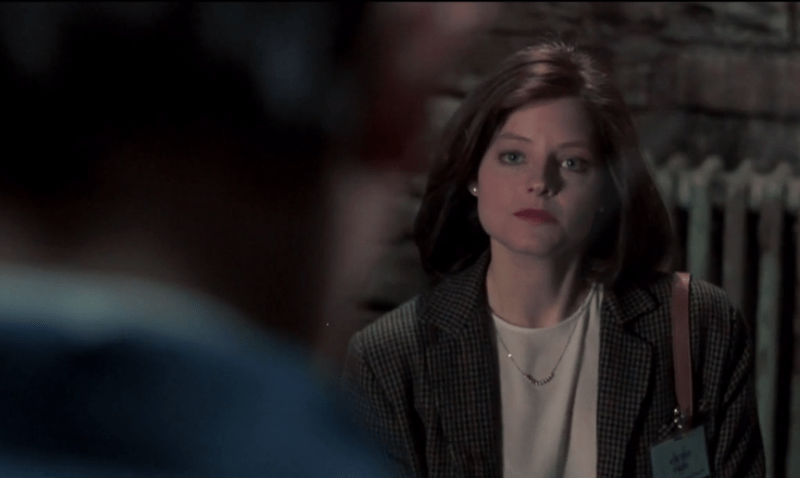
Which brings us to Clarice Starling. The tough, hardworking, determined and psychologically believable heroine. Decent, pure protagonists rarely have this much depth, are seen as being tangibly this human onscreen. Of course this is all down to Jodie Foster, she invests her key role with a charming straight arrow directness – Elliot Ness with as much heart as brains. No wonder Hannibal falls for her. No wonder the world did. Her short, slight stature, her unguarded reading of threats both in the line of fire and the work place make you worry for her. Yet she is consistently presented as tough as nails, a risk taker. She’ll sweatily kicks down doors in training or in the field, she returns to Lecter, she gets right up to the glass if it means a step closer to rescuing the victim. Striving and excelling in a dangerous man’s world on her own terms, all the while keeping her own female identity made Clarice Starling a rare feminist icon in cinema. Rare even today.

BBC Culture’s Nicholas Barber noted “Demme and his team may have hoped to usher in a new age of intelligent, independent, inspiring Hollywood heroines, but instead it was haughty homicidal maniacs who caught the public imagination.” And that would prove the series’ undoing. It got hooked on the monstrous male gazers and flirting ladykillers rather than the franchise’s one fully developed human. When they decided the inferior Julianne Moore was an interchangeable fit for a declining Foster they decided cannibals were more important than saviours. I would have mothballed the project the second Jodie said “No thanks.” And maybe Foster just sensibly realised what a shitstorm an adaptation of Thomas Harris’ Hannibal was bound to be.

I have given Hannibal the sequel two tries. Both times I was frustrated by how directionless and ambling it is. In no rush to get nowhere. Not-Clarice sits in a Justice Department basement for the entire second act, the most exciting sequences involve Lecter wandering around lesser landmarks while characters with no given names stalk him. At one point we cut to an Italian cop watching some Champion’s League on telly. I was jealous. It all seemed far more involving a watch. And I don’t even like football. Ridley Scott collects a paycheck. He frames the excessive Grand Guignol well enough but the beige blank wall space it hangs from is gargantuan and overwhelming. Clearly the work of someone happy to shrug his talented shoulders and just shoot a discordant script. And he shoots the violent, brain peeling jumble as prettily as the budget allowed and no doubt moved on to more engaging projects off the back of the inevitable positive till receipts. There is no clarity to the plotlines or unity to the ensemble that a great director who cared about the material might bring. I’m a fan of Ridders so it hurts typing that.

IMG_2023

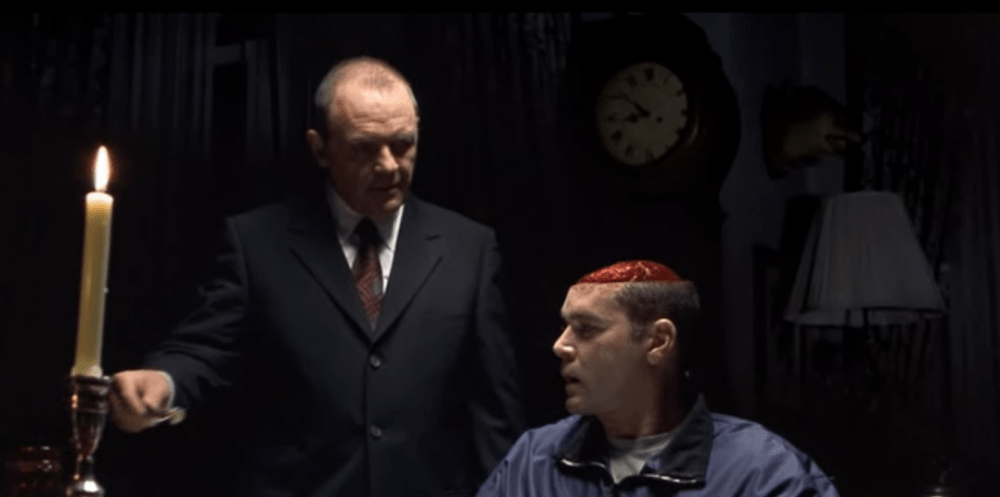
There are two seams of gold within the slate. Ray Liotta goes full pelt as Clarice’s sexist superior. And Gary Oldman as Mason Verger is just delicious. Verger has to be the most underrated movie monster in cinema history. Horrifyingly scared, wickedly self aware and unstoppably enthusiastic, his one wish is to see Lecter fed to the pigs. And in many ways Oldman imbues this disgusting nasty with such electrifying delivery he manages to elevate the drossy, rote film he finds himself in (uncredited pointedly… Hmmm?). He in many ways serves the same purpose as Hopkins did in Silence. He turns a support role into something more troubling, a side antagonist into the main event. And to prove just how undeserving Hannibal the movie is of such a millionaire pederast horrowshow, Hannibal the TV show embraced Mason Verger fully. Let him run wild. And it was glorious.
IMG_2022

Such a shame that Lecter, Starling and Verger found their stories left dangling in such a mediocre, compromised final chapter. But given the palpable quality dip after Silence I’d much rather Mikklesen and Fuller got a chance to meet a fresh Clarice through any medium, TV or cinema, rather than see Hopkins use his one hand to write another new Starling another dirty love letter.

5/10/4
Immortal Beloved (1994)

IMG_2016

Bernard Rose directs Gary Oldman, Isabella Rossellini and Valeria Golino in this warts and all biopic of Beethoven. 

A mixed bag period drama. The Citizen Kane style framing device restricts and neuters Oldman’s performance – making him a barely glimpsed question mark, often silent  or in the sidelines rather than out in front waving his baton as you’d want him. The central mystery is also rather daftly resolved – all the anger, pain and unrequited love we bare to witness boils down to some ropey room service and icky stew (imagine Ludwig Van’s Tripadvisor review)! Despite these frustrations, Bernard Rose, the horror director no less, wrangles out some marvellous sequences of revolts, frilly sexiness and the pièce de résistance is the Ode to Joy flashback of inspiration. That montage of magical realism is in particular brilliant cinema. These struts of quality cannot support the entire rickety narrative but they make it worth enjoying at least once.

5

Tootsie (1982)

IMG_2015

Sydney Pollack directs Dustin Hoffman, Dustin Hoffman and Jessica Lange in this comedy about an unemployable method actor who poses as a middle aged woman to secure a part on a soap.

Tootsie is one of those “classics” that I always meant to get around to watching, it is embarrassing I hadn’t til now being quite such a big Hoffman and Bill Murray fan. It didn’t quite meet my high expectations for it. As a comedy or a drama it isn’t quite feast or famine. The humour from the set up is amusing at best, with only an uncredited Bill finding laugh out lines. Drama wise the developments are too broad – points are made about sexism and questioning identity but in a foamy sitcommy way, it is a little too as expected, a little too soft play safe. Tootsie stands out on strong performances and charm, good New York location work and an insider’s relish of the acting world. It is a very, very likeable film giving Hoffman plenty of room to excel in dual roles… he creates and maintains Dorothy as her own person admirably. And Jessica Lange makes the most of what could have been a throwaway part – instilling her romantic interest with depth, seductiveness and vulnerability.

7

Vivre sa Vie (1962)

IMG_2014

Jean Luc-Godard directs Anna Karina, Sady Rebbot and André S. Labarthe in this drama following a young free spirit’s descent into prostitution.

A bit of class this. So beautiful, so stylish and evocative of its era. Yet also deliberately cold and calculated. Distancing techniques abound like chapter intertitles, abrupt cuts, unflinching cameras, long shots of the back of people’s heads, bleak clinical narration from government surveys about prostitution. Yet all of it cannot suppress a glowing star turn from Anna Karina – as the gorgeous fool who would rather oblivion than her normal constraining life, she is captivating. You feel for her ennui and failed attempt to break out, savour her guilt and acceptance of her lot. Yes – it is a tragedy but there are some quirky moments embracing pop culture scattered to entertain us (a trip to the movies / a jukebox is played), that poke holes of light into the darkness. Great!

8


On the Beach (1959)

IMG_2013

Stanley Kramer directs Gregory Peck, Ava Gardner and Anthony Perkins in this staid apocalyptic romance about the citizens of Melbourne waiting for the deadly radiation from a nuclear war that has wiped out the rest of the planet to reach them. 

I’m getting old. Some kid at work has nicknamed me “Grandpa” and another asked me what the biggest change I have seen in my lifetime was. And the answer I gave was I grew up thinking at any moment nuclear war would begin and that would be that. I grew up on Mad Max, The Terminator, Threads and When the Wind Blows. And then after the Berlin Wall fell… that mindset… that the only possible future would be dictated by the thermonuclear loaded gun our governments had created… seemingly disappeared. The weapons haven’t gone anywhere, just the appetite, I guess? We’d much rather the slow gnaw of environmental breakdown than the spectacular immediate burnout of a man made extinction level event. This film rather calmly explores the fallout of this. But rather than hordes of marauding mutants racing the wasteland for another arseholes to fuck and then eat, we follow a group of sailors and civil servants going about their romances and admin in the face of timetabled approaching doom. It is a well made but bleak film, troubling yet quaint. If it wasn’t for the annoying repetition of Waltzing Matilda, I would probably reward its classy stoic pessimism with a higher mark. As a collection of haunting dramatic ironies it has weathered the storm well enough.

6