The Miracle Worker (1962)

9E5A4E8F-EEC2-410B-B2B5-7062EA4E0C04

Arthur Penn directs Anne Bancroft, Patty Duke and Victor Jory in this biographical film about Annie Sullivan’s arduous efforts to give blind deaf Helen Keller the tools to understand and communicate with the world. 

A great movie set piece involves action overcoming obstacles. It might be underdog Rocky going the distance against champion Apollo Creed. Tom Cruise scaling the glass surface of the world’s tallest building with his gadget gloves malfunctioning. Or Indiana Jones trying to commandeer a truck full of Nazis, a truck he is currently being keel hauled behind. The point is we, the audience, can feel the bruising effort of a great set piece, we know what the stakes are and see the points where a lesser person would give up and admit defeat. The Miracle Worker has a similar sequence in both format and effectiveness to any of these adventure blockbusters. It takes place in one dining room for over ten minutes. Anne Bancroft needs to get Patty Duke to sit down and eat a meal like a “normal” person. After years of being ignored, indulged and undisciplined due to her condition the child wilfully will not take instruction. She lashes out, she throws tantrums, she is spoilt. But if Bancroft’s teacher cannot get her to submit and be calm then she will never be able to bully her into learning the physical alphabet that will give her a link to the outside world. They wrestle and exhaust each other, chase and struggle around the table. It is a marathon, you feel drained by the effort. But when Bancroft’s unconventional teacher finally breaks the child you know it is for the kid’s long term benefit. To see two dramatic actors so wholeheartedly and actively frazzle each other is a thrill. And this scene is replicated on a smaller scale throughout The Miracle Worker. The message is no child is unreachable. Even one with the obvious disadvantages of Helen Keller. But some children need unique, almost gargantuan, personal methods to get them to understand the world and communicate with it. It is an unarguable message on the importance of education, powerfully delivered in this gripping, experimental drama.

9

First Reformed (2018)

4AC3EE5A-0787-4AC5-B2DF-65A7262D78AB

Paul Schrader directs Ethan Hawke, Amanda Seyfried and Cedric Kyles in this drama about an alcoholic priest who begins interacting with a fanatical environmentalist. 

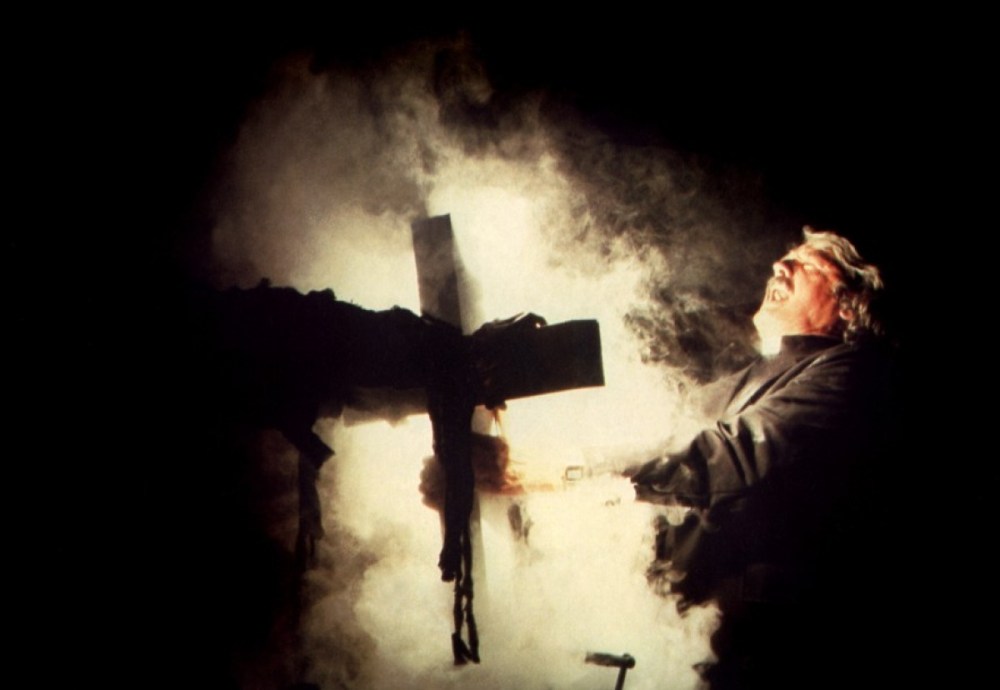
A very fine film. Sometimes you can judge quite how well made a film is by how many people walk out of its Friday night screening. Throughout First Reformed’s running time I’d say about a fifth of the audience gave up. It isn’t what they wanted, what they expected when they bought a ticket… a dozen separate exits. To begin with it threatens to be a talky film… a battle of wills, a restrained attack of faith in a suburban living room between a suicidal eco-warrior and a charming but introspective priest. Who will win? The doomsayer who uses science to drive his dangerous belief system or the cautious priest… excited to have a soul to save and find some purpose beyond caretaking his picturesque church for tourists. But then the film opens out… there’s a murder mystery, a thriller element, Hawke’s priest begins to reveal deep flaws and weaknesses. Big business and corporate conspiracy begin to rear their ugly head. Someone is converted to take drastic, murderous action. We slip into the fatalist aimlessness of Taxi Driver. An out of time man, trapped in his own internal monologue, cruises the streets with vigilante death on his mind. The fact he is a mild mannered priest is both amusing and starkly troubling. First Reformed is a disturbing film. Don’t let its mannered square box screen ratio and near monochrome colour palette fool you. It picks away at sensational concepts and outlandish plot developments in it staid garments and hushed tones. A wolf in sheeps clothing. There are strands and characters that I still haven’t gotten my head around… Is Seyfried’s concerned parishioner gaslighting or setting up Hawke?… It is never explicitly stated but it makes sense how she always is supplying him with the next necessary tool for his downfall.  How serious do we take the moments of fantasy? The dreamwalking… The chaste sexual contact…. Schrader has been lost over the past decade as a gun for hire on direct to streaming fare. I’d say The Canyons is a better film than its reputation suggests. But with First Reformed he is back on the firm, fertile ground that made him a name to watch in the 70s… obsession… paranoia… stoicism… self harm… corruption… oblivion. First Reformed may not be the easiest film to digest, and it needs you to meet it halfway as a viewer, but the scope and intelligence and daring on display make it one of the must see movies of the year. And Hawke’s internal, committed performance sits with Boyhood and Before Sunrise as one of his very best.

8

The Fog (1980)

EE818439-78CD-43D5-9FBC-C8B046456363

John Carpenter directs Adrienne Barbeau, Jamie Lee Curtis and Tom Atkins in this supernatural horror about a town cursed by murderous ghost pirates.

If you wanted to introduce a young teen to horror as a genre then The Fog is a brilliant gateway film. There’s a few jump scares, some spooky imagery and mild gore but nothing particularly more shocking than you might find in an Indiana Jones adventure. Carpenter is most interested here in atmosphere. The town is consumed by both the visual effect of the fog but also the unavoidable retribution of a century old curse. The humanoid monsters within the mist are gloopy silhouettes with glowing red eyes… blanks for us to fill the details of our worst fear into. He loves the visuals play of bright light on smoky darkness. This is the Pink Flloyd concert of creepy stories. Edgar Allen Poe with a dry ice machine. And we get one of his trademark doom laden, echoey electronics scores… urgent yet mournful. As a plot it ends very abruptly. The characters are serviceable (Jamie Lee Curtis feels wasted but Adrienne Barbeau’s lone DJ trapped in a lighthouse impresses). It essentially is a series of random set pieces bound by the visual idea of murky curse consuming a town. Yet there are vivid flourishes that raise The Fog’s mythic stature above more explicit and popular genre works of its era. The prologue where John Houseman sits us around the campfire like children and tells us a spook story (exposition for the threat to come) is a marvel of hammy acting, comic book storytelling and affection to a more subtle mode of horror. Like the best scary tales, the details of The Fog drift away from you post-watch and you are left without abiding memories of what just happened yet know someone just relentlessly tried to scare the dickens out of you.

9