Queen of the Earth (2015)

72B8D95E-5437-4C97-804E-C398757915FB

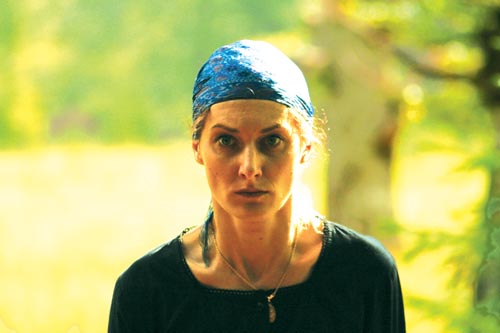
Alex Ross Perry directs Elisabeth Moss, Katherine Waterston and Patrick Fugit in this drama about two friends sharing a summer house while one overcomes a harsh break-up. 

I absolutely rate Elisabeth Moss but even she couldn’t save this. You can see her acting when usually you cannot, if that makes sense? Pretentious… it goes nowhere slowly. Borrowing heavily from Polanski’s Repulsion and Fassbinder’s The Bitter Tears of Petra Von Kant yet sunny, cautious and only occasionally daringly framed. A yawner.

3

Easy Rider (1969)

34C6DFFC-947D-48ED-A3D8-13890AF22039

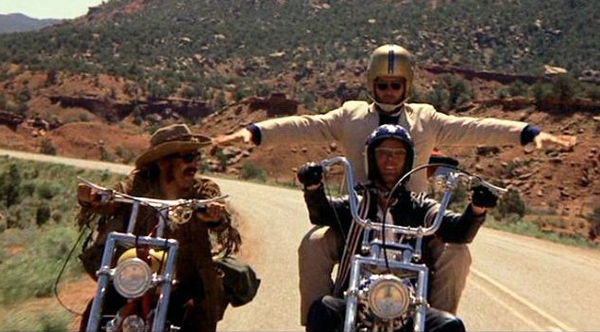
Dennis Hopper directs Peter Fonda, himself and Jack Nicholson in this seminal road movie about two hippie bikers struggling to find a place to stop in sixties America. 

One of those “classics” that bored me to tears on previous attempts… I warmed to it just a little bit more on this try. It is still pretentious, grubby and often wearyingly dull. The best bits are the filler moments when the boys are just riding on their choppers, through the landscape, through an evocative soundtrack of Jimi, The Band and… yes… Steppenwolf. And you have Jack Nicholson wander in for twenty minutes and completely steal the show. He’s brilliant. He’s always brilliant. Dennis Hopper is good value too as the twitching in the background, always uncomfortable Number Two. But Fonda’s lead is a blank presence and the far-out commune and drug sequences feel more alienating these days than the didactic violent conservatism Captain America and Billy face whenever they reach ‘civilisation’.

6

Katalin Varga (2009)

1933C775-C126-409E-82B4-ABF06C4AD966

Peter Strickland directs Hilda Péter, Norbert Tankó and László Mátray in this Romanian revenge thriller where a wife sets out to find her attackers, after her husband outcasts her and her son on discovering the child is the product of a decade old rape. 

We dodged a blizzard and ducked into the Filmhouse, choosing this pretty much at random to keep us out of the cold. It helped it was directed by Peter Strickland whose haunting Berberian Sound Studio and kinky The Duke of Burgundy were arty conundrums. Made on a shoestring budget, about the same amount as most people’s annual salary, this is a gritty mystery imbued with an air of folklorish fantasy. The mother and child travel by horse and trap yet use mobile phones, people in garish shell suits talk unironically about God and tradition. Katalin stares into the dark of the forest and you expect a strigoi to appear. It is languid in pace, and ultimately the conclusion is abrupt and somewhat trite. Yet as a calling card for Strickland’s ominous potential it obviously worked, and Hilda Péter delivers a knockout monologue on a rowing boat filling us in on the backstory we have been guessing at for the first two acts.

6

On Deadly Ground (1994)

A2D00EE7-FD36-4BF5-8131-A64C20D5C7CA

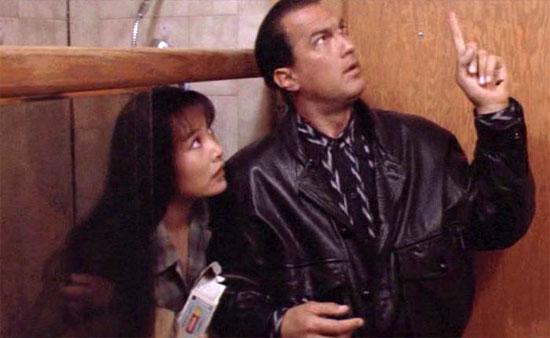
Steven Seagal directs himself, Michael Caine and Joan Chen as a ponytailed uber-human who takes on a corrupt, polluting oil magnate while engaging with the Inuit community, both local and on the spirit plane, who sold off their drilling rights to the evil, bad badman. 

I went to the shithole two screen fleapit in West Ealing to watch this as a kid. It was shit then and it is shit now. “Shit!… Shit, you say Bobby… then why the fuck watch it again?” We had an utterly deserted pub and this was all that was on ITV4+1 between the dead period and last orders. The fights are perfunctory, the spiritual moments and Seagal’s ten minute speech about the environment at the end are laughably boring. He has just blown up an oil rig, a terrorist action, thus polluting the environment far more than any shonky commerce could… jog on, mate… you should be in fucking handcuffs. Even if the sentiment is in the right place the execution is meathead logic. Warner Bros greenlit this in a deal so he would star in Under Seige 2. I doubt it was worth the ultimate hassle. Seagal also seemingly was paid in jackets. Every scene he sports a new one… some excessively tasseled, some with ethnographic detailing… all made from the hide of a dead animal. Pretty impressive wardrobe changes for a guy on the run in the Alaskan wilderness. Michael Caine spits through his teeth in every scene. This was the grubbiest period of his long career. All the dirty, evil oil his megalomaniac has naughtily pumped up seems to have been used to make the slick black wig on his head. The only reason this doesn’t get a damning 1 score is this swathe of dialogue from R. Lee Emery; “He’s the kind of guy that would drink a gallon of gasoline so he could piss in your campfire! You could drop this guy off at the Arctic Circle wearing a pair of bikini underwear, without his toothbrush, and tomorrow afternoon he’s going to show up at your pool side with a million dollar smile and fist full of pesos. This guy’s a professional, you got me?” Amazing… and I’m gonna bet completely improvised by the former United States Marine Corps staff sergeant.

2

¡Que viva México! (1930/1979)

C21704E9-DED1-48FA-9B8F-8E2214C4E193

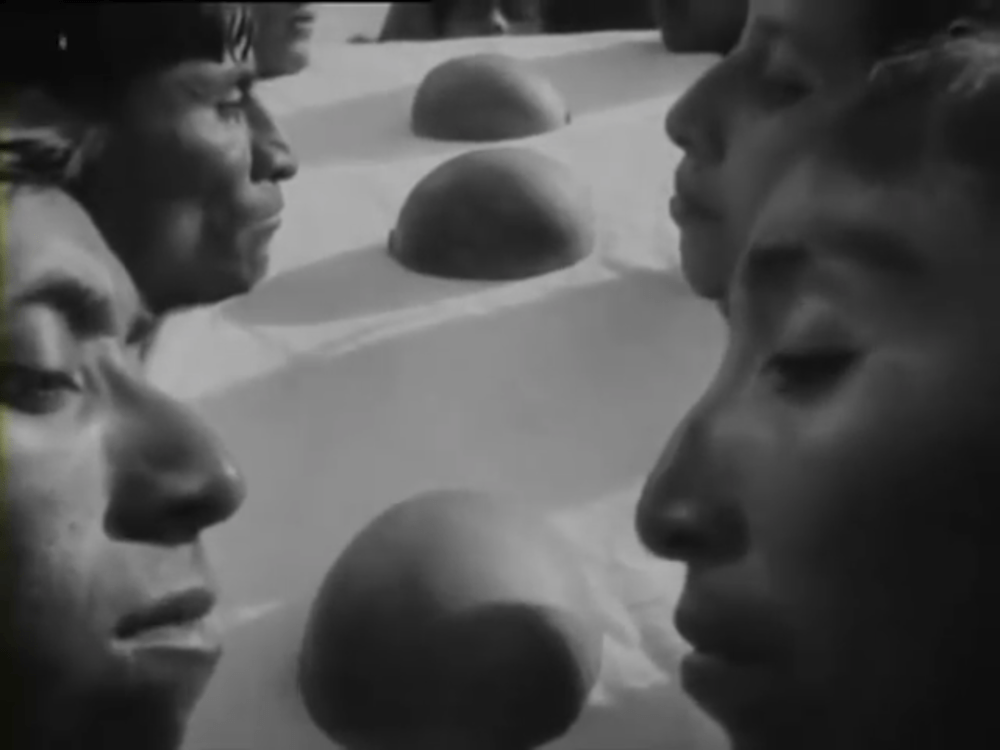
Sergei Eisenstein directs Sergei Bondarchuk, Sara García and Isabel Villaseñor in an arthouse travelogue and historical portrait of Mexico assembled posthumously from an abandoned episodic project filmed by Eisenstein until funding was withdrawn. 

Strange how similar the salvaged remenants of this are to Disney’s own later travel anthology Saludos Amigos. The chunks that remain are often beautiful recreations, sensitively featuring the hopes and struggles of poor Mexicans. Their lives are soaked with a telling visual poetry. My favourite moment is when the dowry necklace a women strives to buy dissolves into a matching shot of the lazy groom-to-be in a hammock. You get some wonderful imagery of Mexican culture and landscape. But by its unavoidable fragmented nature, it is also bitty and frustratingly incomplete.

7

Battleship Potemkin (1925)

39B70CBF-EBCB-4E01-A162-FE91B472111E

Sergei Eisenstein directs Aleksandr Antonov, Vladimir Barksy and Grigori Aleksandrov in this silent historical reenactment of a 1905 ship mutiny and the tsarist massacre of supporters that followed. 

I never massively enjoyed school. I found the rigidness of sitting, listening and transcribing unengaging. I struggled to find friends with similar interests. College was different though. I chose the subjects, the young adults in those classes were also curious or passionate about those topics, giving us common ground to form friendships over mutual taste rather than enforced proximity… and there was oodles of free time throughout the day to pursue your own side projects with access to all manner of media, content and equipment. I made terrible short films using the bulky “pro” camcorders and cut them painstakingly on linear video editing decks. There was a darkroom (and an easy going, encouraging photography teacher) where you could fuck about for hours with no pressure of results, or even talent. There was a pub across the way, Finnegan’s Wake, who had never even thought of IDing their clientele and allowed you to sit around all afternoon chatting nonsense, surrounded by fake Irish tat. And there was… and here’s where I get to Battleship Potemkin… a media-centric library. It was small yet bright. But it had computers that hooked up to the internet (most people didn’t even have dial up in their homes back then), meaning I spent hours on the new, seemingly inexhaustible, IMDB. It had back issues of Sight and Sound which I spent days skimming through. And it had a whole wall bank of videos. Cassettes of old movies recordered off the TV. And I worked through these diligently. Devouring Hitchcocks, realising just how much John Ford and Howard Hawks I had unwittingly watched with my Dad as a kid, seeing Citizen Kane and Nosferatu and Doctor Strangelove for the very first time. And Battleship Potemkin. I must have borrowed their copy of Battleship Potemkin, taped from a silent film season on Channel 4, three or four times. Whichever former faculty member had built up this haphazard canon of timer recorded, possibly illegal, treasures at Ealing Tertiary College, I salute you. You stoked my passion for classic cinema by making it freely available yet curated. Battleship Potemkin is the cornerstone of just about every Introduction to Film Studies that I doubt I can say anything particularly new about it. It is the finest propaganda film, a clear example of montage theory and a silent movie whose vibrant accessibility keeps it from being a dusty, revered museum piece. The Odessa Steps massacre sequence reappears, or is copied, so often that even people who will never watch a silent film are familiar with it. That is how it has earned its place as an indisputable “great.” But how watchable is it now, a century on? Pretty captivating. It can be strange following a narrative with no obvious protagonist but Eisenstein evokes the feelings and aims of the rebellion humanistically. You know their motivations and the stakes at every setpiece. He has an eye for an interesting face, whether weathered and expressive or heroic and idealised. There are also moments that are somehow both surreal yet intense. That famous doomed baby bouncing down the stairs, its carriage being dragged to oblivion by gravity, the murdering soldiers pursuing it uncaringly. The cowed sailors put under a white tarp, facing a firing squad as a faceless mass. The rhythmic, suggestive editing helps keeps things propulsive. The metaphorical juxtapositions are rousing. A series of lion statues rise in shock. Men work with the harmony of a well oiled machine. This is basic, easy to decipher stuff, but it is framed purely without pretensions or artifice. Only the final sequence where the mutinous ship is engaged lacks the captivating grip of the first two acts. It is still a well put together chase sequence, just bereft of the bloody impact of the rebellion and the massacre. Battleship Potemkin isn’t an acquired taste or a mere rights of passage for movie fans. If you go into it with an open mind it is a thrilling and effective war pic achieved via compelling and confident storytelling techniques.

9